
The first time I went looking for macrame cord as an adult, I stood in front of the shelf for a very long time.
Three-ply. Single twist. Braided. 3mm, 4mm, 5mm. Cotton, jute, polyester, something called ‘macrame yarn’ that looked suspiciously like knitting yarn to me. Rolls, hanks, little bundles in a dozen colours, and no clear sense of which of them would actually make the thing I had in my head.
I bought the wrong one, obviously. It was 6mm braided, it was enormous, and my first attempt at a plant hanger looked like ship’s rigging.
My mother, who has been doing this since the seventies, would have picked the right one in about four seconds. When I described what I had bought, she made a small noise down the phone that I have been hearing since childhood.
If you are brand new to all this, start at the beginning of the series and come back here when you are ready to buy.
So this is the post I wish I had read while I was standing in front of that shelf. What the different cords actually are, which one you want, how much of it you need, and whether a kit is worth your money.
The three types of macrame cord
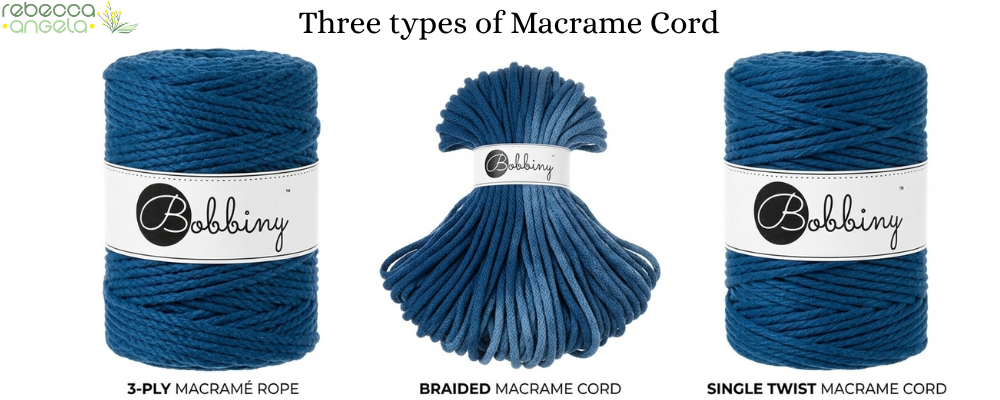
Almost every cord you will see falls into one of three constructions, and the difference genuinely matters to how your finished piece looks.
Three-ply (twisted) cord
Three strands twisted together into a rope. This is the classic macrame cord and probably what your mother or grandmother used.
It holds a knot beautifully, it has a lovely bit of texture, and — this is the important part — it unravels into a wavy, crimped fringe when you brush it out. If you have ever seen a wall hanging with a big soft cloud of fringe at the bottom, that is three-ply cord that has been combed.
It is my default and, I suspect, will become yours.
Single twist (rope) cord
One continuous bundle of fibres twisted in a single direction. Sometimes called ‘string’ or just ‘cotton rope’.
It is smoother and rounder than three-ply, and it gives a cleaner, more sculptural line. Knots sit very crisply in it. It does not fringe out into that same soft cloud — it fringes into a curlier, springier one, because the twist has memory.
Lovely for plant hangers and anything where you want the knots themselves to be the feature.
Braided cord
A woven sleeve, sometimes with a core inside. It looks a bit like a shoelace or a piece of sash cord.
Braided cord does not fringe at all — cut it and it stays cut, or frays into a mess, depending on the quality. It is strong and it is smooth, which makes it good for bags, belts, keyrings and anything that will take a lot of handling.
It is the wrong choice for a fringed wall hanging. This is the mistake I made.
Tip: If you are not sure what you have got, untwist a 5cm length at the end. Three strands means three-ply. One twisted bundle means single twist. A hollow sleeve means braided.
Cotton, jute or synthetic?
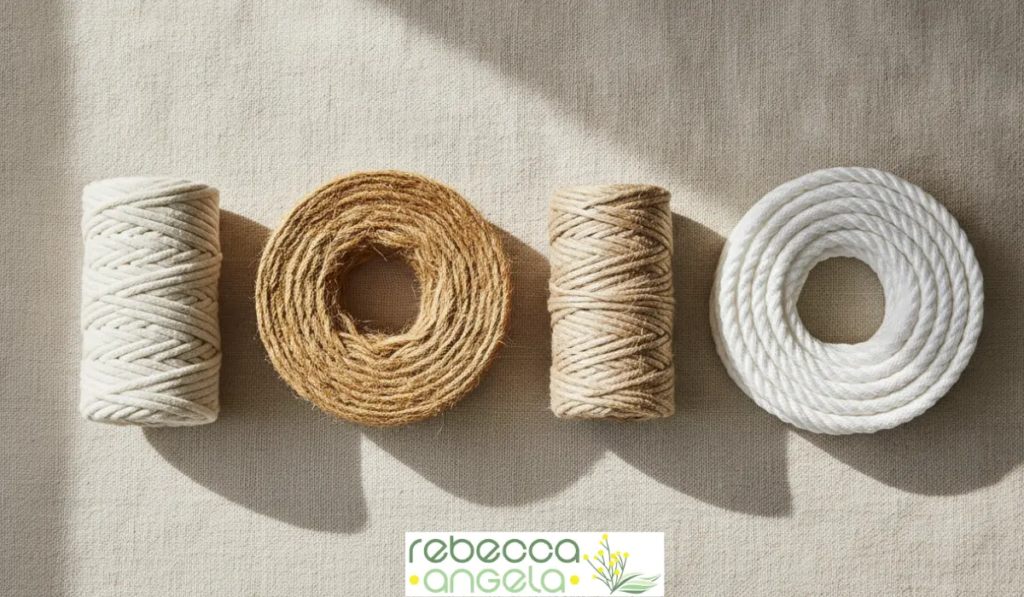
Cotton
Start here. Cotton is soft on the hands, forgiving, easy to untie when you get it wrong, and it takes dye beautifully so it comes in every colour you could want. Natural undyed cotton is the classic look and hides beginner unevenness better than a dark colour does.
It is also, for my money, the nicest to work with for a long evening. Your hands will thank you.
Jute and hemp
This is what a lot of the seventies work was made from, and it is what I remember from my mother’s cane basket — a dry, dusty, slightly hairy cord with a wonderful smell.
Jute is rougher on the hands and much less forgiving of mistakes, because it grips itself and does not want to come undone. It is stiffer, so it holds shape well. If you want that authentically retro, earthy look, jute is how you get it — but I would not learn on it.
Hemp is similar but finer and stronger, and it is the traditional choice for macrame jewellery.
Synthetic (polypropylene, nylon, polyester)
Weatherproof, rot-proof, colourfast and strong. If you are making something that will live outside — a hanger for the verandah, a swing seat — synthetic is the sensible choice, because cotton left in Australian sun and rain will degrade faster than you would like.
Indoors, though, I would rather use a natural fibre. Sustainability has become a much bigger interest of mine over the years, and given the choice between a plant-based cord that will eventually compost and a plastic one that will not, I know which I would rather have knotted into something I look at every day.
Note: If you are buying cotton and it matters to you, look for cord that says recycled or organic on the label. Recycled cotton cord is increasingly easy to find and is usually made from offcuts from the garment industry, which is a good use for something that would otherwise be waste.
What diameter should I use?
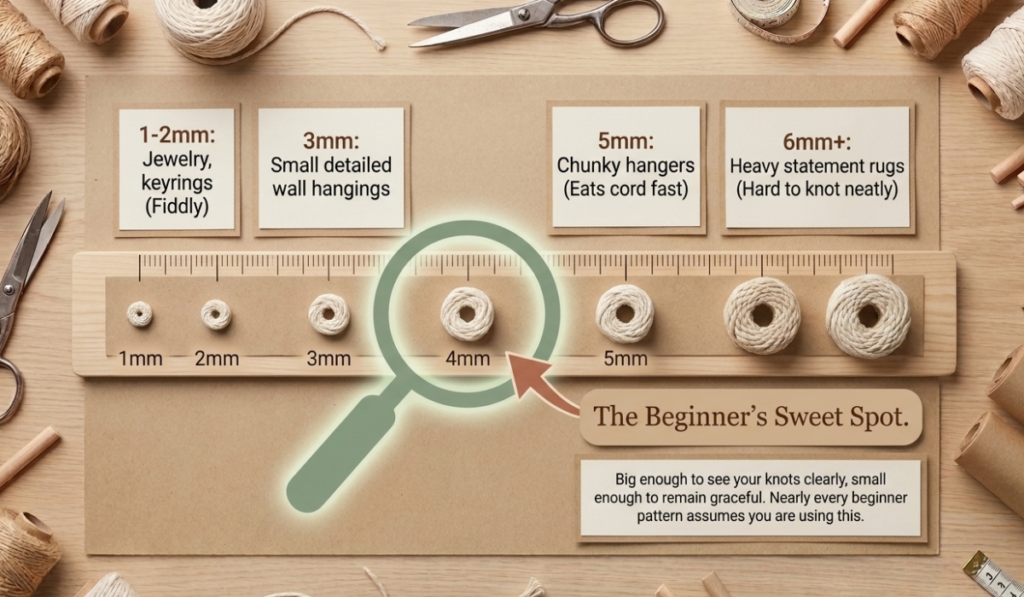
This is the question I most wish someone had answered for me before I bought that 6mm monster. Cord diameter changes everything about the scale and drape of a finished piece.
| Diameter | Best for | Notes |
|---|---|---|
| 1–2mm | Jewellery, bracelets, keyrings, fine detail | Fiddly on big projects. Hemp or waxed cotton is usual here. |
| 3mm | Wall hangings with detail, small plant hangers, coasters | Good all-rounder. Shows pattern clearly. |
| 4mm | Plant hangers, medium wall hangings, bags | The best beginner choice. Big enough to see what you are doing, small enough to be graceful. |
| 5mm | Large wall hangings, chunky plant hangers | Works up fast, which is satisfying. Eats cord. |
| 6mm and up | Big statement pieces, rugs, chunky decor | Heavy, expensive, and hard to knot neatly at first. |
If you are buying one roll to learn on, buy 4mm three-ply cotton in natural. It is the most useful, most forgiving cord in the whole range, and nearly every beginner pattern you find will assume something close to it.
Tip: Buy all the cord for a project in one go, and preferably from one batch. Natural cotton varies in shade between production runs, exactly the way fabric does — I have written about that in Learn-to-Sew: All About Fabric — and there are few things more irritating than running out three-quarters of the way up a wall hanging and finding the new roll is a slightly different white.
How much cord do I need?
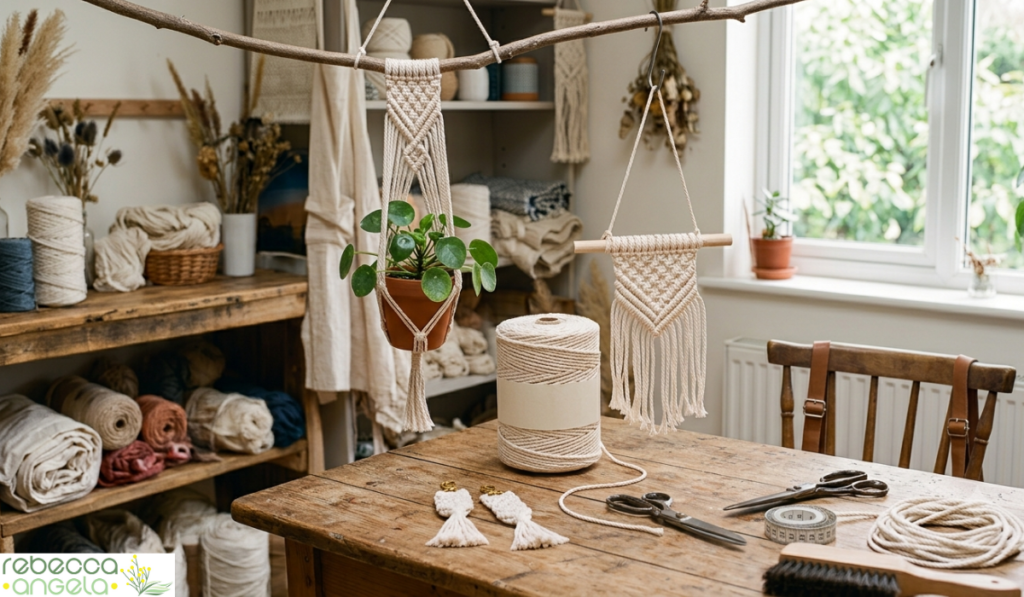
The rule of thumb you will see everywhere is four times the finished length. So a plant hanger you want to finish at 90cm needs cords cut to roughly 3.6m.
But there are two things that trip people up.
First: folding. Most projects start by folding each cord in half over a dowel or ring with a lark’s head knot. That means one cut length gives you two working cords — so if a pattern asks for 16 working cords, you cut 8 lengths.
Second: density. Four times is a minimum, not a promise. Spiral sections eat cord. So do rows and rows of square knots. Dense, tightly-knotted work can want five or six times the finished length.
My honest advice for your first few pieces: be generous. Cutting cord too long costs you some waste and a slightly awkward feeling. Cutting it too short costs you the whole project, because you cannot join macrame cord invisibly halfway up a piece. There is no equivalent of the sewing machine’s little backstitch to rescue you here.
Ask me how I know. My first plant hanger finished a good 15cm shorter than I meant it to, and the fringe is more of a rumour than a fringe.
As a rough guide for common beginner projects, using 4mm cord:
- Keyring: about 2m in total
- Bracelet: 2–3m in total
- Small plant hanger (60–70cm): 8 lengths of about 3m — around 24m
- Standard plant hanger (90cm): 8 lengths of about 4m — around 32m (the full plant hanger tutorial has every measurement)
- Small wall hanging (30cm dowel): around 30–40m
- Large wall hanging: 80m and up, quite easily
A 100m roll of 4mm cotton will get a beginner through a plant hanger, a couple of keyrings and a small wall hanging with a bit left over. That is a very reasonable first purchase.
Are macrame kits worth it?
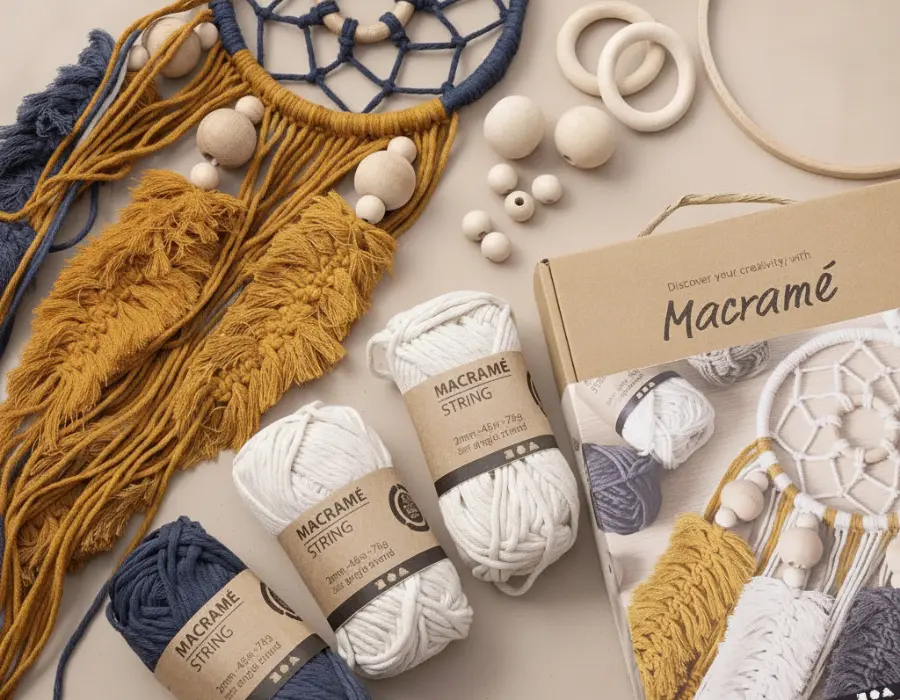
Sometimes. It depends entirely on what you are actually buying.
A kit is good value when it contains the exact cord quantity pre-cut for a specific project, a dowel or ring, and a clear pattern. For a nervous beginner, having someone else do the measuring and cutting removes the single most common way to ruin a first project. That is worth paying for.
A kit is poor value when it is a small amount of cheap cord, a wooden ring you could buy for a couple of dollars, and a photocopied instruction sheet, sold for the price of a 100m roll of good cord. There are a lot of these about.
Before you buy a kit, check three things:
- How many metres of cord? If it does not say, be suspicious.
- What diameter and construction? “Macrame cord” on its own tells you nothing.
- Are the instructions written and photographed, or just a link to a video? Both are fine, but you should know which you are getting.
My view, for what it is worth: buy a kit if it will get you started this weekend rather than in three weeks’ time. The best craft purchase is the one that actually gets used. But once you have made one or two things, you will almost always save money buying a roll of cord and a bag of dowels and working from free patterns.
The other bits and pieces
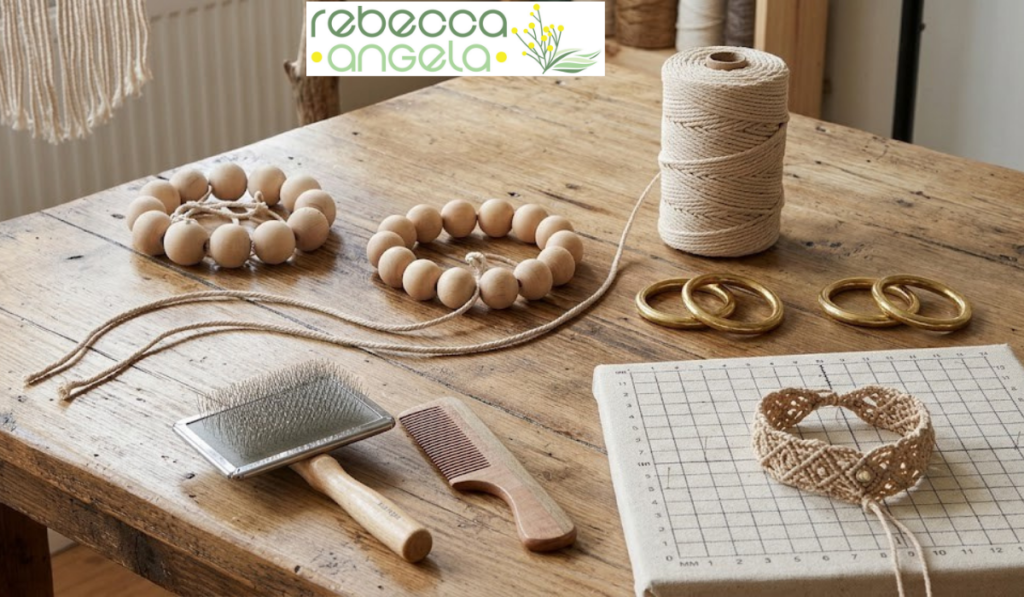
None of this is essential on day one. All of it is nice to have eventually.
- Dowels. Timber dowel from the hardware shop, cut to length, is a fraction of the price of ‘macrame dowels’ from a craft shop. Sand the cut ends. A 20mm dowel suits most wall hangings.
- Driftwood or a branch. Free, and much prettier. Scrub it, dry it thoroughly, and check it is not going to shed bark all over your wall.
- Metal or wooden rings. For plant hangers. A 5cm ring is a good standard size.
- A comb or brush for fringing. A cheap pet slicker brush is what most people end up using — the fine wire pins open out three-ply cord far better than a hair comb does.
- Wooden beads. Check the hole size against your cord before you buy. A 4mm cord needs at least a 10mm hole to pass two strands through comfortably. This is a very easy mistake to make online.
- A macrame board. A foam or cork board with a grid, used for pinning down flat work like bracelets. Genuinely useful for jewellery, completely unnecessary for anything that hangs.
- Sharp scissors. Blunt scissors crush cotton cord rather than cutting it, and you get a fuzzy end that will not thread through a bead. Keep a decent pair for cord only, the same way I keep my fabric shears away from paper.
- A tape measure, and somewhere to hang your work. A clothes rail, a coat hook, a door handle, an S-hook over the top of a door. Mine is a rail in the laundry, which is deeply unglamorous and works perfectly.
Where to buy macrame supplies in Australia
A few honest words here, because most of the macrame content online is American and it is not always much use to us.
Craft chains — Spotlight, Lincraft and the like — stock cotton cord in the common diameters and are the easiest place to see and feel it before you buy. Prices are middling, but a sale plus a bit of patience makes them very reasonable.
Hardware shops are where I get dowels, and it is worth knowing that plain cotton sash cord and some natural ropes from the hardware aisle work perfectly well for chunky pieces at a fraction of craft-shop prices. Check the fibre content on the label.
Independent Australian fibre suppliers are where the good stuff is — recycled cotton, unusual diameters, proper colour ranges, and cord sold by weight on big rolls. Search for Australian macrame cord suppliers and buy from someone local if you can; the postage on a 1kg roll from overseas is brutal, and the small Australian makers are generally lovely to deal with.
A word on American brands. A great many macrame tutorials will name specific US cords and craft-store house brands. Most of those are simply not sold here, so do not go hunting — match on construction and diameter instead. A 4mm three-ply cotton is a 4mm three-ply cotton wherever it was made.
Note: American patterns also give lengths in inches and feet. One inch is 2.54cm, one foot is about 30.5cm — so a pattern asking for 12 feet of cord wants about 3.7m. I have grumbled about this conversion business before in Five Principles for Neat Sewing, and it is just as annoying here.
If you only buy one thing
One 100m roll of 4mm three-ply natural cotton cord.
That is it. That is the whole shopping list to get started. Add a pair of scissors you already own and a chair to tie it to, and you can learn every knot in the knots post tonight.
Everything else — the dowels, the beads, the rings, the comb — can wait until you know whether you love this. And I rather suspect you will.
Questions people ask about macrame cord
What is the best macrame cord for beginners? 4mm three-ply cotton cord in natural. It is soft on the hands, easy to untie when you make a mistake, thick enough to see what you are doing, and it combs out into a lovely fringe.
What is the difference between macrame cord, rope and string? They are mostly describing the same thing at different constructions. ‘Cord’ is usually three-ply or braided, ‘rope’ usually means single twist, and ‘string’ generally means something finer. What matters is the construction and the diameter, not the word on the label.
Can I use yarn for macrame? Not really. Knitting yarn is spun soft and it stretches, so knots go fuzzy and lose definition, and the piece will sag over time. ‘Macrame yarn’ sold in craft shops is usually a single-twist cotton, which is fine — but ordinary wool yarn is not.
How much cord do I need for a plant hanger? About 32m of 4mm cord for a standard 90cm hanger — 8 lengths of 4m each, folded in half. Add more if you are planning long spirals.
Is macrame cord the same as cotton rope from the hardware shop? Often, yes. Check the label for 100% cotton and give it a squeeze — if it is soft and either three-ply or single twist, it will knot beautifully and cost you far less.
What size beads do I need for 4mm cord? At least a 10mm hole if two strands need to pass through, and check before ordering online. Bead hole sizes are the single most common online-shopping regret in this craft.
So there you have it — everything I have worked out about cord, mostly by buying the wrong thing first.
If you take one thing away, let it be this: get a roll of 4mm natural cotton, don’t agonise over the rest, and start knotting. The cord you actually use is infinitely better than the perfect cord still sitting in a shopping cart.
What are you working with? And has anyone else bought a 6mm roll in a moment of enthusiasm and ended up with something resembling ship’s rigging? Tell me in the comments — I would feel much better about it.
Next in the series: Learn-to-Macrame: The Only Knots You Need.