

Australians are pouring more than $48 billion a year into home renovations, according to the What’s the Damage 2026 Australian Renovation Market Report, yet the cheapest, fastest transformation in most homes is one people forget entirely: the wall above the sofa. New tiles, a fresh coat of paint, a re-done ensuite – these projects take weeks and blow out budgets fast. A single piece of art takes an afternoon.
Horizontal landscape pieces do more visual work per dollar than almost any other decor choice you can make. They stretch the eye across a room instead of up a wall, they suit the wide, low furniture most of us already own, and they don’t require you to touch a single power tool. If you’ve been eyeing a blank wall and wondering where to start, this is it.
Where Horizontal Landscape Art Works Best
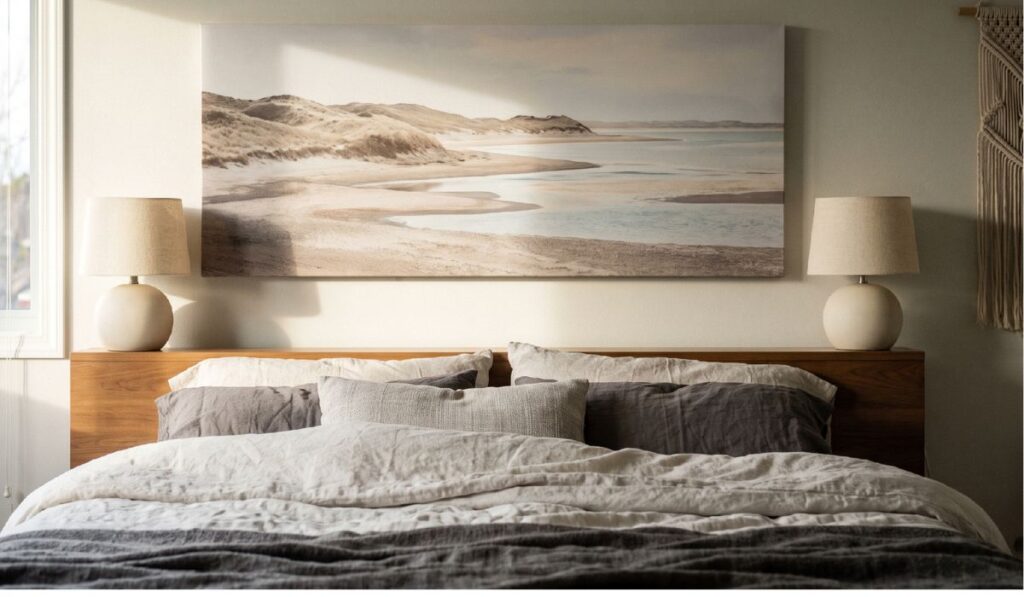
A horizontal format is built for exactly the kind of furniture most Aussie living rooms and bedrooms have: wide sofas, low consoles, queen and king bed frames. Because the piece stretches sideways rather than up, it visually widens whatever wall it hangs on, which makes even a narrow rental lounge room feel more generous. The general rule of thumb is to size the piece at roughly two-thirds the width of the furniture underneath it, and to hang it so the centre sits at eye level, which for most people works out to somewhere between 145 and 160 centimetres off the floor.
Picture a narrow rental living room with a modest three-seater pushed against the main wall. The usual move is to cluster three or four small square frames above it, but the gaps between them tend to make the wall feel busy and cramped rather than styled. Swap that cluster for one wide piece of horizontal landscape wall art instead, and the wall, and the room, instantly reads bigger. It’s a five-minute swap that does more than most furniture rearranging ever will.
Choosing the Right Landscape Scene for Your Space
The scene you choose matters almost as much as the format. Coastal horizons feel breezy and work well in bright, north-facing rooms. Golden-hour sunsets bring warmth into a space that leans cool or gets afternoon light. Forest silhouettes and misty mountain ranges suit darker, moodier rooms where you want a sense of depth rather than brightness.
Nature-inspired themes, think sunrise and sunset tones, green landscapes, botanical and coastal scenes, are among the strongest-performing wall art categories for 2025 and 2026, as more people chase calm, premium-feeling interiors rather than busy, pattern-heavy decor. That’s not a coincidence. A landscape scene gives a room a sense of place and quiet without shouting for attention, which is exactly what most people actually want when they walk in after a long day.
Before you commit, hold a paint swatch or a cushion cover up next to the print you’re considering. Undertones are sneaky. A sunset print that looks warm and golden on a screen can suddenly clash with a room that leans more pink or grey than you’d noticed. Five minutes of comparing colours against your actual walls saves you from a return.
Building a Gallery Wall Around a Horizontal Centrepiece
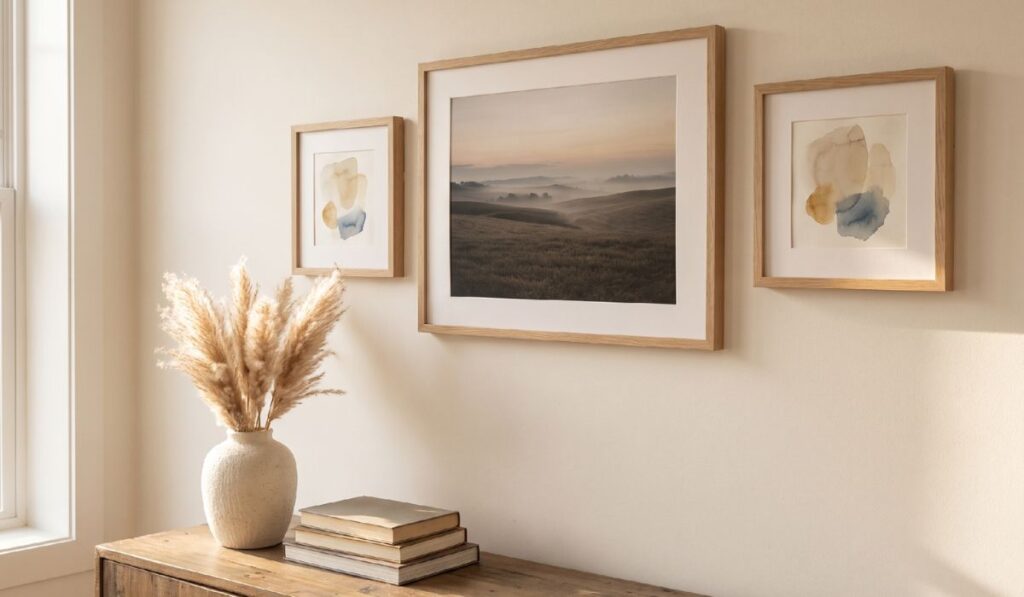
Gallery walls aren’t going anywhere in 2026, but the look is loosening up. Perfectly symmetrical grids are giving way to a more instinctive, “collected” arrangement, and diptych or triptych sets are showing consistently strong interest as an alternative to one single piece, according to the same Gelato trend report. The easiest way to build one of these without a spirit level and three afternoons of frustration is to start with one large horizontal landscape piece as your anchor, then build outward with two or three smaller square or portrait frames that pick up a colour or tone from the main print.
Keep the smaller frames loosely aligned rather than perfectly gridded. A slight offset here and there is what makes the arrangement feel collected over time rather than assembled in one trip to a shop. If you’re already layering in other decor elements, like a Scandinavian decorating touch, this is the wall to do it on. The organic, gathered look of a Scandi-style shelf or textile pairs naturally with a landscape-led gallery wall.
Sizing, Placement and Common Mistakes to Avoid
The three mistakes that come up again and again are hanging too high, undersizing the piece, and ignoring where people actually sit. Hang a print so its centre sits near a light switch height and it will feel like it’s floating above the furniture instead of relating to it. Choose something too small for the wall and no amount of clever framing will stop it looking lost. And if you hang art without walking into the room and checking the sightline from the main couch or the bed, you might end up with a piece that’s only visible from an angle nobody actually uses.
Lighting matters more than most people expect too. A print that looks rich and detailed in daylight can go flat and lifeless under a single overhead downlight at night. If natural light in the room is limited, a simple picture light mounted above the frame fixes this cheaply and makes the colours read properly after dark.
If you’re in the middle of a home addition project, it’s worth planning your wall art placement at the same time as the layout, not as an afterthought once the paint’s dry. Deciding where the main piece will hang before the framing goes up means you can plan power points for picture lighting and avoid an awkward window or door swing eating into your best wall.
Why Now Is a Good Time to Refresh Your Walls
Australia’s home renovation market is sitting above $48 billion, a 13% jump from 2024, and total home improvement spend is on track to cross $51 billion in 2026, per the 2026 Australian Renovation Market Report. Roughly one in three Australian households is doing some kind of renovation work right now. Against that backdrop, a well-chosen piece of wall art is the highest-impact, lowest-cost item you can tick off a refresh list. It doesn’t need a tradie, a permit, or a weekend of your life.
If you’re not sure where to start, browsing more home decor inspiration is a low-pressure way to figure out what style actually suits your space before you buy anything. Save a few images, hold them up against your wall, and let the decision take a week rather than an afternoon of panic-buying at a homewares store.
The Wall That Changes the Room
A single, well-placed horizontal landscape piece can reset the visual balance of an entire room faster and cheaper than almost any renovation project on your list. It doesn’t fix a dated kitchen or a cramped bathroom, and it won’t add square metres to a house that needs them. But for the wall behind your sofa, above your bed, or in the entryway everyone walks past on the way in, it earns its keep in a single afternoon.
Start with one wall. Pick the scene that matches how the room actually feels, not just how it looks in a catalogue photo, and hang it where you’ll see it every day. That’s the whole trick.

