
I was pruning the garden on a Saturday morning — one of those jobs that starts as five minutes and becomes an hour — and I ended up with a pile of branches I didn’t quite want to throw away.
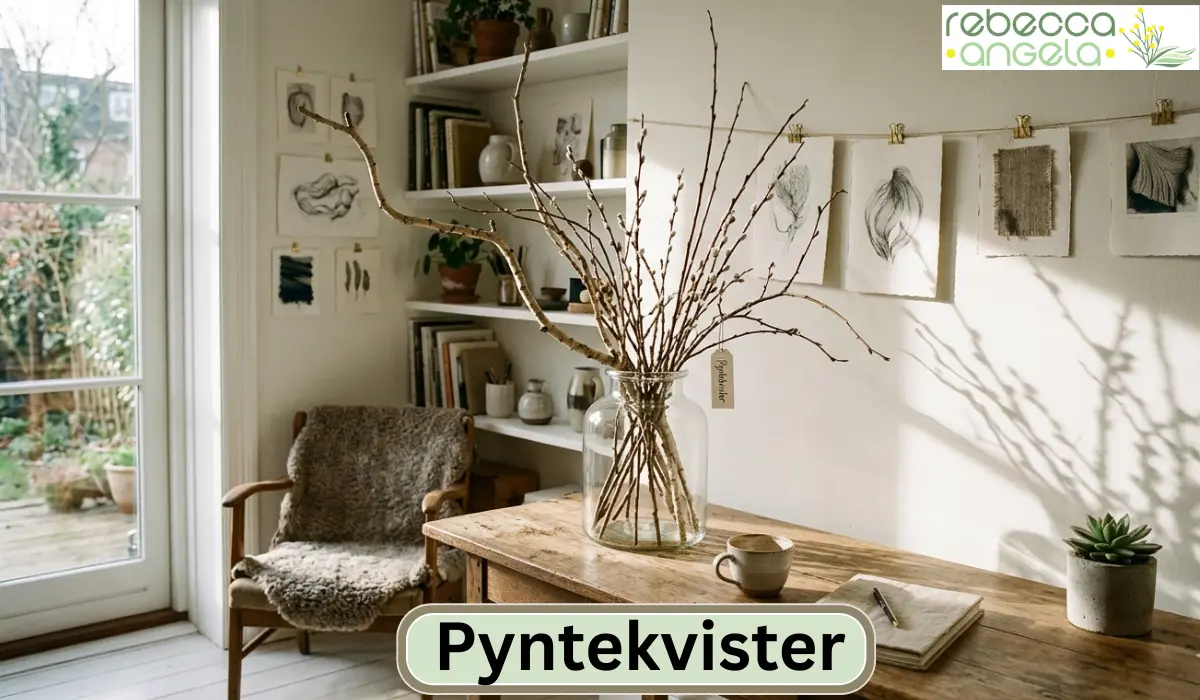
The shapes were interesting. A few birch-like curves. Some fine, branching ends that caught the light in a particular way. I brought them inside, put them in a tall glass vase near the window, and stepped back.
The room looked better. Not dramatically, not in a way anyone else would necessarily notice. But something about the corner shifted. It felt like it was breathing.
I found out later there is a Scandinavian word for exactly this.
What Pyntekvister Means
The word is Norwegian and Danish in origin. “Pynte” means to decorate. “Kvister” means twigs or branches. Together — Pyntekvister means decorative branches. Ornamental twigs deliberately brought indoors and arranged as part of the home.
It sounds simple because it is. A branch. A vase. A corner that needed something. But the idea behind it carries more than the literal description suggests.
In Scandinavian homes the practice goes back generations — bare twigs painted white for winter, branches hung with small ornaments for Easter, spring cuttings placed in water to coax early blossoms indoors. It was never purely decorative. It was a way of tracking the seasons inside the house. Of keeping a physical connection to what was happening outside when the weather made going out there less appealing.
Why it Works in a Room
There is a quality that a branch brings to an interior that almost nothing else does.
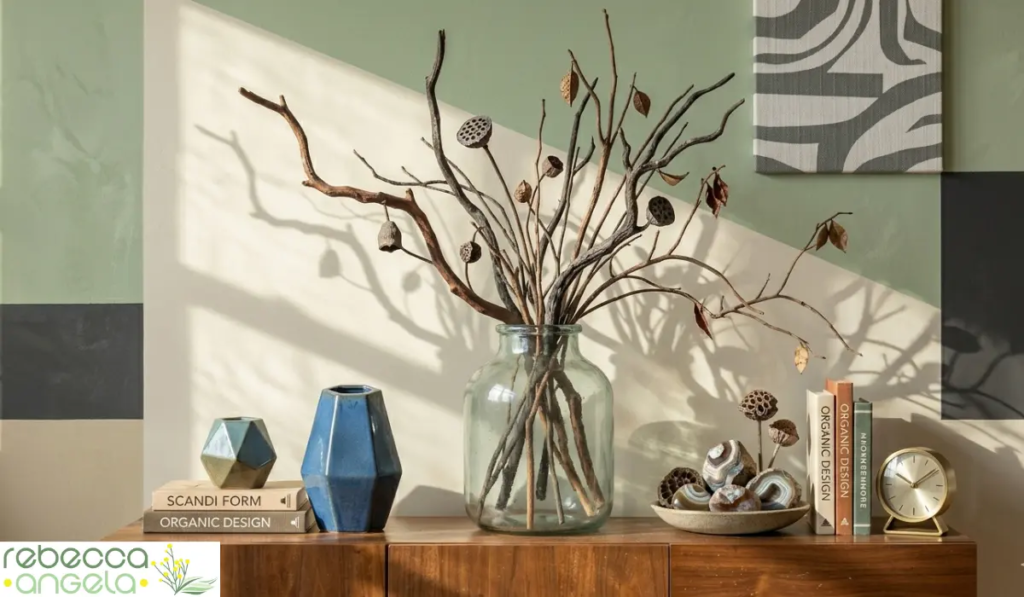
It adds height without weight. It introduces an organic line into a space full of straight edges and right angles. It changes as the light changes — the shadows a bare twig casts at midday are completely different from what they do at four in the afternoon. And unlike flowers it does not make demands. It does not wilt by Thursday. It simply stays, doing its quiet thing.
The Scandinavian design tradition has always understood something about empty space — that it is not a problem to solve but a quality to maintain. Pyntekvister work within that logic. A single branch in the right spot creates presence without density. The eye follows the line of it naturally. The room feels considered without being cluttered.
For those of us who spend a lot of time in a home studio or creative workspace, this matters more than it might sound. The environment you work in shapes how you think and make. A corner that has been attended to — even with something as simple as a few branches in a vase — signals that the space is cared for. That signal has a real effect on the work that happens there.
The Making Side of Pyntekvister
What I find most interesting about pyntekvister is that it sits right at the edge of decorating and making. Bringing branches inside is the starting point, not the whole story.
Painting them is the most obvious step — a coat of white or chalk grey transforms a foraged twig into something that looks completely intentional. Gold or copper paint does something entirely different, warmer and more celebratory. You can go as minimal or as considered as you like. I have painted branches before as part of exploring different ways to make marks on surfaces, and there is something genuinely satisfying about the way paint sits on the irregular texture of bark — it never looks the same twice.
Beyond paint, branches become structural. Hung horizontally from the ceiling with thread, they work as a display rail — a place to hang drawings, dried flowers, fabric swatches, small artworks. Leaned against a wall at an angle they fill a corner without blocking light. Placed in a wide low vessel with stones to hold them upright they become a table arrangement that can be re-dressed with the seasons — small ornaments for winter, dried flowers for spring, foraged seedheads for autumn.
The creativity in pyntekvister is not in the branch itself. It is in the looking, the choosing, and then the decision about what to do with what you have found.
Which Branches to Use
Different branches do different things visually.
Birch is the classic choice — fine white bark, delicate structure, an airy quality that works particularly well in small spaces or against a plain wall. Willow curves naturally and brings a sense of movement. Hazel has that twisted, characterful look that suits a more rustic or studio-style interior. Cherry and apple cut in late winter will sometimes bloom indoors if kept in water — one of the more magical things a branch can do.
For a more architectural effect, thicker branches with strong forking shapes work better than fine twigs. For something light and airy, the opposite. The shape matters more than the species. Look at the line of it. Does it do something interesting? Then it is worth taking home.
Getting Started
You do not need to buy anything.
Walk outside. Look at what is already there — fallen branches after wind, pruning offcuts from a hedge, twigs collected on a path. What has a shape that interests you? What catches the light in a particular way?
Clean them gently, let them dry, and then find a vessel that suits the scale of what you have. A tall ceramic jug. A wide glass vase with stones for weight. An old bottle. The container is part of the composition.
Then put them somewhere and live with them for a day before deciding they need anything else. Often they don’t.
The Bigger Thought
Pyntekvister appeals to me because it is creativity at its most accessible. No specialist materials, no particular skill required, no expense. Just attention — to what is outside, to what your space needs, to what you might do with a shape that caught your eye on a walk.
That kind of low-barrier, high-reward making is worth taking seriously. Some of the best creative work starts not with a plan but with picking something up because it seems interesting, bringing it inside, and seeing what it wants to become.
A branch is as good a starting point as any.
Have you tried pyntekvister at home, or do you already bring branches inside without having a name for it? I would love to hear what you do with them — drop a comment below.