

Soft bristles controlled motion and fluid reach must work together for a comfortable jet toothbrush
RANVOO presents a low angle micro sweep as part of its gum comfort strategy.
LONDON A gentle toothbrush cannot be defined by soft bristles alone because comfort depends on the combined behavior of the head, motor, pressure, fluid pathway and user technique.
The common mistake of pressing harder
When teeth do not feel clean, many people respond by adding pressure. That instinct can make brushing less comfortable and can deform the bristle field, reducing controlled contact. A more capable brush should improve coverage through engineering rather than depending on force from the user.
Jet toothbrushes create an opportunity to redistribute the work. Bristles can handle accessible surfaces with moderate contact, while air driven microbubbles or a liquid jet support spaces that direct contact cannot fully reach. The second mechanism should reduce the temptation to chase every area through aggressive scrubbing.
Comfort begins at the bristle tip
Diameter, stiffness, end rounding and tuft arrangement shape the first sensation at the tooth and gumline. RANVOO describes the AirJet X5 head with 0.01 millimeter soft bristles and a high end rounding rate. It also uses soft material around parts of the head to reduce hard contact.
These specifications matter only as part of the complete head. A very soft filament can still feel ineffective if the user compensates with pressure, while an oversized head can be difficult to position near posterior teeth. Comfort requires a shape that lets the user maintain light, predictable contact.
Motion should remain controlled under load
Frequency alone does not describe how a brush moves. Amplitude, sweep angle, motor control and the way motion changes against a tooth all affect the experience. AirJet uses mode specific combinations rather than one operating point. Dyson describes CameraJet with variable sonic oscillation designed to prevent the bristles from stalling under load.
Pressure feedback can help, but it should arrive early and clearly. The user should not need to interpret a detailed screen while brushing. A haptic alert, visible indicator or automatic adjustment can protect technique at the moment excessive force occurs.
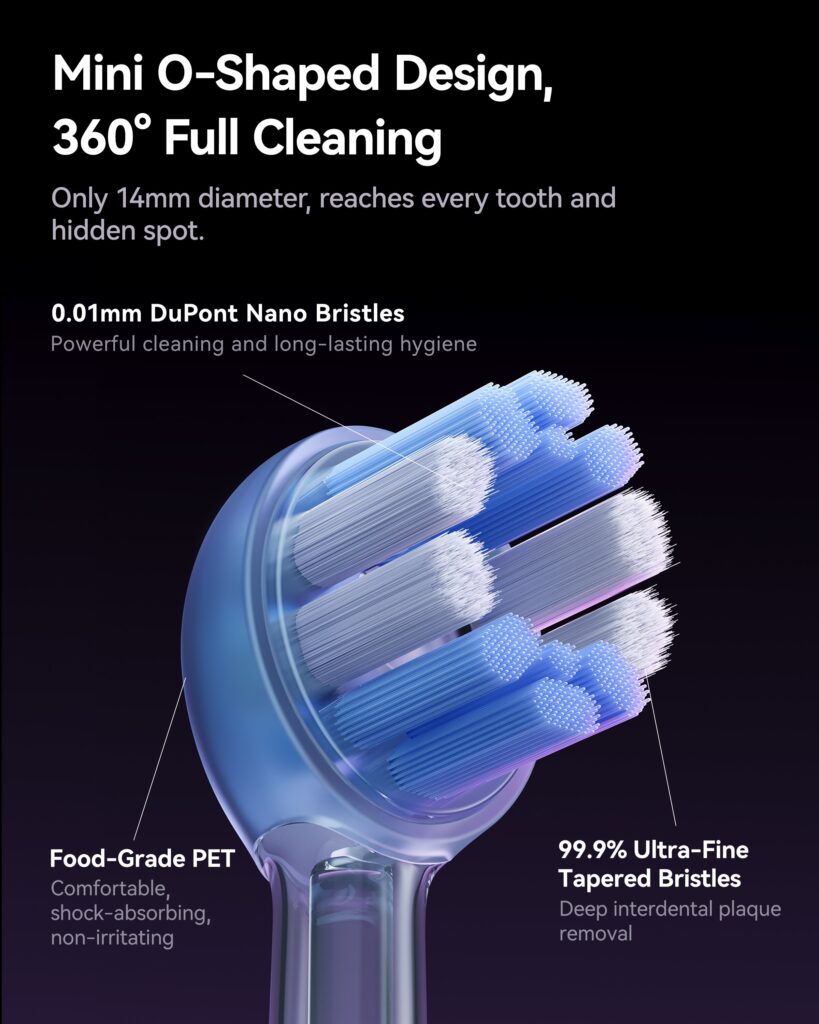
Head size bristle profile and surrounding soft material influence how the brush feels at the gumline.
Fluid can add reach without adding hard contact
AirJet’s microbubble stream is intended to move around contours and narrow spaces while the soft bristles remain on the broader surfaces. CameraJet directs a conical mouthrinse burst into a gap identified by its camera. In both designs, the fluid pathway expands the cleaning zone without requiring a bristle to be forced into every space.
Gentle does not mean weak. It means that energy is delivered in a controlled form to the intended area. A jet that is too forceful or poorly aimed can feel unpleasant, while a stream that disperses too early may add little. Outlet geometry and mode calibration therefore belong in any serious discussion of gum comfort.
Routine design affects the gums too
A comfortable device cannot overcome inconsistent habits. Rushing leaves areas uncovered, while repeatedly returning to the same visible surfaces can add unnecessary contact. Timers, zone prompts and coverage guidance can encourage a more even routine, provided that the feedback stays simple.
Users with bleeding gums, recession, sensitivity, braces or ongoing dental treatment should follow professional advice. A hybrid brush may make daily care easier, but it cannot diagnose the reason for discomfort or replace individualized recommendations.
Maintenance protects comfort and performance
Residue around a nozzle, chamber or bristle base can change how the head feels and how fluid exits. Rinsing and air drying are therefore part of the comfort system. A replaceable head should remain easy to obtain, and cleaning instructions should explain the wet pathway rather than focusing only on the outside of the handle.
The best gentle mode is one that remains stable throughout ownership. Soft materials, pump output and motor control should not become excuses for complicated care. A new era toothbrush should make the comfortable choice the easiest choice each morning and evening.
A better definition of power
The industry’s traditional shorthand equates power with speed. Jet systems suggest a better definition. Power is the ability to place suitable cleaning action where it is needed while preserving comfort and control. Sometimes that comes from bristle motion, and sometimes it comes from moving fluid around the bristle footprint.
AirJet and CameraJet approach the problem differently, but both show why comfort must be engineered across the whole system. A soft brush is a material choice. A gentle cleaning experience is the result of materials, motion, fluid and behavior working together.

