
Most people who spend long hours at a screen have noticed the feeling by early evening. Eyes that feel heavier than they should. A low-grade headache that was not there in the morning. A brain that is oddly alert at eleven at night despite genuine tiredness. These things get attributed to stress or too much caffeine or not enough sleep, and sometimes that is correct. But often the screen is doing more than anyone accounts for.
Blue light blocker glasses exist to address that problem — or rather, two distinct versions of it. Understanding the difference between those two versions is the part most guides skip over, and it is the part that actually matters when you are deciding whether to buy a pair and which kind to get.
What Is Blue Light and Where Does It Come From?
Blue light refers to a high-energy visible light wavelength in the 380 to 500 nanometre range, sitting just above UV light in the visible spectrum. It reaches your eyes every day from multiple sources, some natural and some not.
Natural blue light comes from the sun. Daylight contains the full visible spectrum including blue light, which is part of why time outdoors makes you feel alert and awake. Your circadian rhythm — the body’s internal sleep-wake cycle — is partly regulated by exposure to natural blue light during the day. That part is not the problem.
The problem is artificial blue light, which comes from computer screens, smartphones, tablets, LED televisions, and the LED and fluorescent lighting inside most modern homes and offices. The issue is not the wavelength itself but the timing and intensity. Prolonged artificial blue light exposure when your body expects light levels to be dropping interferes with melatonin production and signals the brain to stay alert rather than prepare for sleep. During the day it creates a different but related problem, which is digital eye strain from sustained focus on close-range screens emitting high-energy light.
What Blue Light Blocker Glasses Actually Do
Blue light blocker glasses use lens technology to selectively filter wavelengths in the blue and green light range. Depending on the lens tint and filter level they reduce or block a percentage of blue light before it reaches the eye.
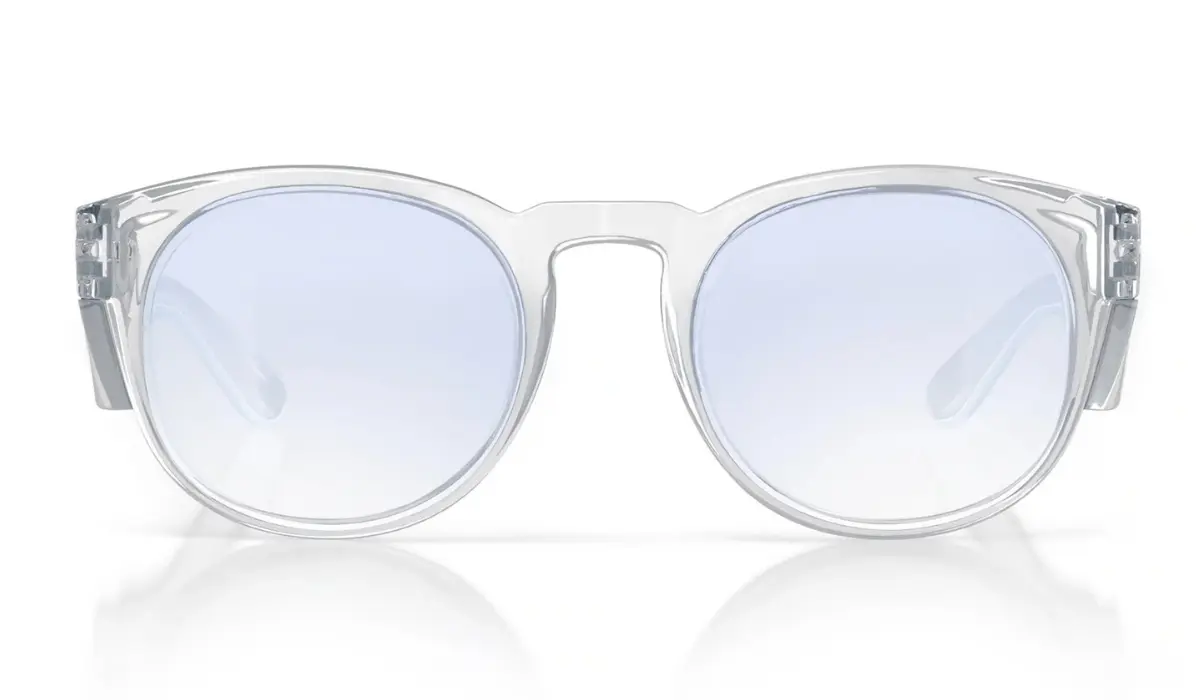
Clear or lightly tinted lenses are designed for daytime use. They reduce the intensity of blue light from screens enough to address digital eye strain without meaningfully affecting colour perception. You can wear them all day at a desk, on a laptop, or watching television, and the visual experience remains largely normal.
Amber and yellow tinted lenses are a different tool for a different purpose. They filter a significantly higher percentage of blue and green light and are designed for evening use in the hours before bed. Studies suggest that wearing blue-blocking glasses for two to three hours before sleep can improve sleep quality by reducing the brain’s alertness response to artificial light and supporting the natural rise in melatonin.
Daytime vs Evening Use
This is where most conversations about blue light glasses conflate two separate problems and produce advice that does not quite fit either one.
| Use Case | Problem Being Solved | Lens Type | Key Benefit |
|---|---|---|---|
| Daytime screen work | Digital eye strain, headaches, tired eyes | Clear or light tint | Reduces discomfort without affecting colour perception |
| Evening screen use | Disrupted sleep, delayed melatonin production | Amber or yellow tint | Helps the body prepare for rest |
| Binge watching at night | Prolonged screen exposure before bed | Amber lenses | Allows enjoyment without fully disrupting sleep signals |
| All-day use | Both strain and sleep disruption | Daytime pair plus evening pair | Addresses each problem properly |
If you are only buying one pair, the most useful starting point is deciding which problem you are actually trying to solve. Daytime eye strain and evening sleep disruption both matter but they call for different lenses. If both are genuinely relevant, two pairs used at the right times address each issue properly rather than one pair doing a partial job on both.
What Makes SafeStyle Different
SafeStyle is one of Australia’s most established optical retailers, with decades of experience producing prescription and non-prescription eyewear to Australian standards. Their blue-light-blocking range is designed specifically for the Australian context, where long screen hours, bright indoor LED environments, and high-intensity summer daylight all contribute to significant blue and green light exposure year-round.
A few things set them apart from the generic options that flood online marketplaces.
Prescription and non-prescription in the same range. Most blue light glasses sold online are non-prescription only. SafeStyle offers blue light lenses in prescription form, meaning people who need vision correction do not have to choose between corrected vision and blue light filtering. One pair handles both.
Lens quality from an accredited optical provider. SafeStyle lenses are produced to optical standards rather than sourced as generic imports. The blue light filtering is built into the lens rather than applied as a surface coating that can scratch or wear off over time.
A frame range that actually gets worn. Blue-light glasses that sit in a drawer do not help anyone. SafeStyle’s range covers enough contemporary and classic styles that finding a pair that fits your look and your daily routine is a genuine possibility rather than a compromise.
In-store optometrist support. For anyone who wants personalised advice on lens type, tint, or prescription integration, SafeStyle’s in-store optometrists can assess your specific needs in a way that an online-only retailer simply cannot.
The Questions That Come Up Most
Do they actually work?
For digital eye strain the evidence is reasonably consistent — blue-light-filtering glasses reduce discomfort and headaches associated with prolonged screen use. For sleep the evidence is also supportive, particularly for amber lenses worn in the two to three hours before bed. The effect is more pronounced with amber lenses than with clear ones because the filter level is higher. Whether they work well enough to justify the purchase depends partly on how much time you spend in front of screens and how much the symptoms described here match your daily experience.
Can you wear them all day?
Clear blue-light-filtering lenses are designed for all-day wear and do not meaningfully affect colour accuracy or visual clarity during daylight hours. Amber lenses are better kept for evening use — their stronger tint can affect colour perception in full daylight in ways that become noticeable and distracting.
Are they the same as sunglasses?
No. Sunglasses block broad-spectrum UV light and reduce overall brightness. Blue-light-blocking glasses filter specific visible wavelengths without blocking overall light transmission. They are for indoor use and offer no meaningful sun protection.
Can children wear them?
Yes. Children using tablets and laptops for school are exposed to the same blue light as adults and the same eye strain risks apply. Non-prescription blue-light-filtering glasses are suitable for children and worth considering for anyone doing sustained screen-based schoolwork.
Do you need a prescription to buy SafeStyle blue light glasses?
No. The range includes both non-prescription and prescription options. If you already need vision correction a prescription blue light lens means one pair serves both purposes without needing to manage two separate pairs throughout the day.