
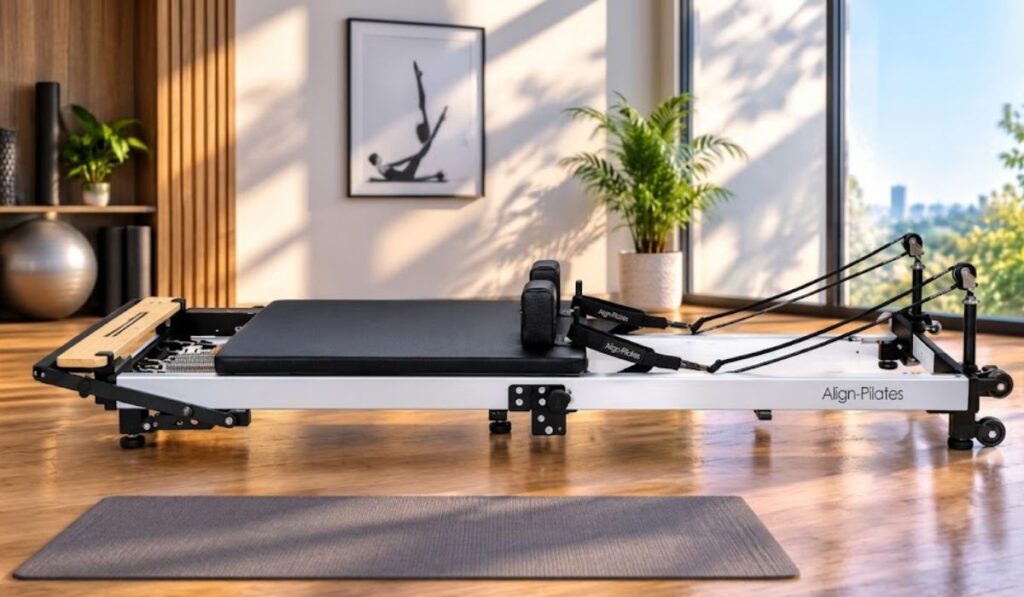

It usually starts with a bit of floor. The gap between the couch and the wall, the far end of the spare room, a corner of the garage where the car doesn’t quite reach. Nobody plans a Pilates studio so much as they notice they have room for one and finally stop saying “next week.”
If you’re just beginning, the equipment is the part that takes some thinking, mostly because there’s a lot of it out there and you don’t need most of it yet. The space matters as much as the gear, and so does choosing pieces that are well made and easy to live with.
The Importance of the Align Reformer in Pilates Practice
The align reformer is the piece that does the heavy lifting. It lets you work through a wide range of exercises for different muscle groups while keeping your posture and alignment honest, and the resistance is built into the movement, which is exactly what a beginner needs while the technique is still settling in.
A folding model is worth a closer look. In a real home, storage decides everything. A reformer that tucks away when you’re done is one you’ll actually keep using, whereas one that takes over half a room tends to end up with a laundry pile on it by week three.
Essential Fitness Accessories for a Home Pilates Studio
Once the reformer is sorted, a few smaller items round out a practice nicely:
- Pilates ring: adds gentle resistance and helps you find control through the arms, legs and core.
- Resistance bands: cheap, portable, and handy for making an exercise easier or harder.
- Foam roller: brilliant for loosening up afterwards when everything feels tight.
- Mat: protects the floor, and takes the sting out of anything done lying down.
You don’t need the fanciest version of any of these. You do want them well made, though. A band that frays or a ring that loses its shape is more annoying than it’s worth.
Setting Up the Space for a Home Pilates Studio
The room doesn’t have to be big. It just has to be clear. You want enough space to use the reformer properly and step around it without catching a shin on the coffee table.
A bit of fresh air and natural light goes a long way in making a space feel good to move in. Flooring matters as well. Something with a little give is kinder on your joints, and a mat underneath looks after the floor and the equipment at the same time. And keep it tidy, if you can. It’s surprisingly easy to talk yourself out of a session when you first have to clear a pile of clothes off the floor.
Benefits of Practising Pilates at Home
Home practice has a lot going for it. No commute, no rushing to make a 6am class, no feeling like everyone else already knows what they’re doing. You go at your own speed, and you show up when it suits you.
Having the equipment close also makes it easier to vary your sessions, which helps build balanced muscles, core strength and better posture. A dedicated space tends to encourage consistency, and consistency is what actually delivers results over time.
Additional Considerations for Beginners
Pilates is a precise practice, so it pays to learn the fundamentals early: controlled breathing, proper alignment, slow and deliberate movement. A few sessions with a qualified instructor, in person or online, can save you a lot of guesswork and stop bad habits from setting in before you notice them.
Looking after the equipment belongs in the routine too. A quick wipe-down, a glance over the springs and straps, keeping the smaller pieces clean. It’s a couple of minutes, and it keeps everything safe and working for longer.
Cost Factors and Budgeting for Equipment
A home studio is an upfront spend, and the range is wide depending on brand and build quality. The cheapest option can be tempting, but a solid frame and thoughtful design tend to pay you back. A better reformer costs more on day one, and generally feels steadier and lasts longer.
Budget for the accessories too, and leave a little room for maintenance and the odd upgrade down the track. Working that out early keeps the whole thing sustainable, instead of a burst of enthusiasm followed by a surprising bill.
Where to Purchase Quality Pilates Equipment
It’s worth comparing a few suppliers before you commit. Specialist Pilates suppliers, Exagym Pilates among them, tend to stock reformers and accessories side by side, which makes it easier to ask questions and see how the pieces fit together. General sports retailers can work for the smaller items, but a reformer is a bigger purchase and deserves a closer look.
Whoever you buy from, check the warranty, ask about spare parts, and find out what happens if a strap or spring needs replacing. Those details matter more a year in than they do on the day it arrives.
Making It a Habit
The equipment gets you started, but the routine is what keeps you going. A short session a few times a week, in a space that’s ready and easy to set up, will do more for you than an ambitious plan you abandon after a fortnight.
Start small, keep the space clear, and let the practice grow from there. A quiet corner and a bit of consistency is really all a home studio needs.


