
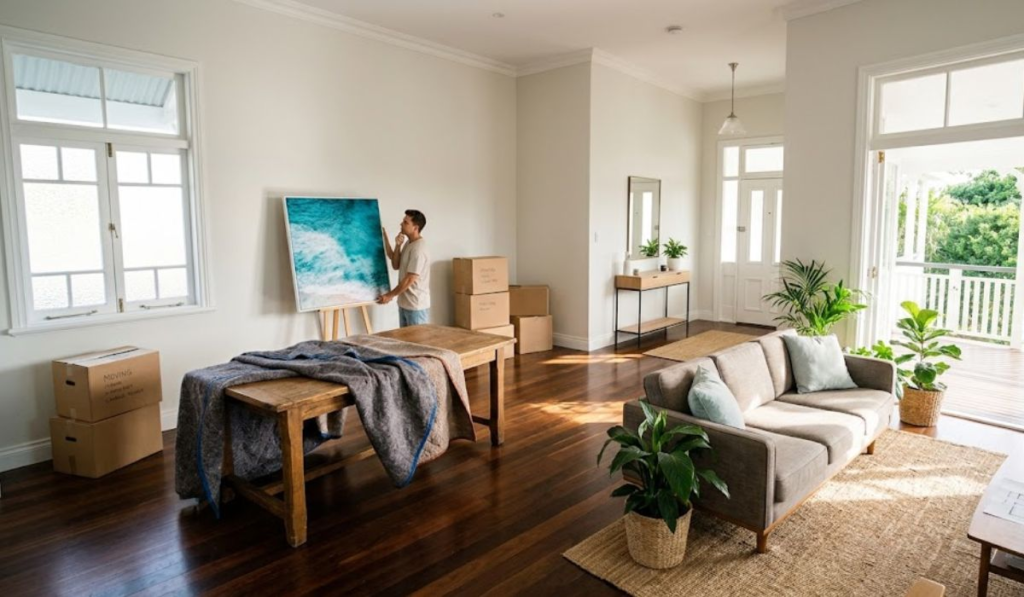

A new home often begins with an empty room.
Before the furniture arrives, before the artwork goes on the walls, before the boxes start appearing everywhere, there’s a brief moment when the property feels completely open to possibility. It doesn’t last long. It’s worth paying attention to while it does.
Moving house doesn’t have to mean recreating the previous home room by room. A new property can be a chance to reconsider furniture, colour, storage, and the way the space actually supports everyday life. Moving, in other words, can become a design reset, if you let it.
Start With the Character of the Property
Every home has its own personality. It might be contemporary, coastal, traditional, minimalist, industrial, Queenslander-inspired, or something a bit more eclectic that doesn’t fit neatly into any of those.
Rather than forcing existing furniture into the new property regardless of fit, it’s worth thinking about how those pieces actually interact with the architecture around them. A large timber table might feel perfect in a character home but heavy and out of place in a minimalist apartment. A bright piece of artwork can become the focal point in a neutral room, where in a busier one it would just get lost. A large rug might be exactly what visually ties an open-plan living area together.
The home should shape the arrangement. Not the other way around.
Don’t Automatically Move Everything
One of the genuine advantages of moving is that it forces you to actually look at everything you own, properly, all at once. For every major piece, it’s worth asking: would I buy this again today?
If the answer is no, it’s worth considering whether it actually belongs in the new home. That doesn’t mean clearing out everything that isn’t currently fashionable. Sentimental objects often carry more real value than anything trend-driven ever will. The question isn’t whether something is stylish. It’s whether it contributes to the home you’re actually trying to build.
Furniture Should Support How You Live
A beautiful room isn’t necessarily a functional one. It’s worth thinking through how a space will actually get used before deciding how it should look.
If entertaining is a regular part of life, the living and dining areas should encourage conversation rather than just look good in a photo. If working from home is part of the routine, the workspace needs to be genuinely practical, not just aesthetically pleasing. If weekends tend to happen outdoors, the connection between indoor and outdoor areas probably matters more than people initially assume.
Design isn’t really about how a room photographs. It’s about how it feels to actually live in.
Create a Furniture Plan Before Moving Day
Before the truck even arrives, it helps to think through roughly where the largest pieces are going to go. A basic floor plan can settle the approximate positions of sofas, beds, dining tables, wardrobes, desks, cabinets, and outdoor furniture well ahead of time.
This matters more than it might seem, especially when several people are helping out on the day. Instead of making every placement decision while carrying a heavy sofa through a doorway, with everyone shouting slightly different opinions, there’s already a plan to follow.
Protect the Pieces With Meaning
Furniture isn’t always valuable because of its price tag. Sometimes the most important piece in a home is the old dining table that’s been in the family for decades, or a cabinet inherited from a grandparent, or an artwork picked up on a trip that meant something.
These pieces deserve real attention during a move. Protective blankets, proper wrapping, and careful handling all help reduce the risk of scratches and impact damage along the way. If something is particularly fragile or holds real sentimental weight, it’s worth flagging with the moving team well before the day itself, not as an afterthought once the truck is already loaded.
Use the Move to Create Breathing Room
A room doesn’t have to be full to feel finished. Leaving some empty space can actually make the furniture and artwork that matters stand out more, not less.
When moving into a new property, it’s worth resisting the urge to immediately fill every empty corner with something. Living with the space first tends to pay off. Notice where the sunlight actually enters through the day, where people naturally end up sitting, how the rooms connect to each other, where storage seems to be lacking, which areas feel a bit empty, and which ones feel crowded before anything’s even been added.
Then make decisions, once there’s something real to base them on.
Think About Lighting
Furniture can look completely different depending on the light it’s sitting in. A room full of warm afternoon sunlight has a different atmosphere entirely from that same room lit artificially at night.
Before committing to artwork placement or any major decorative decisions, it’s worth spending a bit of time simply observing a room across the day. That can shape decisions around artwork placement, mirrors, curtains, rugs, furniture orientation, and decorative objects generally. Sometimes the best design decision is really just letting the architecture do more of the work itself.
Don’t Forget the Entrance
The entrance sets the first impression of a home before anyone’s even properly inside it. It doesn’t need to be elaborate to do that job well. A simple combination of artwork, a mirror, a console table, a plant, and the right lighting can create a genuinely welcoming transition between outside and in.
The most important thing, though, is keeping it functional. A beautiful hallway isn’t much use if everyone has to awkwardly navigate around furniture just to get through it on their way somewhere else.
Moving Can Change Your Lifestyle
Maybe the previous home was never really suited to entertaining. Maybe the new property has a proper kitchen and an open-plan living area that actually works. Maybe there’s a spare room now that could become a studio, or a bigger balcony or backyard that encourages more time spent outside than before.
The move gives you a real opening to ask: what do I actually want my home to help me do? That question tends to be a lot more useful, long term, than asking what’s currently trending.
When Furniture Is the Difficult Part of the Move
Large furniture is often one of the hardest parts of relocating. Sofas, wardrobes, dining tables, and cabinets can be heavy, awkward, and genuinely difficult to get through narrow doorways and tight stairwells without damage.
For homeowners planning a substantial relocation, using moving services on the Gold Coast can take a lot of the physical burden off entirely, leaving more time and energy to actually focus on setting up the new home properly rather than just surviving the move itself.
Common Questions
Should I buy new furniture when I move? Not necessarily. Start with what’s already owned and see how it works in the new property first. Existing pieces often work better than expected once they’re in a different space with different light.
Should I declutter before moving? Yes. Moving tends to be one of the best times to properly assess what’s actually owned and let go of anything broken, unused, or simply no longer suitable for the life being lived now.
How do I decide where furniture should go? Room proportions, circulation, natural light, focal points, and how the room will genuinely be used all factor in. There’s rarely one correct answer, but those five things narrow it down quickly.
Should I decorate immediately after moving? There’s no need to rush it. Living in the property for a while first tends to reveal how the space naturally gets used and what it actually needs, which is hard to guess in advance.
How can I protect valuable furniture during a move? Identify the important pieces before moving day and talk through their handling requirements ahead of time. The right protective materials and careful loading go a long way toward reducing damage.
A New Home Doesn’t Need to Look Like the Old One
The best thing about moving might not be the new address at all. It might be the chance to genuinely rethink how you live.
Take the furniture that actually matters. Let go of what doesn’t. Give the architecture room to speak for itself. And build a home that reflects not just where you live, but how you actually want to live in it.

