
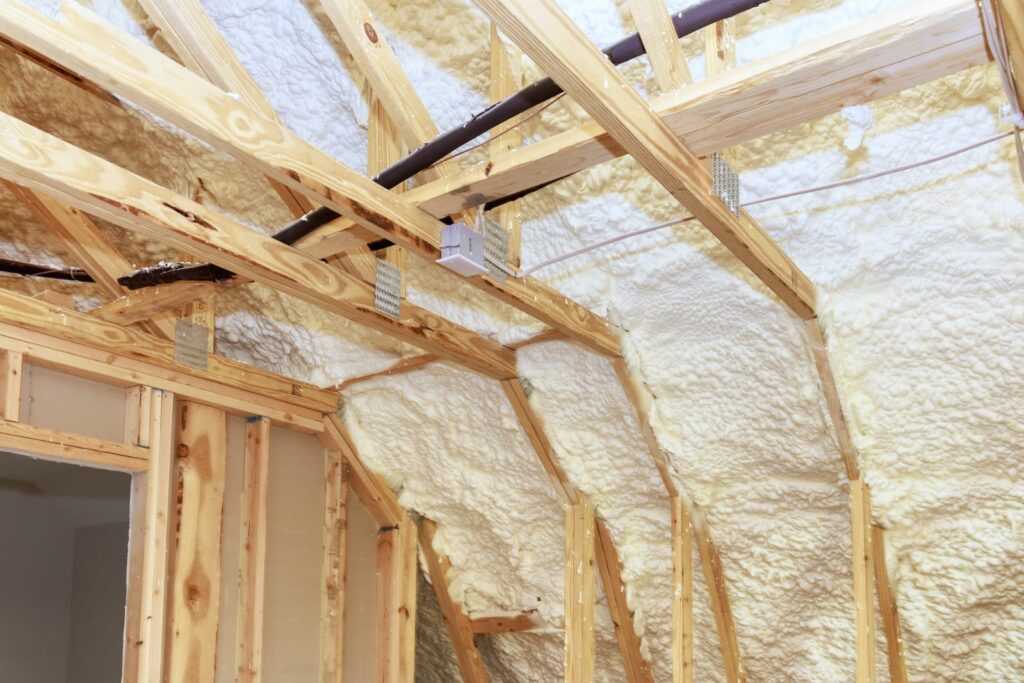

Winter has a way of asking questions nobody budgeted for. Stand in the hallway in a jumper, look up at the ceiling, and you start wondering whether anyone actually insulated this place properly, or just ticked a box during the build. Insulation is one of the cheaper fixes available for that feeling. The hard part is knowing how much actually counts as enough. Too little and you barely notice the difference. Too much in the wrong spot, and the money was never going to come back to you.
One number settles most of this. It’s called R-value, and it tells you how well insulation actually performs. Here’s what that figure means, and roughly how to work out how much insulation batts a given home needs.
What R-Value Actually Means
Heat moves. Insulation’s job is to slow that movement down, and R-value is simply how that resistance gets measured. Higher number, slower transfer, steadier house.
That’s really the whole concept. It’s the figure used to compare products on the shelf, and it’s worth specifying directly rather than grabbing whatever batt looks thickest and hoping for the best.
Why It Actually Matters
A house with the right R-value doesn’t fight its own climate as hard. Heat stays out in summer, stays in through winter, and the heating or cooling system gets a break it wouldn’t otherwise have.
Over months, that adds up. A more comfortable home. A smaller bill. Getting the R-value right is really the entire point, which is why it’s worth a proper look rather than a glance.
The Right Amount Comes Down to Climate
Where a house sits changes everything here. What counts as the right R-value a few hundred kilometres north can look completely different further south.
Colder or more extreme climates tend to need a higher number just to keep pace with what they’re up against. Milder regions can often get away with less. Match the figure to the actual climate, not to whatever sounds impressive on a product label.
Different Parts of the House Ask for Different Things
Not every surface needs the same treatment. Ceilings usually come first. A huge share of a home’s heat escapes through the roof, so that’s where a higher R-value tends to earn its keep.
Walls and underfloor spaces matter too, just less urgently, and the right figure there shifts with the climate and the specific area. One blanket number across the whole house rarely makes sense. Treating each part on its own terms does.
What Under-Insulating Actually Costs
Go too low, and comfort quietly leaks out along with the heat. Under-insulated spots let more through than they should, which shows up as a house that’s harder to keep comfortable and a bill that creeps upward.
It’s a false economy, really. Skimping on R-value where it matters most doesn’t save money so much as defer the cost somewhere less obvious. Getting it right from the start avoids that entirely.
Choosing the Right Type, Not Just the Right Number
R-value tells you how well something insulates. It doesn’t tell you whether it’s the right material for the job.
Different products reach their performance differently, and what suits a ceiling rarely suits a wall or an underfloor space in quite the same way. Some materials bring extras too, better acoustic dampening, stronger fire resistance, alongside the thermal rating. Worth weighing both the number and the material before deciding.
Installation Matters Just as Much as the Number
Even a perfect R-value means nothing if the fit is sloppy. Gaps, compressed batts, a corner left thin around a beam, all of it chips away at the performance that was paid for on paper.
For the awkward spots, or simply for peace of mind, professional installation is worth considering. A well-fitted batt at the right R-value is what actually delivers the comfortable, efficient home the number was promising in the first place.
Getting It Right
Two things decide this, really. A higher R-value means better performance, and the right level depends on the climate and the part of the house in question. Get those two right, and the comfort and the savings tend to follow on their own, without much more thought required after that.

