
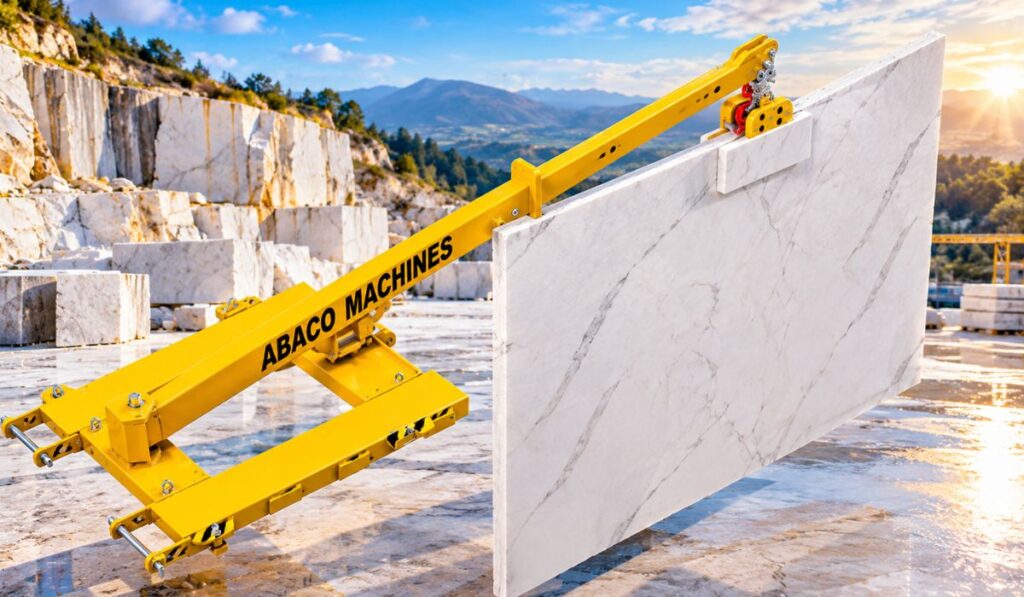

Anyone who has watched a large slab of stone get moved around a workshop knows the feeling. Everyone goes quiet, someone calls out “slowly”, and nobody wants to be the person standing in the wrong spot. A slab can be heavy, awkward and surprisingly easy to chip, and a bad lift costs more than a bruised ego.
That’s why moving natural and engineered stone takes planning, suitable equipment and a good eye on safety. In fabrication workshops, warehouses and building sites, getting slabs from A to B efficiently matters for productivity, but it matters just as much for cutting down on manual handling and unsuitable lifting methods.
Forklifts do plenty of the heavy shifting, though standard forks aren’t always the right arrangement for a slab. Using forklift jib attachments for stone handling can add lifting options when they’re paired with compatible equipment and the right lifting accessories. I’d start by understanding how they work, where their limits are and what safety checks come with them, then decide whether they suit your process.
A Jib Gives You More Lifting Flexibility
A jib extends the lifting point beyond the forklift’s normal fork position. Depending on the design, suitable lifting accessories can then be connected to handle suspended loads. In a stone workshop, that can help with materials that need a different approach from the palletised goods a forklift usually carries.
Slabs often have dimensions and handling needs that make fork-only moves difficult. A compatible jib may let operators use approved lifting clamps or other suitable accessories to position material during specific tasks. The catch is that it has to be right for the forklift, the load and the job. Operators still need to follow the equipment instructions and the workplace’s safety procedures every time.
Better Positioning Means More Controlled Movement
Even light contact with a rack, a wall or another machine can damage an edge or a finished surface, so accurate positioning matters. Slabs regularly move between storage racks, cutting equipment and handling areas. Being able to lift and place a load with suitable attachments can give operators more control, as long as the gear is correctly selected and operated.
Different models offer different reach or lifting positions. That’s useful, but it comes with a trade-off. Extending a load away from the forklift changes the forces on the machine. Operators need to know the attachment’s rated capacity at the lifting position they intend to use, and the forklift’s approved capacity with the attachment fitted. Extra reach is never permission to lift past the specified limits.
Cutting Back on Manual Handling
Shifting big slabs by hand exposes people to real hazards. The material is heavy, hard to grip and often awkwardly shaped, so injuries, uncontrolled movement and damaged stone are all genuine risks. Properly selected mechanical lifting equipment can reduce how often workers have to physically support or move heavy loads.
A jib can be one part of a mechanical lifting system that moves suitable stone without anyone relying on muscle. Mechanical systems bring their own hazards, though: suspended loads, load movement and potential instability. Workers should stay clear of anything hanging, and lifts should be planned and carried out by trained, authorised people. Mechanical help works best alongside safe systems of work, not instead of them.
Load Capacity and Stability
Slab weight varies a lot with size, thickness and material. Before any lift, someone needs to establish what the load actually weighs and confirm that the forklift, the jib and the lifting accessories can all handle it. The lowest rated capacity anywhere in the arrangement is the one that counts, and the effect of the jib on the forklift’s overall capacity has to be considered as well.
Stability deserves equal attention, since a suspended load can move or swing if it’s handled badly. Sudden movements, unsuitable lifting points and poor balance all create hazardous conditions. Follow the manufacturer’s instructions for lifting, travelling and positioning suspended loads, including any restrictions. Where it’s required, a task-specific risk assessment and lifting plan can flag problems before the work starts.
Checking That Everything Works Together
Not every jib suits every forklift or every stone job. Designs, mounting arrangements, reach, capacity and intended use all differ. Before choosing equipment, confirm that the attachment is compatible with your forklift and that the combined setup is approved for the lift you have in mind. The accessories used with it need to suit the material too.
Look at the workspace alongside the specifications. Floor conditions, available room, overhead clearance and rack locations all affect how safely a lift can be done. A setup that works well in one workshop may be wrong for another with tighter access or different handling needs. I’d always look at the whole operating environment before buying anything.
Regular Inspection and Maintenance
Attachments used with heavy materials every day take a beating. Over time, parts can wear, get damaged or deteriorate in ways that affect whether they’re fit for lifting. Regular inspections help catch damaged structural components, worn attachment points, missing identification markings or faulty securing mechanisms before the equipment is used.
Maintenance should follow the manufacturer’s recommendations and your workplace procedures. Operators should do the required pre-use checks and report any sign of damage or malfunction. Anything damaged, incorrectly fitted or otherwise unsafe should come out of service until a competent person has assessed it and made it safe. Keeping inspection records, and making sure workers understand the equipment’s limits, supports reliable operation over time.
Where This Leaves Stone Handling
A jib can give a stone workshop useful lifting flexibility when it’s used with a compatible forklift and suitable accessories. It can support more controlled positioning, reduce reliance on manual handling and make some material movements more efficient. How well it works comes down to choosing equipment that suits the load, the workplace and the task.
The attachment is only part of the picture, though. Load capacity, stability, compatibility, operator training and maintenance all matter. Weigh these factors carefully, follow approved operating procedures, and you’ll make better use of mechanical lifting while protecting your people, your materials and the area around them.


