
I’ll be honest — I didn’t always think much about pot size. I’d pick whatever looked right, squeeze the plant in, and wonder a few months later why it wasn’t doing what I’d hoped. It took a few frustrating seasons before I started connecting the dots between the container and the plant’s behaviour above ground.
Now, I genuinely believe the pot is one of the most consequential decisions you make in a garden. And if there’s one thing I’d tell a newer gardener, it’s this: go bigger than you think you need to. The difference that large plant pots make — not just to how the garden looks, but to how the plants actually grow — is one of those things that’s hard to unsee once you’ve experienced it.
Improved Root Development
Here’s what nobody really explains when you’re starting out: what happens above the soil is almost entirely a reflection of what’s happening below it.
Roots need room — real room — to spread, anchor, and do the quiet work of pulling moisture and nutrients from the soil. When they run out of space, the plant above ground stalls. It might not happen overnight, but you’ll notice it eventually in leaves that don’t quite look right, flowers that come and go too quickly, or growth that just seems to plateau for no obvious reason.
A large pot removes that ceiling. I’ve grown the same variety of plant in two different sized pots side by side, and the difference in how they performed was startling. The one with room to grow simply did. It’s that straightforward.
Enhanced Stability
This one I learned the hard way — a standard rose I was really pleased with, in a pot that was probably a size too small, tipped over in a summer storm and snapped a main stem. The plant survived, but it set it back considerably.
Tall plants and top-heavy growers need a base that can hold them. The weight and footprint of a large pot makes a genuine difference, particularly in exposed spots — a windy balcony, an open patio, a garden corner that catches the afternoon breeze. It’s not glamorous advice, but it’s the kind that saves you from a disappointing morning after a rough night of weather.
Versatility in Plant Choices
This is the part I find most exciting, honestly. When you move to a larger pot, the list of plants you can grow expands considerably — and I mean considerably.
Smaller containers are mostly limited to herbs, annuals, and compact perennials. Bump up to a genuinely large pot and you’re suddenly talking about dwarf fruit trees, shrubs, climbers trained up a support, deep-rooted vegetables, even small ornamental trees. I’ve grown a lemon tree on a balcony for three years in a large pot and it’s produced more fruit than I can use. That would not have been possible in anything smaller.
Optimal Moisture Retention
If you’ve ever grown plants in small pots through an Australian summer, you’ll know the anxiety of checking them twice a day because the soil dries out so fast. It’s exhausting, and the inconsistency in moisture is genuinely stressful for the plants too.
Larger pots hold more soil volume, which means they hold moisture for longer and create more stable conditions between waterings. That consistency makes a real difference to how plants grow. The one thing I’d add — because I’ve made this mistake — is that good drainage matters just as much. A large pot with poor drainage trades one problem for another. Make sure the drainage holes are clear and the potting mix allows water to move through rather than sitting.
Improved Aesthetic Appeal
There’s a reason so many well-designed gardens — the ones that look effortless in photographs — use large pots as their anchoring elements. A single generous pot with the right plant in it can do more for a space than a dozen smaller ones scattered around.
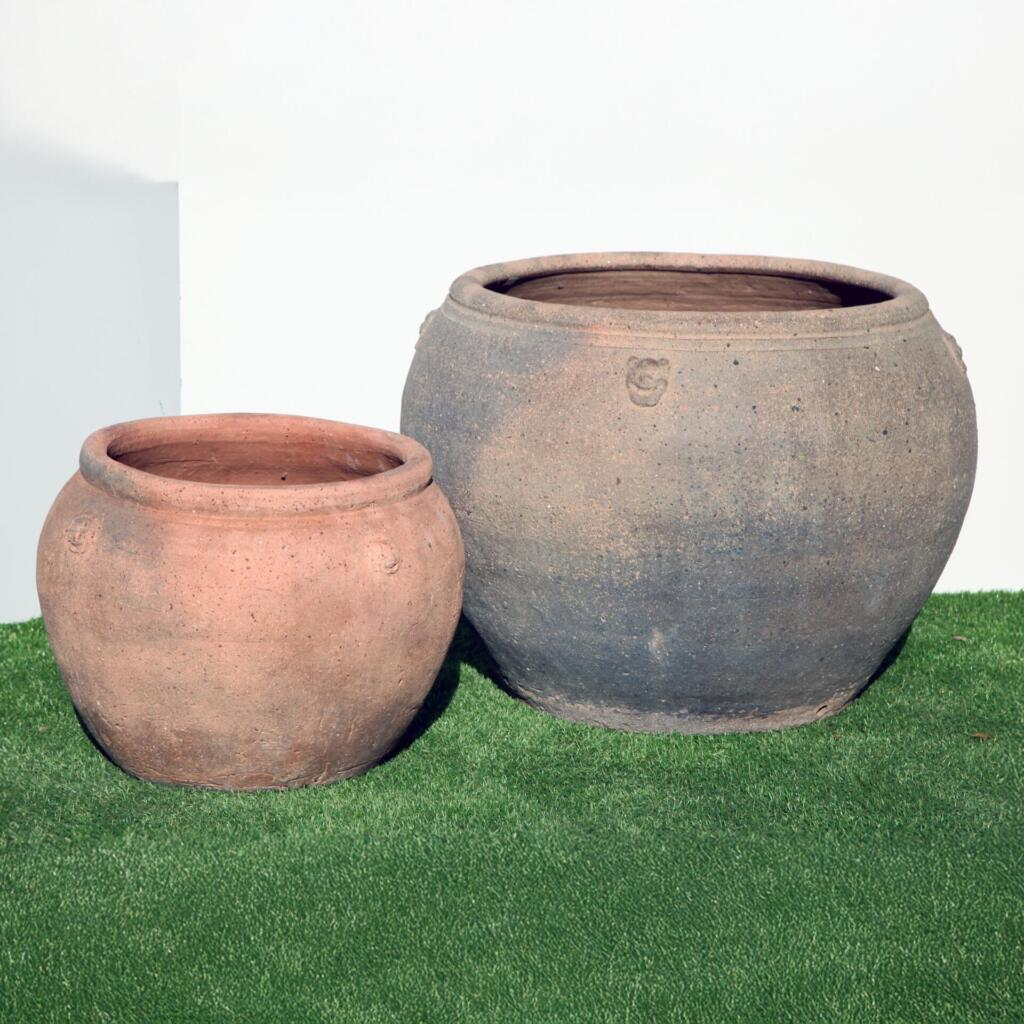
It creates a focal point. It frames a doorway. It gives the eye somewhere to land. And the range of materials available now is genuinely beautiful — textured concrete, aged terracotta, powder-coated steel, smooth fibreglass in colours that work with almost any palette. The pot has become part of the design rather than just the thing the plant lives in.
Ideal for Balcony and Patio Gardens
I’ve spoken to a lot of apartment gardeners over the years, and the ones who feel most limited are almost always the ones working with pots that are too small for what they’re trying to achieve. A balcony full of small pots can feel busy and underwhelming at the same time — lots of visual noise, not much impact.
A few large pots, chosen carefully and planted well, changes the whole character of the space. You can have a proper herb garden, a flowering climber, a fruit tree, and a statement foliage plant — all without a single square metre of ground. It requires thinking about what the space actually needs first, but large pots give you the tools to meet that need properly.
Easy Relocation
One thing I genuinely love about container gardening — and large pots specifically — is the ability to change my mind. A planted bed is a commitment. A pot is an invitation to keep experimenting.
I move pots to follow the light as seasons shift. I bring frost-sensitive plants under cover in winter. I rearrange when I want the garden to feel different. With castors or a wheeled platform underneath, even quite heavy pots become manageable. That ongoing flexibility is something ground planting simply can’t offer.
Container Planting for Urban Areas
This is something that matters more than people often acknowledge. Urban soil is frequently compromised in ways that aren’t immediately visible — contamination from old structures, compaction from decades of use, or simply the absence of any workable soil at all beneath hard surfaces.
Container planting sidesteps all of that. You choose what goes in the pot, you know exactly what your plants are growing in, and you can adjust it over time. For anyone growing edibles in a city — which I think is one of the most satisfying things you can do in a small space — that control over the growing medium is particularly reassuring.
Potential for a Controlled Environment
This is one of those benefits that sounds technical but is actually quite freeing once you understand it. If you’ve ever tried to grow an acid-loving plant like a camellia or blueberry in soil that simply isn’t right for it, you’ll know how much of an uphill battle that becomes. Amending ground soil is slow and imprecise. A pot gives you a clean slate.
I’ve grown plants in large pots that I would never have managed to establish in the ground here — the soil conditions where I garden simply don’t suit them. But in a pot with the right mix, tailored to what the plant actually needs, they’ve thrived. It opens up a much wider range of possibilities than the native soil would otherwise allow.
Minimising Pest Problems
I won’t pretend large pots are a magic barrier against every pest — they’re not. But growing in containers rather than directly in the ground does reduce exposure to a range of soil-borne problems that are genuinely difficult to manage otherwise.
For plants that are particularly vulnerable to root-level pests or fungal diseases that live in native soil, this separation makes a real practical difference. And for gardeners who prefer to grow without chemicals, fewer pest problems means fewer interventions — which is a meaningful benefit over a whole growing season.
Encouragement of Growth
One of my favourite things to do in a large pot is companion planting — growing two or three compatible plants together in the same container in a way that benefits all of them. Tomatoes with basil. Climbing beans with trailing nasturtiums. Herbs grouped by what they actually need rather than just what fits.
The scale of a large pot makes this genuinely practical. You’re not cramming plants together out of necessity — you’re making deliberate choices about which plants support each other, which creates both a healthier growing environment and a more interesting visual result.
Reducing Soil Compaction
Ground soil compacts. It happens gradually, under foot traffic and weather and the repeated cycle of watering, and by the time you notice it the roots are already struggling. Loosening compacted ground soil is hard work and the results don’t always last.
Potted soil, managed properly and refreshed periodically, stays in much better condition. It stays loose, drains well, and continues to support healthy root growth in a way that compacted ground soil simply can’t. For plants that are sensitive to soil structure — and there are more of them than you might expect — this makes a meaningful difference to how they perform year after year.
Saving Resources
I notice this most in summer. Plants in well-sized pots with good soil need less water, less feeding, and less intervention overall than plants struggling in conditions that don’t suit them. The moisture retention of a large pot means I’m watering less frequently. The reduced pest pressure means I’m reaching for treatments less often.
It adds up quietly over a season. Less time, less water, fewer products. For anyone thinking about gardening more sustainably, large pots with quality potting mix are a more resource-conscious starting point than the constant management that difficult ground soil often demands.
Investment in Quality and Longevity
I bought a cheap pot once — genuinely cheap, the kind that seems fine until the first winter. It cracked along one side before spring. The plant was fine, but the pot was done, and I had to replace it at exactly the moment I wasn’t thinking about pot shopping.
A quality large pot — proper fibreglass, quality ceramic, well-finished powder-coated metal — will last years, often decades. The upfront cost is higher and that’s real. But spread across fifteen years of use, it works out far cheaper than replacing something cheaper every few seasons. I’ve stopped thinking about it as an expense and started thinking about it as the thing that protects everything growing inside it.
Environmental Contribution
The material you choose matters, and it’s worth thinking about before you buy. Pots made from recycled materials, sustainably sourced clay, or responsibly produced alternatives carry a lower footprint than mass-produced plastic options that degrade quickly and end up in landfill.
Some of the most beautiful pots I’ve come across have been made with environmental considerations genuinely built into their production — not as a marketing add-on, but as part of how they’re designed and manufactured. And a pot that lasts, whatever it’s made from, is inherently more sustainable than one that doesn’t. Longevity is its own form of environmental contribution.
Gardening teaches you, over time, that the conditions matter as much as the choices. Give a plant the right environment and it will show you what it’s capable of. Large pots are one of the more reliable ways of creating those conditions — in terms of root space, moisture, stability, and the simple fact that the plant has room to become what it’s supposed to be.
I find that genuinely satisfying. And I think once you experience the difference a well-chosen large pot makes, you will too.