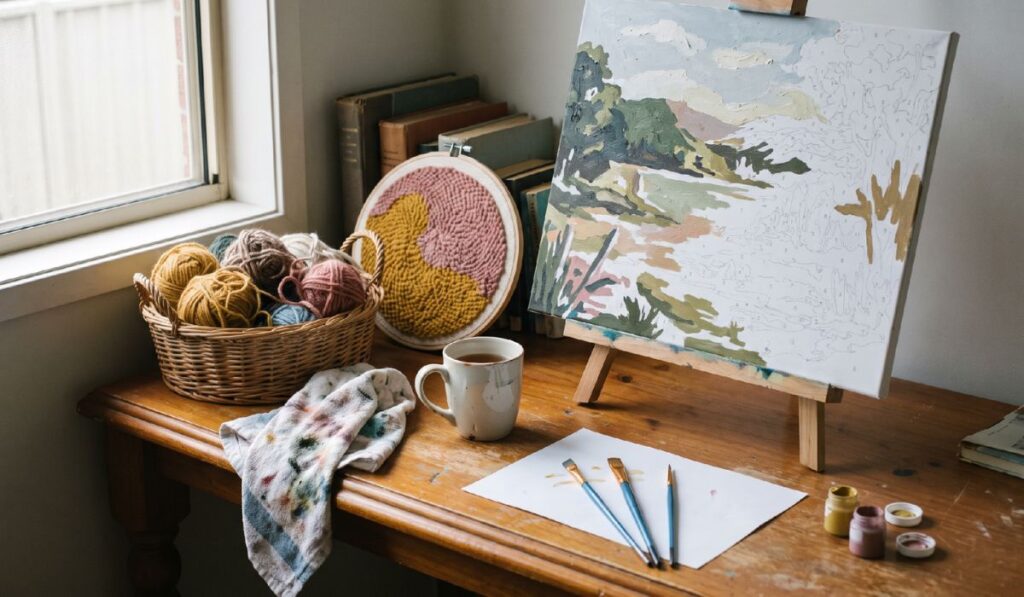
Crafting isn’t just for kids’ rainy-day boxes anymore. For a lot of us, it’s become something closer to a wind-down ritual, the thing you reach for after a long day when scrolling isn’t cutting it. Mintel’s US Arts and Crafts Consumer Report found that 71% of US consumers now identify as crafters, and nearly half of US adults say stress is a reason they pick up a craft in the first place. Two hobbies in particular are having a real moment among home decor lovers right now: paint by numbers and punch needle. Both ask almost nothing of you in terms of skill, and both end with something you’ll actually want to hang on the wall.
Why Paint by Numbers Is Having a Moment
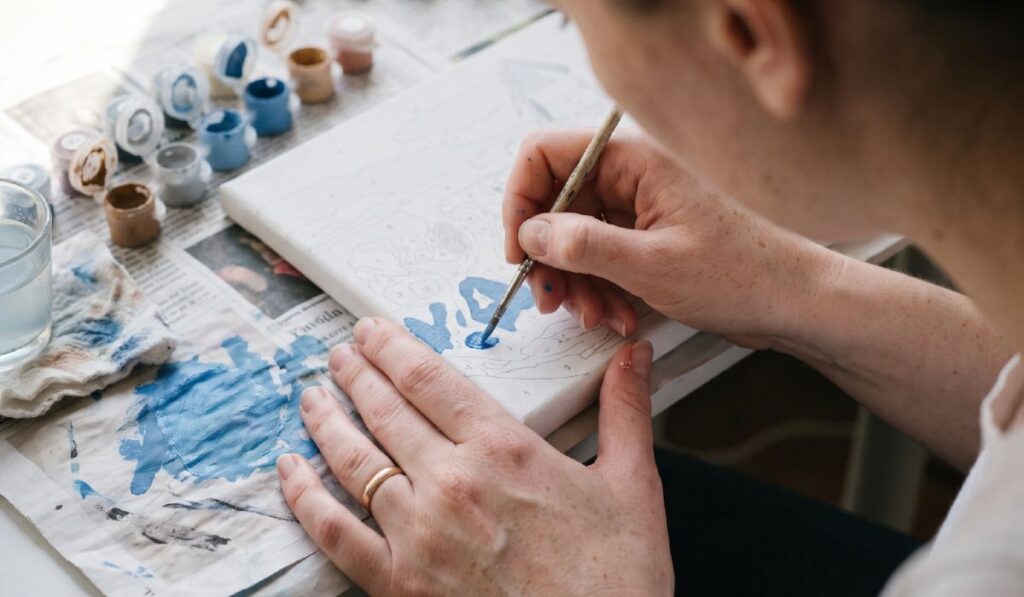
There’s a reason paint by numbers keeps turning up in home decor feeds. The global paint-by-numbers kit market reached USD 1.67 billion in 2025 and is forecast to climb to USD 3.07 billion by 2034, according to Growth Market Reports. That kind of growth doesn’t happen because people love following instructions. It happens because the format removes the one thing that stops most adults from painting at all: the fear of getting it wrong. Numbered sections and colour-matched paint pots turn a blank canvas into something achievable in an evening, not a lifetime of art classes.
What’s changed lately is how personal these kits have become. Research from paintmelike.co, based on more than 10,000 custom orders, found that cats and dogs together make up 48% of all custom paint-by-number orders, with animal subjects overall accounting for roughly 55.8% of custom purchases. People aren’t just grabbing a generic mountain scene anymore; they’re turning their own dog, their wedding photo, or their favourite holiday snap into wall art. That’s exactly the gap a customized paint by number kit fills. Upload a photo, get a canvas mapped out in your own colours, and paint something that actually means something to you rather than something you picked off a shelf.
Getting Started Without Overthinking It
The hardest part of any new hobby is usually the first ten minutes, not the skill itself. Pick a canvas size that suits your space; a 30cm by 40cm piece is plenty for a first attempt and won’t dominate a small wall. Set up somewhere with decent light and a surface you don’t mind getting a bit of paint on. Then expect to make mistakes. You’ll paint outside a line, mix up two similar numbers, or run out of a colour halfway through a section, and none of that ruins the piece.
If you’ve ever gone through a creative slump, you already know that the wobbly first attempts are usually the ones you learn the most from. Creative mistakes can feel frustrating at the moment, but they’re often much easier to fix than they seem. Paint by numbers is forgiving in a way a lot of other crafts aren’t; a slightly uneven line disappears once the whole canvas is filled in, and nobody looking at the finished piece on your wall is going to notice it anyway.
Enter Punch Needle: The Other Slow-Craft Everyone’s Trying
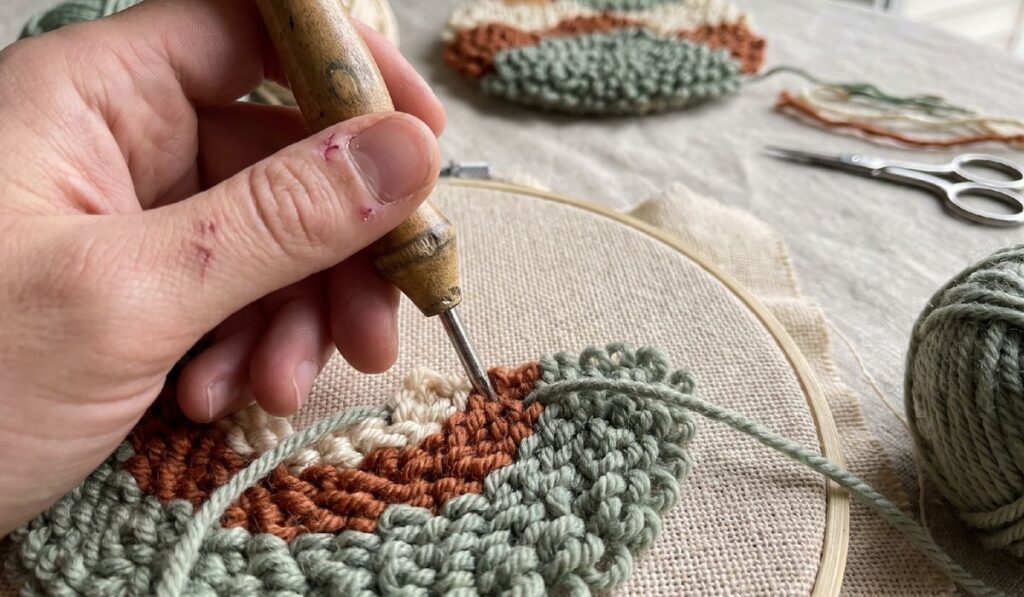
Punch needle work builds soft, textured wall art one loop at a time, ideal for anyone new to fibre crafts.
Punch needle is paint by numbers’ textile cousin, and it’s picking up speed for a lot of the same reasons. Reporting from Michigan State University’s Spartan Newsroom found that fibre-arts hobbies like crochet and punch needle are seeing a real resurgence among younger makers, driven largely by TikTok and YouTube tutorials that took off during and after the pandemic. Instead of paint and a brush, you’re pushing loops of yarn through monk’s cloth stretched across a hoop, and the repetitive, rhythmic motion is where the calming part comes in.
The market backs this up too. MarketIntelo puts the global punch needle kit market at roughly USD 0.4 billion in 2025, projected to reach USD 0.68 billion by 2034, with beginner kits already commanding the largest share at 42.5%. That beginner-friendly slant makes sense once you try it. Most newcomers start with ready-made needle punch kits that include the hoop, yarn, needle, and pattern all in one box, so you’re not left guessing what supplies you actually need. You can be punching your first loops within minutes of opening the packet.
Making Room for Two Hobbies at Once
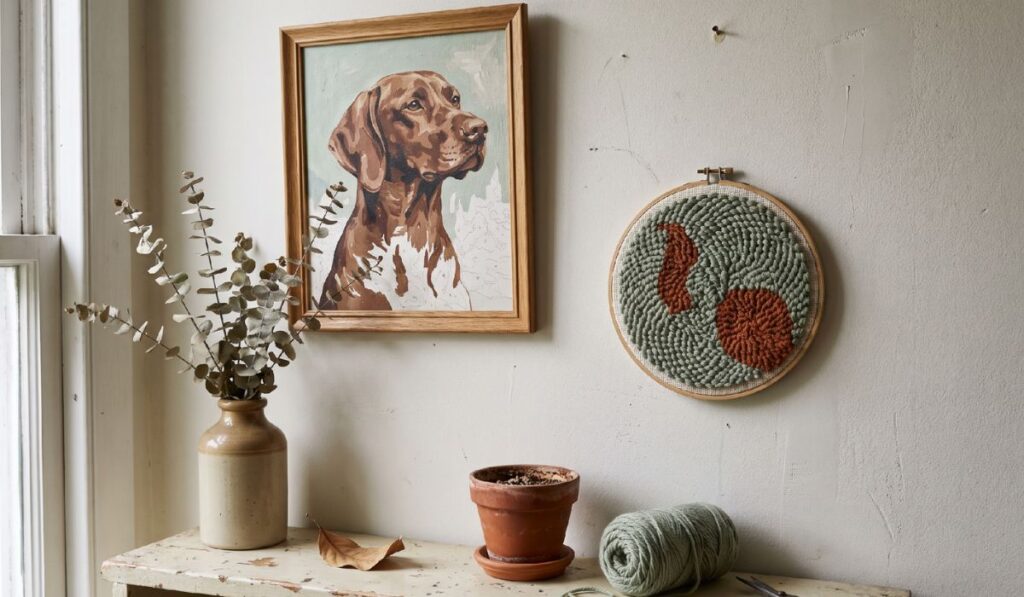
You don’t have to choose between them. In fact, the two crafts complement each other nicely on a home decor level: a smooth painted canvas next to a raised, textured punch needle piece gives a gallery wall real depth instead of everything sitting flat. If you’re new to working with a needle and thread generally, picking up a needle for the first time is worth reading before you start punch needle, since a lot of the same basic handling skills carry over.
Once you’ve got a couple of finished pieces, framing and displaying them is its own small project. If you’d rather sew than frame, our tutorial on simple handmade cushion covers is a nice next step for turning leftover fabric scraps into something for the sofa. And if stress relief is really the point for you, that’s backed by more than anecdote: the US Chamber of Commerce has reported on the growing body of evidence linking crafting to lower stress levels, part of why so many people are turning to hands-on hobbies in the first place.
The Weekend Project That Actually Finishes Itself
Neither of these crafts demands much. No art degree, no expensive setup, no years of practice before you produce something worth keeping. What you get instead is an hour or two of genuinely quiet focus and a finished piece for the wall at the end of it. Pick whichever one appeals more this weekend, a canvas or a hoop, and see how far a bit of colour-by-number or loop-by-loop progress takes you.

