
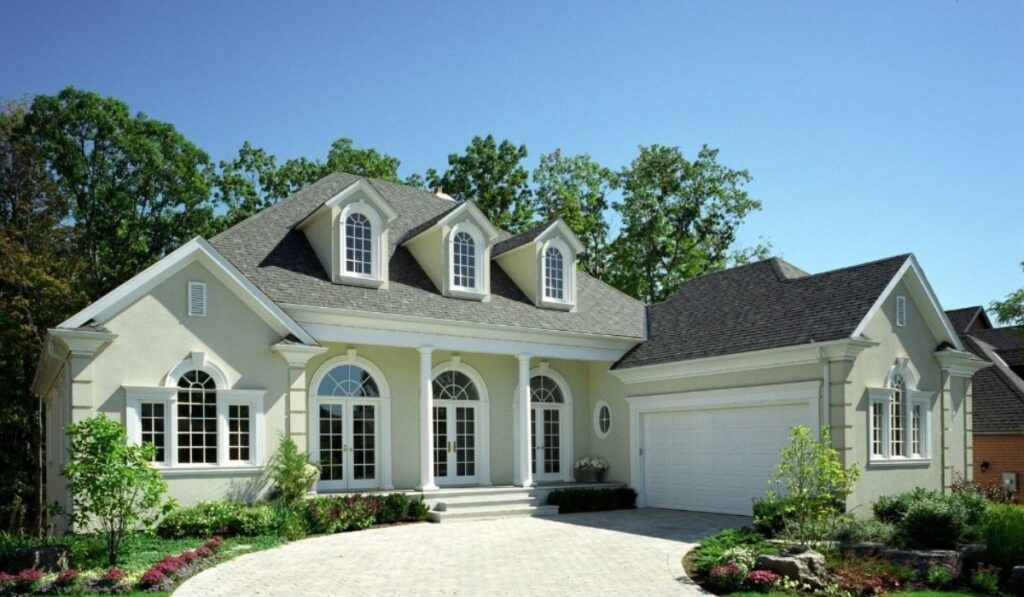

A repaint is supposed to buy you ten years. Plenty of Sydney homes get four. The paint starts chalking on the western wall, the north side fades unevenly, something flakes above the gutter line, and the owner assumes they were sold cheap paint.
Usually the paint was fine. What went wrong happened before the first coat, or it happened on a surface nobody looked at properly. Exterior work is unforgiving in a way interior work isn’t, because the wall is standing outside in Sydney weather every day for a decade.
Preparation Is Roughly Eighty Per Cent of the Job
This is the part people can’t see and therefore don’t want to pay for. It’s also the part that decides everything. Washing down years of grime and salt, scraping back anything loose, filling and sanding, treating mould rather than painting over it, and priming bare or patched areas properly.
Mould is the one that catches people out. It grows happily on the shaded south side of a house, and rolling fresh paint straight over it simply gives it a new surface to push through. It has to be killed and washed off first. Same with chalky old paint, which needs to come back to something sound rather than being sealed under a fresh coat and left to let go later.
If your home was built before the late eighties and has fibro cladding, stop and get it assessed before anyone sands anything. That material can contain asbestos, and it’s not a do-it-yourself situation.
Choosing Who Actually Does the Work
Most people start by typing professional painters near me into their phone and ringing the first three results, which is a perfectly reasonable place to begin. The part that matters is what you ask once someone’s standing in your driveway.
Ask what preparation is included, in writing. Ask how many coats and which product, because two coats of a good exterior paint over sound prep will outlast three coats of something cheap. Ask what happens if rain arrives mid job. A quote that’s meaningfully cheaper than the others is usually cheaper somewhere specific, and that somewhere is almost always preparation.
It’s also worth asking who’s actually on the tools. Some outfits quote the job and subcontract the work, which isn’t a problem in itself, but you want to know whether the person who walked you through the quote is the person who’ll be standing on your roofline in three weeks.
Then check the licence and the insurance yourself rather than taking the word for it. In New South Wales, residential work over a certain value has to be done by a licensed contractor, and licences can be looked up online in about a minute.
Sun, Salt and the Western Wall
Sydney doesn’t weather a house evenly. The western and northern walls take the brunt of the ultraviolet and will fade and chalk years ahead of the rest. South-facing walls stay damp longer and grow mould. Anywhere within a few kilometres of the coast, salt in the air accelerates everything, particularly on metal fixings and window frames.
That means a whole-house repaint is rarely the right answer to a problem on one elevation. Plenty of homes need the west wall done twice in the time the rest needs doing once. Lighter colours hold up better under that sun, and deep charcoals, which look superb on render, absorb enormous heat and are the least forgiving choice you can make on a wall that faces west.
The Roof Plays by Different Rules
People often lump the roof in with the walls and assume it’s the same trade with a longer ladder. It’s not. Roof painting solution involves different products, different preparation, and a genuinely different risk profile, and the failure mode is different too. A wall that’s been painted badly looks bad. A roof that’s been painted badly can hold moisture where you can’t see it.
Concrete tiles are the common case across Sydney, and they lose their original colour coat over twenty or thirty years, going porous and starting to hold moss. That’s a restoration job, not a cosmetic one, and it usually involves cleaning, repointing the ridge capping, replacing broken tiles, and sealing before any colour goes on. Terracotta behaves differently again and often shouldn’t be coated at all.
Get the roof assessed before committing to the walls. It’s far easier to work top down than to send someone back over freshly painted walls with a pressure washer.
Timing Matters More Than Most People Expect
Autumn and early spring are the sweet spots in Sydney. Mild temperatures, lower humidity, and enough daylight to get proper coats on. Midsummer is difficult because paint skins over too fast in direct heat and you end up with lap marks and poor adhesion. Deep winter brings dew that lands on a surface long before the paint has properly cured.
Good painters are booked out in those windows, which tells you something. If the only tradesperson available at short notice in late January is free that week, it’s worth asking why.
The Small Maintenance That Buys Extra Years
A wash down once a year removes the salt and grime that quietly break down the film. Clear the gutters, because overflow running down a wall will strip a paint job faster than sunlight will. Cut back anything growing against the house, since plants trap moisture against the surface and keep it damp.
Keep a note of what was used. The brand, the colour codes, and the sheen level for each surface. Two years later, when something needs patching, that scrap of information is the difference between a touch up nobody notices and repainting a whole wall to make it match. Good painters will write it down for you if you ask at handover.
Touch up small chips as they appear rather than waiting. Bare substrate takes on water, water gets behind the surrounding paint, and a coin-sized chip becomes a patch you can put your hand through. Fifteen minutes now genuinely saves a wall later.
Where to Start
Walk the outside of your house slowly and look at each elevation separately. Note where the paint’s gone chalky, where mould is sitting, where water runs when it rains, and what condition the roof is in. Bring that list to whoever quotes the job. You’ll get a far more useful conversation than the one that starts with how much to paint the house.

