
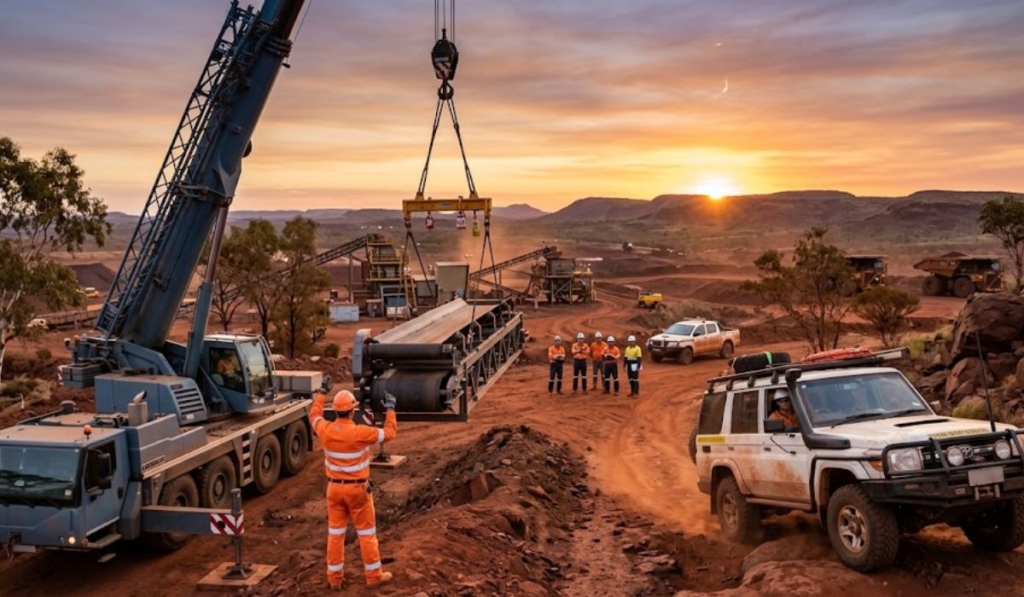

Australia’s construction, mining, infrastructure and resources industries rely on workers who can operate safely in challenging environments. From remote worksites with unsealed access roads to busy construction projects involving cranes and suspended loads, many everyday tasks require specialised knowledge, practical skills and a clear understanding of workplace risk.
Two areas that warrant particular attention are four-wheel drive (4WD) vehicle operation and dogging. They involve different equipment and working conditions, but both require careful planning, hazard awareness and compliance with relevant safety procedures. For workers and employers across Australia, developing these capabilities can improve operational safety, reduce avoidable risk and support more efficient project delivery.
Why Practical Safety Skills Matter Across Australian Industries
Work in construction, mining and infrastructure often involves conditions that differ significantly from those found in ordinary workplaces. Employees may travel through remote areas, operate vehicles on uneven terrain or work alongside heavy machinery and lifting equipment.
These activities introduce risks that general safety awareness cannot always manage. Workers need to understand the equipment they use, recognise changing conditions and follow procedures appropriate to the task.
For employers, training is one part of a broader safety management approach. Site inductions, risk assessments, equipment inspections, supervision and clear communication remain essential, particularly when workers are assigned unfamiliar tasks or operate in hazardous environments. Practical training supports employees in developing the technical knowledge needed to carry out their duties within their level of competence.
4WD Training: Preparing for Challenging Australian Terrain
Four-wheel drive vehicles are widely used across Australia’s mining, construction, agriculture, utilities and infrastructure sectors. They provide access to remote locations and worksites where conventional road vehicles may not be suitable.
However, operating a 4WD does not in itself indicate readiness for difficult off-road conditions. Loose gravel, sand, mud, steep slopes and uneven surfaces can affect vehicle stability, traction and braking, and changes in weather or unfamiliar terrain introduce additional hazards. Professional 4WD training focuses on the skills needed to operate these vehicles safely in demanding environments.
What Does 4WD Training Cover?
Depending on the unit of competency, training may cover the following practical skills:
- Pre-start inspections: checking the vehicle and identifying mechanical or safety issues before departure.
- Vehicle operation: understanding four-wheel drive systems and selecting appropriate operating modes for different conditions.
- Terrain assessment: recognising hazards and selecting suitable routes across unsealed roads and challenging surfaces.
- Trip planning: preparing for remote travel, considering environmental impacts and allowing for changing conditions.
- Vehicle recovery: understanding recovery equipment, safe recovery procedures and the risks associated with recovering a bogged vehicle.
- Basic maintenance: recognising vehicle faults and carrying out routine checks and minor repairs within one’s competence.
These skills are particularly relevant to workers who regularly travel between remote sites or operate vehicles as part of their employment.
For individuals seeking to develop these capabilities, 4WD Training in Australia from Safety Australia Training provides nationally recognised options covering four-wheel drive operation, off-road driving and vehicle recovery. Units commonly listed include RIIVEH305F, TLIC0023, FWPCOT3325, PMASUP236 and FWPCOT3326. Unit codes and versions are updated periodically, and the appropriate unit depends on the participant’s work activities and training requirements. Current details should be confirmed with the provider.
Who Can Benefit from 4WD Training?
Workers in mining, civil construction, agriculture and field-based services may benefit from training that reflects the conditions in which they operate vehicles. It may also be relevant to utility workers, technical specialists and supervisors who travel through remote or difficult terrain as part of their duties.
Before enrolling, participants should confirm the unit required by their employer and review the practical requirements of the course. A current driver’s licence and access to a suitable vehicle may be necessary, depending on the training arrangement.
Dogging: Managing the Risks of Suspended Loads
While 4WD training addresses vehicle operation, dogging concerns the safe movement of loads lifted by cranes or hoists. It is common across construction sites, industrial facilities, infrastructure projects and other workplaces where heavy materials must be positioned accurately.
These tasks carry significant risks. Loads may swing unexpectedly, lifting gear may be unsuitable for the load, and poor communication between the dogger and the crane operator can create dangerous situations. A dogger must understand the characteristics of the load, select appropriate lifting gear and communicate effectively with the operator so that lifting operations are carried out safely.
What Does a Dogger Do?
Duties associated with dogging can include:
- Assessing the load and identifying potential hazards before lifting begins.
- Selecting and inspecting suitable slings, chains, shackles and other lifting equipment.
- Applying appropriate slinging techniques to secure the load.
- Directing the movement of the load using agreed signals or communication methods.
- Coordinating with the crane or hoist operator throughout the lifting process.
- Ensuring the load is moved and positioned in accordance with the relevant work procedures.
- Completing the required checks and safely concluding the operation.
These activities require practical competence and an understanding of load behaviour, lifting equipment limitations and workplace communication procedures. A worker must also recognise when a lift cannot proceed safely and follow the appropriate process to stop work or report a problem.
Obtaining a Licence to Perform Dogging in Australia
Dogging is a high-risk work activity in Australia. Workers performing dogging work must hold the appropriate High Risk Work Licence (HRWL), subject to the applicable legal requirements.
The nationally recognised unit CPCCLDG3001, Licence to perform dogging, covers the skills and knowledge required for dogging operations. Workers looking to enter this field can explore the Licence to Perform Dogging course offered by Safety Australia Training.
Courses of this type typically combine theoretical learning with practical training and assessment, covering hazard identification, lifting gear selection, load preparation, slinging techniques and the direction of crane or hoist movements.
Following successful completion of the required training and assessment, participants receive a Statement of Attainment and may apply for the relevant DG High Risk Work Licence through the appropriate state or territory regulator, in accordance with its application requirements. The licence is an important requirement for eligible dogging work, but workers must still follow site-specific procedures and any additional requirements relevant to the lifting operation.
How 4WD and Dogging Skills Support Safer Project Delivery
Off-road driving and dogging may appear unrelated, but both contribute to the safe delivery of construction, mining and infrastructure projects.
Consider a remote construction project in which equipment is transported along unsealed access roads before materials are unloaded by crane. The vehicle operator must assess road and terrain conditions, inspect the vehicle and follow suitable driving procedures. Once the equipment arrives, the lifting team must assess the load, select suitable lifting gear and coordinate the movement of suspended materials. Each stage introduces different hazards and requires workers with the appropriate skills.
Training helps employees understand the risks associated with their specific duties. It can also improve communication between team members and reinforce the importance of following established procedures. However, training alone does not eliminate workplace hazards. Businesses must also ensure that equipment is suitable, work areas are properly managed and workers receive appropriate supervision.
Choosing the Right Training for Your Career
Selecting the right course begins with understanding the work to be performed.
For people working in remote environments, the most appropriate 4WD unit depends on whether their duties involve general four-wheel drive operation, driving on unsealed roads, field vehicle operation or vehicle recovery. For those entering construction or industrial lifting, dogging training is relevant when the intended work involves duties covered by the dogging competency and the applicable High Risk Work Licence requirements.
Before enrolling, consider the following:
- Does the course cover the skills required for the intended role?
- Is the unit nationally recognised and relevant to the work to be performed?
- Does the training include the required practical assessment?
- Are there additional workplace, licensing or site-specific requirements?
- Will the training meet the expectations of the current or prospective employer?
Confirming these details helps ensure the training aligns with career goals and the practical requirements of the industry.
Building a Stronger Safety Culture
Safe vehicle operation and lifting practices depend on preparation, competence and consistent decision-making. Workers need to recognise hazards, understand their responsibilities and communicate effectively when conditions change.
For employers, investing in suitable training supports these expectations across the workforce. It should be complemented by risk assessments, equipment maintenance, clear operating procedures and ongoing supervision.
Whether the task involves travelling to a remote worksite or directing a suspended load, the same principle applies: safety begins with understanding the risks and having the skills to manage them. Selecting training that matches job duties, and maintaining a commitment to safe work practices, allows Australian workers to build valuable industry skills while helping their teams operate more safely and effectively.


