
Most people have painted a room at some point and know exactly how it goes. The roller that leaves texture on the wall. The brush that streaks if you do not keep a wet edge. The hours spent on a fence that still looks patchy when you step back and look at it properly.
There is a better way to do it and it has been sitting in professional painters’ vans for decades. Airless paint sprayers have quietly become one of the most useful tools available for anyone tackling a serious painting project. Understanding how they work makes the difference between using one confidently and being intimidated by the setup.
What Is an Airless Paint Sprayer?
An airless paint sprayer is a machine that applies paint by pumping it at high pressure through a small spray tip. The pressure forces paint through the nozzle and breaks it into fine droplets that spread evenly across the surface.
The name trips people up initially. Airless does not mean it produces no spray. It means the system does not rely on compressed air to atomise the paint. Traditional spray systems mix air with paint to create the spray pattern. Airless sprayers use mechanical pressure alone which is what allows them to handle thicker coatings and cover large areas considerably faster than conventional methods.
They offer several advantages over traditional painting methods and once you have used one on a large surface going back to a roller feels like a significant step backwards.
How Does an Airless Paint Sprayer Work?
The process is straightforward once you see it in action. A motor powers a pump that draws paint from a container and pushes it through a high pressure hose to the spray gun. At the gun end the paint exits through a specially designed tip that controls the spray width and the volume of paint being released.
As paint passes through that small tip opening under high pressure it breaks into fine droplets and spreads across the surface in an even fan pattern. The result is a smooth consistent coat applied quickly across whatever surface you are working on.
The operator controls start and stop through the trigger on the spray gun which gives reasonable accuracy once you develop a feel for the equipment.
The Main Components of an Airless Sprayer
Understanding what each part does makes the equipment considerably less intimidating and helps you get better results from the first time you use it.
Motor
The motor powers the pump. Depending on the model airless sprayers use electric motors or petrol engines. Electric models are standard for most residential and commercial applications. Petrol suits larger outdoor projects where power access is limited.
Pump
The pump is the heart of the machine. It generates and maintains the high pressure that moves paint through the system. A quality pump produces consistent pressure which directly affects the evenness of the finish. Inconsistent pressure is usually where spray quality problems originate.
Paint Hose
The hose transfers paint from the machine to the gun. These hoses are purpose-built to handle the pressures involved which are typically far higher than most people expect from a painting tool.
Spray Gun
The gun is what the operator holds and controls. The trigger releases paint when pressed and stops it immediately when released which allows reasonably precise control over where paint goes.
Spray Tip
The tip is the component that most directly affects the finished result. Different tips produce different spray widths and release different volumes of paint per pass. Choosing the right tip for the material being applied and the surface being covered makes a meaningful difference to the outcome.
Benefits of Using an Airless Paint Sprayer
The benefits become particularly clear on large or complex projects. Speed is the most immediately obvious one. Large walls, ceilings, fences, exterior surfaces, and commercial spaces can be covered in a fraction of the time a brush or roller would require.
For anyone who has spent a full weekend rolling the exterior of a house the time saving on a project that size is substantial. The sprayer does not get tired, does not leave lap marks from a wet edge drying before the next pass, and maintains consistent pressure throughout.
Smooth and Even Finish
When used correctly an airless sprayer produces a finish that rollers and brushes genuinely cannot match on large surfaces. Rollers leave a slight texture from the nap. Brushes leave marks if the paint starts to dry between strokes. A sprayer distributes paint evenly across the surface without either of those issues.
This matters most on surfaces where appearance is important such as feature walls, cabinetry, commercial interiors, anywhere that a high quality finish is the point of the exercise.
Ability to Apply Different Coatings
Airless sprayers handle a wide range of materials including interior and exterior paints, primers, protective coatings, stains, and sealants. Because they operate on pressure rather than air volume they manage thicker products that conventional spray systems struggle with.
Reduced Physical Effort
Painting large areas by hand is physically demanding work. Hours of rolling or brushing place real strain on shoulders, arms, and back. A sprayer removes most of that physical effort from the equation which matters both for comfort and for the quality of the finish toward the end of a long day.
Common Applications for Airless Paint Sprayers
Exteriors, fences, sheds, garages, and large interior spaces are where homeowners typically find an airless sprayer earns its place. The speed advantage is most pronounced on open surfaces with minimal obstacles.
Builders and contractors reach for airless sprayers on commercial work because the combination of speed and consistency is difficult to replicate with other methods. Offices, warehouses, retail spaces, and large developments all suit the technology well.
Industrial environments often require durable specialised coatings applied evenly across large areas. Airless sprayers handle the thicker tougher materials these applications demand without the limitations that affect lighter spray systems.
For refinishing furniture, doors, and timber surfaces where a smooth factory-like finish is the goal a sprayer produces results that are difficult to achieve with a brush regardless of skill level.
Airless Sprayer vs Traditional Painting Methods
The honest comparison is fairly simple. Brushes are right for detailed work, cut-ins, and small touch-ups where control matters more than speed. Rollers are practical for medium-sized interior surfaces. Airless sprayers are the right tool when coverage speed, finish quality, or the ability to handle thick coatings becomes the priority.
The trade-off is preparation time. Spraying requires masking and protecting surfaces that should not be painted and controlling overspray is an important part of the technique. That preparation time is real but it is almost always recovered on larger projects where the sprayer’s speed advantage is significant.
Tips for Using an Airless Paint Sprayer
A few habits make the difference between a good result and a frustrating one.
Prepare the surface properly before starting by cleaning and filling imperfections and allowing everything to dry. Choose the spray tip that matches the paint viscosity and the surface. Test the spray pattern on cardboard before touching the actual surface. Maintain a consistent distance from the surface throughout because too close creates runs and too far creates dry spray. Move the gun in smooth steady passes rather than sweeping arcs that create uneven coverage at the edges.
Applying thin consistent coats and allowing adequate drying time between them produces better results than trying to cover everything in one heavy pass.
Safety Considerations
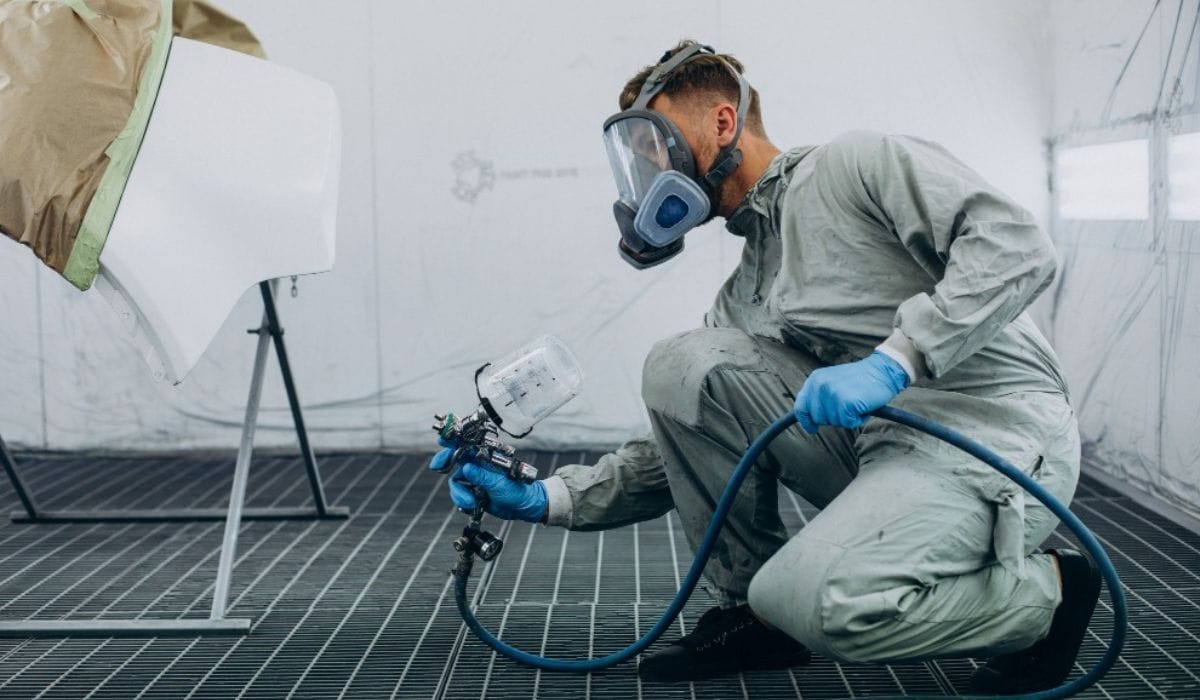
Airless sprayers operate at pressures that deserve respect. High pressure paint can cause serious injury if it contacts skin. This is not a theoretical risk and it is the reason safe operation matters.
Wear safety glasses, appropriate protective clothing, gloves, and suitable breathing protection for the material being sprayed. Ensure good ventilation when working indoors. Never point the spray gun at anyone and always follow the manufacturer’s safety guidelines for the specific equipment being used.
Why Hire an Airless Paint Sprayer?
For occasional projects hiring an airless sprayer can be a practical alternative to purchasing one. The cost of quality equipment is significant for something that might be used a handful of times and hire gives access to professional grade machinery matched to the specific project without the ongoing commitment of ownership.
Hire also means no storage requirements between projects, no maintenance obligations, and typically access to guidance on selecting the right equipment and settings for the job at hand. For homeowners completing a renovation or contractors managing a short-term project it is usually the more sensible option than buying.
Worth Understanding Before You Start
An airless paint sprayer does not require professional training to use well. It requires understanding how it works, choosing the right equipment for the job, preparing properly, and practising technique before committing to the actual surface.
The result when those things are done correctly is faster coverage and a better finish than most other painting methods can achieve. For any project where surface area is large and finish quality matters that combination is worth the setup time it requires.