
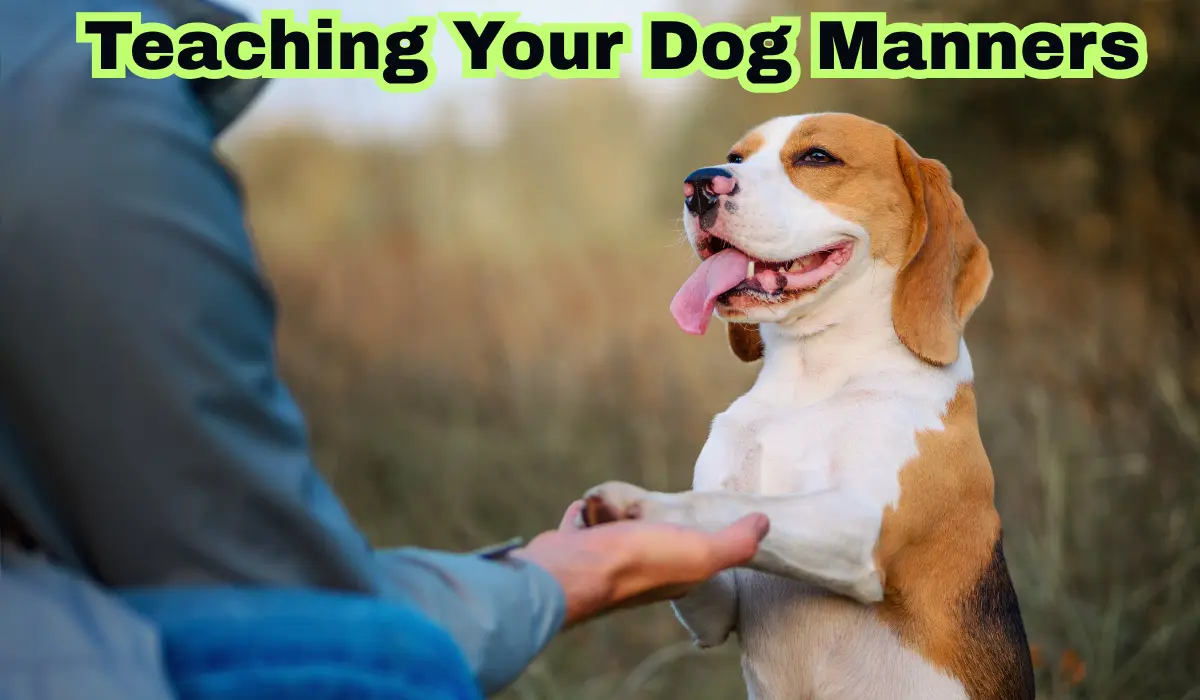

An untrained dog does not make for a relaxed household. The jumping at guests, the pulling on the lead, the barking at nothing in particular — none of it is malicious, but all of it is wearing. What tends to get overlooked is how quickly things can shift with the right approach. Dogs are remarkably responsive to consistency, and the gap between a chaotic home and a calm one is often smaller than it feels.
Teaching basic manners is the starting point for a more harmonious life with your dog — both inside the house and out in the world.
Establish Clear Ground Rules and a Consistent Routine
Before any active training begins, the whole household needs to agree on what the rules actually are.
This matters more than most people realise. If one person allows the dog on the sofa while another scolds them for it, the dog is not being disobedient — it is being genuinely confused by conflicting signals. Decide on the specific behaviours you want, agree on the verbal cues you will use for each, and apply them consistently, every time, without variation.
Beyond the rules themselves, a reliable daily routine makes an enormous difference. Regular mealtimes, predictable potty breaks, and consistent training sessions give dogs a structure they can settle into. Routines reduce anxiety, and a less anxious dog is a considerably easier dog to train.
Master Focus and the Critical “Look at Me” Command
Attention is the foundation everything else is built on. Without it, no instruction lands reliably — regardless of how well the dog knows the command in a quiet room.
The exercise itself is simple. Hold a high-value treat close to your eye, say your dog’s name or a cue like “Look”, and the moment they make direct eye contact, praise them and deliver the reward. Begin in a calm, distraction-free environment before gradually moving to busier settings.
Once a dog can focus on cue reliably — even outdoors, even around other dogs — redirecting unwanted behaviour becomes straightforward. Attention is the tool that makes every other command work.
Source Professional Help for Advanced Skill Development
Home training covers a great deal of ground, but some behavioural challenges genuinely benefit from expert input.
Deep-seated leash pulling, reactivity around other dogs or people, selective listening that persists despite consistent effort — these are not signs of a bad dog. They are signs that a more tailored approach is needed. Having structured dog training programmes provides personalised feedback and professional guidance that is difficult to replicate at home.
A good trainer will often identify subtle things — a timing issue in how a reward is delivered, a body language cue the owner is giving without realising — that are quietly stalling progress. The controlled environment also gives dogs the opportunity to practise polite behaviour around real-world distractions in a way that is difficult to recreate otherwise.
Teach Polished Threshold Etiquette and Calm Door Manners
A dog that bolts through an open door is not just an embarrassing habit — it is a genuinely dangerous one, particularly near roads or unfenced areas.
The correction is gradual and consistent. Each time you approach a doorway, ask your dog to sit. Begin turning the handle slowly. If they get up, close the door and start again — calmly, without frustration. When they hold the sit as the door opens fully, give a specific release cue such as “Let’s go” before allowing them through.
It takes repetition, but the result is a dog that pauses at thresholds rather than rushing through them. That self-control transfers to a great many other situations as well.
Implement Positive Redirection for Unwanted Jumping Habits
Jumping is a natural greeting behaviour for dogs — they are trying to get closer to a face, the way they would with another dog. The problem is that the typical human response, pushing the dog away or raising a voice, often reads as engagement rather than discouragement. To an excitable dog, any reaction can feel like an invitation to continue.
The more effective approach is complete withdrawal of attention the instant the front paws leave the ground. Turn away, no eye contact, no touch, no verbal response. Hold that position until all four paws are back on the floor, then ask for a sit and reward calmly when they comply.
The lesson the dog learns is a clear one: jumping makes everything interesting disappear, while keeping four paws down and sitting politely brings attention and reward. That contrast, applied consistently, tends to produce results relatively quickly.
Enjoy the Rewards of a Well-Mannered Companion
The shift that happens when a dog begins to understand what is expected of them is genuinely worth the work it takes to get there. Walks become easier. Guests arrive without the chaos. The relationship between dog and owner settles into something much more relaxed.
Keep training sessions short and positive — dogs learn better in brief, frequent bursts than in long, tiring sessions. Celebrate the small wins along the way, and extend patience to the pace at which each individual dog learns. It varies considerably, and progress that feels slow is still progress.
A dog with good manners is not a restricted dog. It is a dog that has been given the tools to move through the world confidently — and that makes everything better for both of you.