
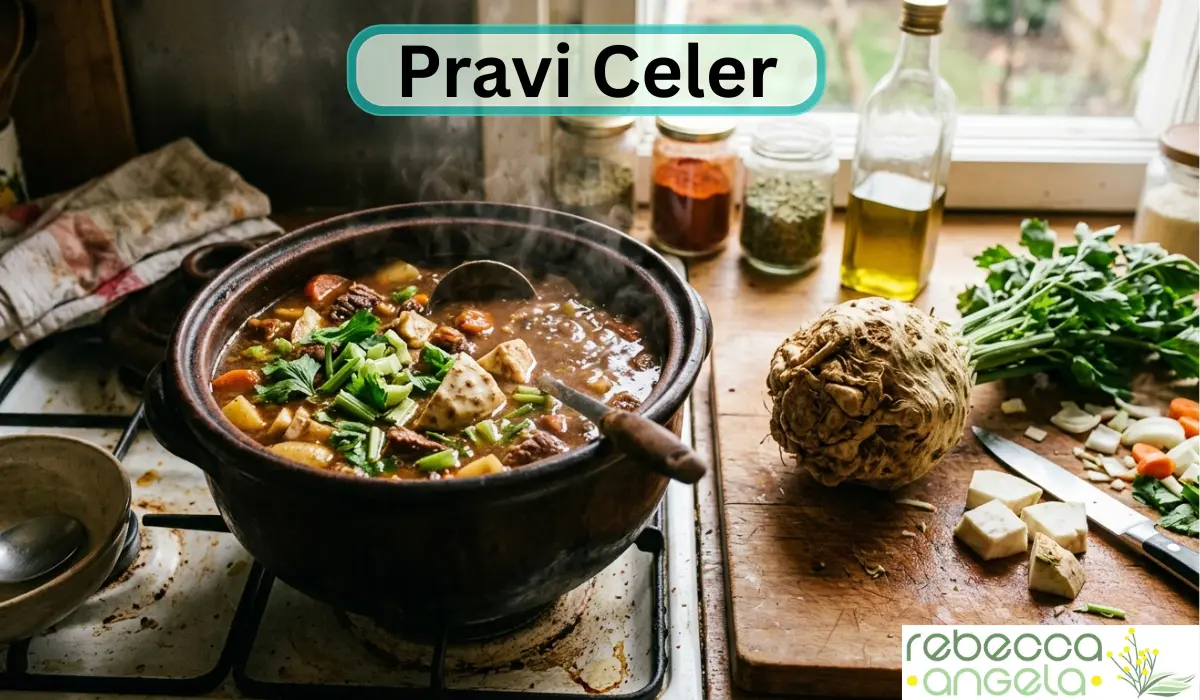

I was making soup on a Sunday afternoon — the slow kind, the kind that fills the whole house and I reached for the celery sitting in the fridge.
Pale. Watery. Odourless almost. I chopped it in anyway. But something felt off. Not wrong exactly. Just absent. Like the dish was missing a note it was supposed to have.
A few weeks later I came across from the term pravi celer in an old Balkan recipe and everything clicked.
What the Word Actually Says
Pravi celer comes from South Slavic languages — Serbian, Croatian, Bosnian. “Pravi” means true or real. “Celer” means celery.
But the phrase does more than name a vegetable. It makes a distinction. A quiet but firm one.
The celery most of us reach for at the supermarket is trimmed, uniform, and mild. It does a job. Pravi celer refers to something older and more complete — the whole plant, grown traditionally, used in full. Stalks, leaves, root, seeds. Nothing removed because it looked inconvenient on a shelf.
More specifically the term points to celeriac — the large knobby root variety, Apium graveolens var. rapaceum — which has sat at the centre of Balkan cooking for generations. In kitchens across Serbia, Croatia, and Bosnia a piece of celer root going into the broth is not a considered choice. It is simply what goes in. What has always gone in. What the soup would taste wrong without.
The word pravi only became necessary when a different version appeared and started using the same name.
A Plant With a Longer Story Than You’d Expect
Celery goes back more than three thousand years. Ancient Greeks and Romans used it primarily as medicine and ceremony — woven into garlands, documented by Hippocrates for digestion, found as seeds in Tutankhamun’s tomb.
It moved slowly through Europe and found particularly deep roots in Central and Eastern European kitchens. In the Balkans it became one of the only aromatic vegetables available year-round fresh through autumn, then dried and stored through winter. That kind of year-round dependability is how an ingredient stops being optional and becomes structural to a cuisine.
The whole-plant tradition comes directly from that history. When a vegetable is precious and seasonal you use all of it. The leaves get dried. The root goes into the broth. The seeds flavour the winter dishes. Nothing is wasted because waste was never an option.
What It Actually Does in the Kitchen
A chunk of celer root in a slow broth does something the stalks cannot. It releases a deep earthy fragrance into the liquid — musky, warm, slightly wild — that becomes the base note of the whole dish. It is the thing that makes a homemade soup smell like a homemade soup.
Beyond broth the root gets diced into meat stews at the very beginning of cooking, shredded raw into salads with lemon and olive oil, roasted until the edges caramelise, mashed quietly alongside potato, or pickled in brine for the cold months. The leaves are dried and crumbled into winter dishes as seasoning. The seeds go into stocks and rubs.
Every part earns its place. That is the whole point of pravi.
What’s Actually in It
The nutritional picture matches the flavour intensity. Pravi celer is dense in vitamin K for bone health and blood clotting, vitamin C for immunity, potassium for blood pressure, folate, and fibre. Its water content sits around 95 percent which makes it genuinely hydrating in a way that processed food simply is not.
It also contains phytochemicals — apigenin, luteolin, phthalides — that research has increasingly linked to anti-inflammatory and antioxidant effects. Traditional Slavic healers recommended it specifically for digestion, circulation, and kidney support long before those properties had scientific names. Modern nutritional research has largely confirmed what those older kitchens already knew.
The leaves, which most people throw away, contain higher concentrations of antioxidants than the stalks. That detail says a lot about how much nutritional value we routinely discard in the name of convenience.
Growing It
Celeriac rewards patience more than skill.
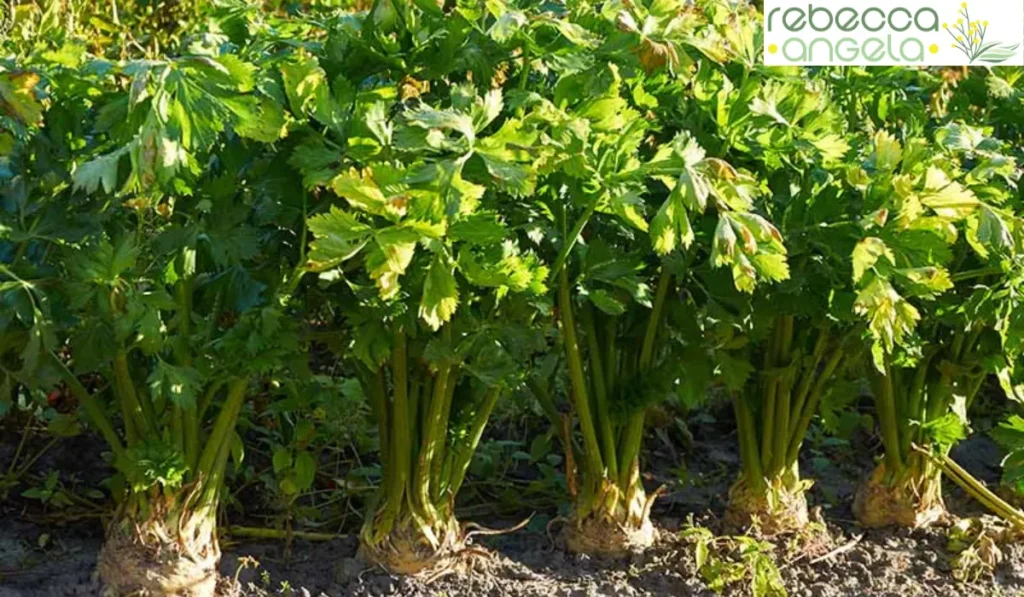
Start seeds indoors about ten to twelve weeks before the last frost. It wants rich soil, consistent moisture, and mulch around the base to keep the roots cool. It is a slow grower — three to four months from seedling to harvest — but autumn is when the flavour peaks and the bulbs are worth the wait.
The difference between a celeriac you have grown yourself and one that has sat in a supply chain for two weeks is the same kind of difference as a tomato warm from the vine versus one from a plastic bag. It recalibrates your understanding of what the vegetable actually is.
The Thing the Word Keeps Pointing At
What stays with me about pravi celer is not a recipe or a health benefit. It is the fact that we need the word at all.
The moment a culture has to invent a term for the real version of something it already had, something has been quietly lost. Pravi celer is the name that got added when the original became rare enough to need distinguishing from the imitation.
That happens with food. It happens with materials. It happens with making. The genuine version exists alongside a faster, cheaper substitute that borrows its name, and eventually the qualifier becomes necessary just to point back at what was always there.
Real celery. True celery. The kind your grandmother used without needing to explain what kind she meant.
Worth finding again.
Have you cooked with celeriac before, or does pravi celer change how you think about what’s in your fridge? Drop a comment — I would genuinely love to know.