
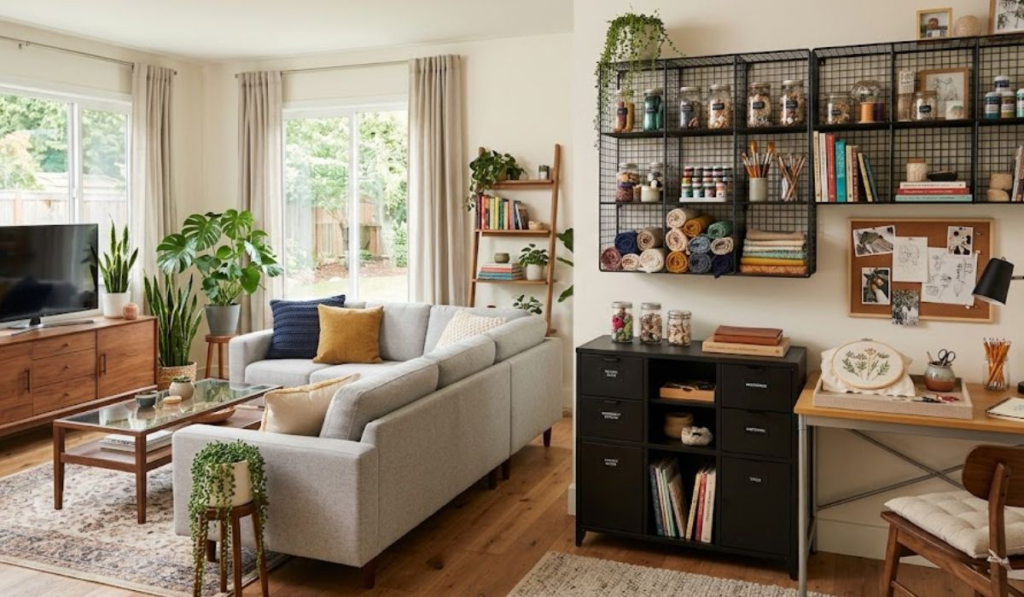

An unfinished project needs somewhere to wait. You might want to pick up your embroidery again tomorrow, but leaving the hoop, fabric and threads across a shared coffee table isn’t much of a storage plan.
Give that work a place between sessions. Separate the things you enjoy displaying from the project you’re using and the spare supplies you can put further away. Start with one hobby and the furniture you already have. The useful test is whether you can take out what you need, then return it without having to rearrange the cupboard.
If you do want an enclosed metal cabinet, Daedalus Designs’ USM Haller dupe guide offers a retailer’s comparison of alternatives. Its scope includes replicas and used genuine USM; replicas are distinct from genuine USM products. Keep your hobby supplies’ fit and access requirements in mind as you compare options.
Sort the supplies before choosing the storage
Gather the materials for one hobby so you can see what needs a home. Hold off on buying matching baskets until you know what will go inside them. A container chosen for its colour may turn out to be the wrong shape for the project.
Imagine an embroidery corner with an unfinished hoop, its pattern, several colours of thread, spare fabric and a favourite craft book. The hoop, pattern and threads belong together as the current project. Extra fabric and threads for later work are reserves. The book might earn a place on an open shelf if you enjoy seeing it there.
Be specific about what’s in progress. Materials saved for a possible future project don’t need to occupy the spot you’ll reach for each evening. Give those reserves a separate box or compartment, labelled if the contents aren’t obvious. You should be able to point to the current project without rummaging through the rest of your collection.
Choose what you want on show
Open shelves let you see and reach their contents without opening a door. That suits a craft book you browse regularly or a finished piece you want to display. Useful objects can be decorative, but your working supplies don’t have to earn their place by looking lovely.
If you prefer not to see packets, offcuts and unfinished work, choose a spot behind solid doors. Glass doors are different: they enclose the shelf while leaving its contents visible. Doors can reduce exposure to dust compared with open shelving, though the cupboard will still need cleaning.
You can use both kinds of storage within the same corner. In the embroidery example, the book could stay on a shelf while the project lives in the cupboard below. There’s no required balance between open and closed space. Choose the visible items with the people who share the room, and leave yourself access to the work tucked away.
If you are considering new furniture, Daedalus Designs’ USM Haller replica collection is one place to browse cabinet options. Compare each layout with the things you want to display and the supplies you would rather keep behind doors.
Give unfinished work a return place
Try keeping the active project in a removable tray or box. Choose one that holds the work as it is now, including the hoop and pattern, without having to unpack everything to make it fit. Test a container you already own before shopping for another.
Keep the threads for this piece with the project. The refill stock can stay in its separate reserve box. If small items mingle in the tray, use a smaller container or divider inside it rather than spreading the kit across several shelves.
A place behind doors can still be suitable for something you use often. Check that you can retrieve the kit when you want it. If you have to lift out two other boxes first, try giving the project a more accessible position.
Reserve that position for its return, too. Filling the empty space while you’re working leaves you with the same question at the end of the evening: where does the unfinished piece go now?
Check the cupboard around the kit
Put the filled container into the storage space you’re considering. Check its usable width, depth and height, including room for your hands to remove it. Open the door or drawer as you normally would and see whether anything catches or blocks your reach.
For the embroidery kit, a box that fits while empty proves very little. Try it with the hoop inside and the pattern where you intend to keep it. If the hoop protrudes or the lid won’t close, change the container or its position before deciding you need more furniture.
An existing cupboard that passes those checks can stay in service.
Try it through a session
Use the arrangement the next time you work on the project. Take out the kit, find the materials you need and put it back when you stop. Notice where you have to search, shuffle or leave something behind.
If the pattern ends up loose on the coffee table, give it a clear place in the kit. If threads scatter through the box, try a small divider. If putting the tray away means moving the reserve supplies, swap their positions and repeat the check.
When you finish a project or start a different one, review what belongs in the active kit. For now, choose the next piece you want to work on, gather its materials and try returning them to one designated spot. Leave that spot ready for tomorrow’s unfinished work.

