
Dark spots have a particular kind of stubbornness. They arrive quietly — a summer spent outdoors, a breakout that finally healed, a patch of skin that never quite evened out — and then they simply stay. Most things you try either do very little or irritate the skin in the process of trying.
Arbutin sits in a different category. Not because it works dramatically, but because it works without the trade-offs.
What is Arbutin?
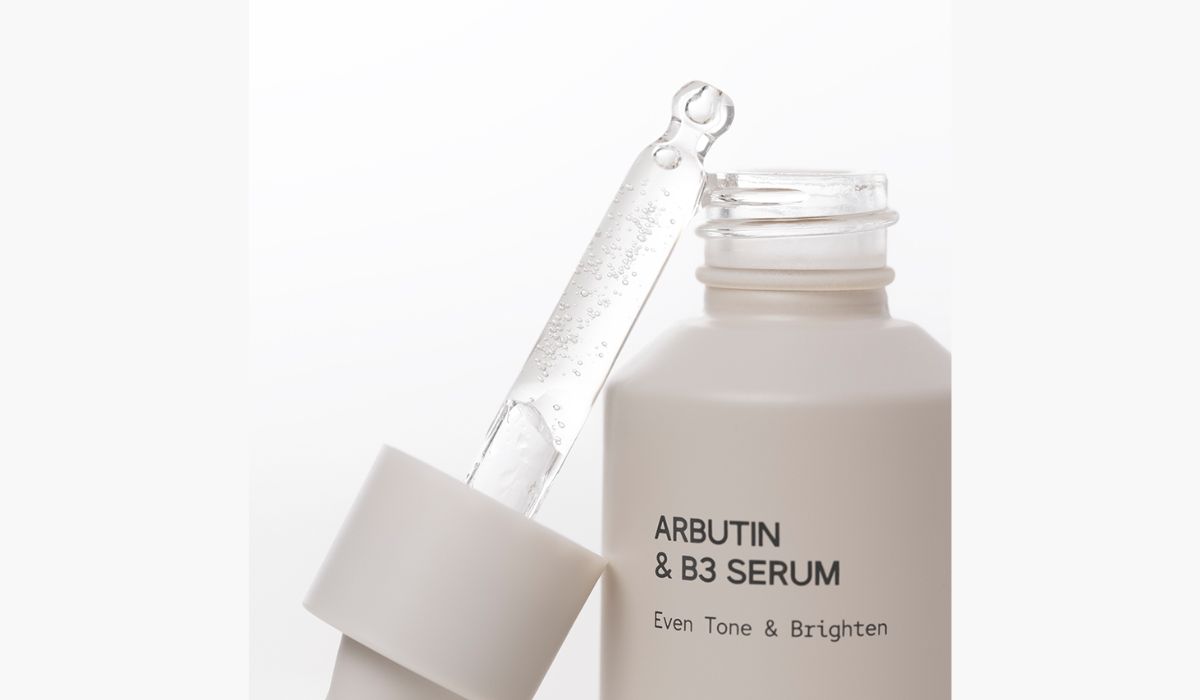
It comes from bearberry plants and has been studied long enough that the evidence behind it is genuinely solid. The way it works is by interrupting melanin production at the enzyme level. Skin produces pigment through a process that relies on tyrosinase. Arbutin slows that process down, which means existing spots fade gradually and new ones form more slowly.
Hydroquinone works the same way and has been a dermatology staple for decades. The difference is in what comes with it — irritation, sensitivity, restrictions on how long it can safely be used. Arbutin takes longer to show results but asks considerably less of the skin in return.
How Does Arbutin Serum Benefit the Skin?
The benefit is specific rather than broad. It targets localised pigmentation — sun spots, post-breakout marks, the kind of uneven tone that sits in particular areas rather than across the whole face.
A well-made arbutin serum also carries antioxidant activity, which matters more than it might sound. UV exposure and environmental stressors are what drive pigmentation to form in the first place. Slowing that process while also treating what is already there means the serum is working on two levels simultaneously.
Results come slowly. Six to twelve weeks is a realistic expectation. What tends to happen is that you stop noticing the spots rather than watching them visibly disappear — which is a quieter kind of progress but a real one.
Is Arbutin Suitable for All Skin Types?
Broadly yes. People who have reacted to hydroquinone, found kojic acid unpredictable, or found vitamin C in high concentrations too much tend to get on well with arbutin. The irritation risk is genuinely low compared to most active brightening ingredients.
That does not make patch testing optional. Apply a small amount somewhere discreet, wait twenty-four hours, and see what happens. It takes almost no time and removes the uncertainty before you commit to your face.
Incorporating Arbutin Serum into a Skincare Routine
After cleansing and toning, before moisturiser. That order puts the active ingredient directly on skin before anything else layers over it.
Regularity matters far more than quantity. A small amount used every day consistently will do more than a generous amount used whenever you remember. Skin responds to routine, not volume.
Sunscreen is not optional alongside this. Melanin production is triggered by UV exposure. Using a brightening serum without daily SPF is working against yourself. The two go together.
Comparing Arbutin to Other Skin Lightening Agents
Hydroquinone moves faster but carries more risk over time. Kojic acid causes sensitivity reactions in enough people to make it unreliable. Vitamin C works through a different mechanism and tends to complement arbutin well rather than compete with it — overall radiance from one, targeted spot treatment from the other.
Alpha-arbutin is worth knowing about. It is a more stable and more concentrated form of the same compound. If regular arbutin has not shifted persistent pigmentation after a few months, that is the natural next step.
When to Expect Results
Four to twelve weeks depending on the depth of pigmentation and how consistently the serum gets used. Progress that happens gradually is almost impossible to notice in the mirror daily.
Photographing the area every two or three weeks makes a real difference to how the timeline feels. Looking back at where you started six weeks in tells a completely different story than checking the mirror every morning and wondering if anything is happening.
Potential Side Effects of Using Arbutin
Mild irritation is possible but uncommon. The more frequent mistake is introducing arbutin at the same time as several other new products. If a reaction occurs you have no way of knowing what caused it. Add it to a settled routine rather than alongside a group of other new additions at once.
Research Supporting Arbutin’s Efficacy
The research is consistent and peer-reviewed. Tyrosinase inhibition is confirmed. Effectiveness as a depigmenting agent is confirmed. Dermatologists recommend it specifically because the risk profile is low relative to the result — particularly for anyone who needs long-term management rather than a short-term intervention.
A Slow Thing That Actually Works
Arbutin is not the most exciting ingredient in skincare. It does not promise a visible difference in a week and it does not deliver one. What it does is work steadily, suit most skin, and hold its results once they appear.
For a problem as persistent as hyperpigmentation, that kind of quiet reliability tends to be worth more than speed.