

A friend of mine moved to a bush block a few years ago and sent me a photo of her new sofa after its first summer. One arm had faded to a sort of tired biscuit colour, and the cushions had a fine film of red dust that no amount of vacuuming shifted. She laughed about it, but she also said she’d have chosen differently if someone had told her what the sun and the dust would do.
That’s the thing about furnishing a home in the bush. The setting is wonderful: native birds with your morning coffee, quiet evenings, a view of eucalyptus trees that goes on for acres. But furniture has to cope with strong sunlight, big temperature swings, dust, insects and the occasional wildlife visitor. And if a dining chair breaks, the nearest large retailer might be hours away.
The best bush homes balance practicality with personality. They use furniture that ages well, materials that don’t demand constant upkeep and interiors that sit comfortably with the landscape. Contemporary, industrial and minimalist styles all work in rural Australia, so there’s no need to settle for traditional country furniture. This guide is general advice drawn from common rural experience, so check details like fire safety and warranties against your own location and supplier.
The Australian Bush Changes the Rules of Interior Design
Where your home sits should shape almost every major furniture decision. Australia’s climate varies enormously, and what works in rural Victoria may be unsuitable for northern Queensland or the dry interior of Western Australia.
In hotter, drier regions, expect prolonged sun, airborne dust and large temperature changes. Upholstery can fade, cheap plastic furniture can turn brittle and poorly made timber can crack. Dust settles behind cabinets, under sofas and in anything with intricate detail.
In the tropics, humidity is the bigger problem. Upholstered furniture can grow mould in persistently damp conditions, untreated metal can corrode and some timber can swell. Furniture that lets air circulate and uses moisture-resistant materials earns its place there.
In the cooler south, furniture that adds warmth helps through winter. Thick upholstery, wool textiles, substantial timber pieces and comfortable armchairs make living areas more inviting.
Life outdoors matters too. Gardening, firewood, animals and acreage all bring dirt inside, and a living room that needs constant cleaning or furniture that stains easily gets frustrating fast. That’s why entry points deserve attention. A solid bench, enclosed storage and a dedicated place for outdoor gear turn the area beside the front door into one of the most useful spaces in the house.
Distance changes priorities as well. When repair services, replacement parts and delivery options are limited, simple construction wins. A wooden chair that can be repaired locally is often a better buy than a cheap imported chair you’ll have to replace.
And a gentle myth-buster: a bush property doesn’t have to look rustic. You don’t need wagon wheels, distressed cabinets or animal-themed accessories. Clean lines, contemporary furniture and restrained colours can connect a room to nature more convincingly than a lot of predictable country decor.
Materials That Can Handle Life Beyond the City
Appearance matters, but durability, repairability and maintenance should carry equal weight.
Australian hardwoods are among the most attractive choices. Spotted gum, blackbutt and blue gum have distinctive grain and natural colours that suit native surroundings, and suitable grades are strong enough for tables, benches and frames. Spotted gum has warm browns, reddish tones and occasional grey markings, and it works well in contemporary homes with concrete floors and neutral walls. Blackbutt is generally lighter, with cream and golden tones that suit bright rooms. Tasmanian oak is a good option for indoor furniture, though like any timber it needs a suitable finish and protection from prolonged moisture.
Solid timber has one real advantage over many cheaper alternatives: it can often be repaired. Scratches, dents and worn finishes don’t always mean replacing the piece, because sanding and refinishing can bring back furniture that has had years of daily use.
Engineered wood isn’t automatically a poor choice, and good plywood is stable and strong. Budget particleboard, though, can be vulnerable to moisture around exposed edges, which makes it a riskier pick in humid or damp conditions.
Metal brings its own advantages. Powder-coated steel makes strong frames for chairs, shelving and coffee tables, while aluminium is a lighter option, especially for outdoor seating you move between shaded spots. A hardwood table on a steel base gives an industrial look without feeling disconnected from nature.
Upholstery needs equal care:
- Leather wipes clean and develops character with age, but direct sun can fade and damage it and it can feel uncomfortable in heat. Keep leather sofas away from exposed windows.
- Fabric is often more comfortable across climates, especially breathable textiles. Tight weaves collect less debris than heavy textures, and removable covers make cleaning easier.
- Cotton blends, linen blends and performance fabrics each trade comfort against practicality. If you have dogs or children, check cleaning instructions, abrasion ratings and whether replacement covers are available.
Colour affects maintenance too. Pure white shows almost every mark, and very dark surfaces highlight pale dust. Mid-tones such as olive, taupe, warm grey and tobacco brown are a useful compromise.
Finishes depend on how much upkeep you’re willing to do. Natural oil finishes show off the grain and repair easily, but they may need reapplying from time to time. Lacquer can reduce routine maintenance, though it’s harder to fix when deeply scratched. Choosing materials is really about how the furniture will be used, not about buying the most expensive option.
From Muddy Boots to Afternoon Naps: Furnishing Each Room
Rooms in a bush home often work a bit differently from their suburban equivalents. Living areas open onto outdoor spaces, kitchens hold larger quantities of supplies and bedrooms become retreats during extreme weather.
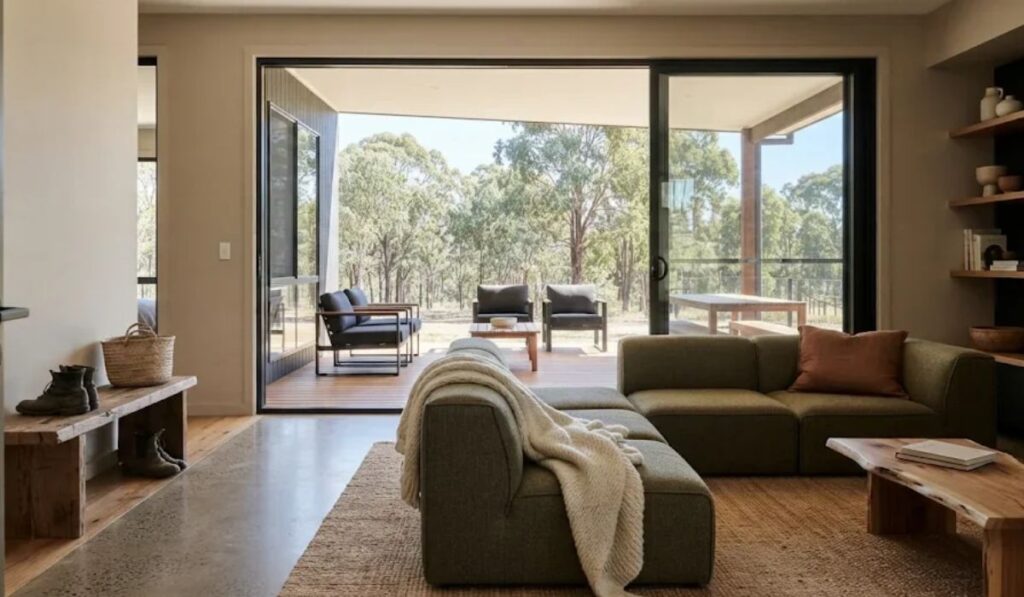
Living room. A substantial, comfortable sofa pays off, since rural life often means more evenings at home. Deep seating, supportive cushions and generous armrests make a difference. Modular sofas suit larger properties because sections are easier to carry through narrow doorways and a damaged piece may be replaceable alone. Removable cushion covers help in households with pets. For coffee tables, solid timber with rounded corners suits busy family homes, while glass shows dust and fingerprints immediately.
Dining room. The dining table often becomes the social centre of a rural home, doing duty for meals, homework, remote work and weekend gatherings. A rectangular hardwood table covers all of those. For chairs that need to survive heavy daily use, some people look at commercial-grade options. Homeowners who explore suppliers of bar and restaurant furniture may find reasonably priced chairs built to tolerate demanding conditions, and simple timber or metal designs can sit well in a home. Commercial pieces are designed for different use, though, so check comfort by sitting in them if you can, confirm the delivery cost to your address and look at the warranty and returns terms before buying. Benches are another good option in larger country homes, since they seat extra guests and tuck under the table.
Bedrooms. Solid timber bed frames with clearance underneath are easier to sweep and vacuum. Elaborate upholstered headboards can look lovely but collect dust. In humid regions, ventilation matters, and slatted bases promote airflow under the mattress. Wardrobes with doors that close properly protect clothes and bedding from dust and insects far better than open racks.
Entrance and utility spaces. A sturdy bench for removing muddy boots, shoe cabinets, wall hooks and washable mats contain the mess. Powder-coated metal shelving is easy to maintain in utility rooms, but tall units should be anchored securely to the wall, especially where there are children.
Home office. More people relocating to rural properties work remotely, so a supportive chair and a spacious desk are worth the investment. Placing a desk perpendicular to a window gives you the view while reducing screen glare.
One last thought on placement: leave room to move and clean. Every extra cabinet or side table is another surface for dust. A smaller collection of well-chosen furniture usually makes a bush home more comfortable and easier to manage.
The Verandah as a Second Living Room
The traditional verandah is one of the most useful features of a rural home. It gives shade, a transition between indoors and out and somewhere to enjoy the surroundings without sitting directly in the sun. It deserves the same thought as a living room.
Powder-coated aluminium is practical for outdoor seating. It’s lightweight, corrosion-resistant and easy to clean, so you can follow the shade through the day. Galvanised or well-coated steel is heavier and more stable in exposed spots, though maintenance matters, particularly where scratches break the protective coating. Outdoor-grade hardwood such as teak and suitable Australian species looks attractive, though it changes with sun and weather. Some owners keep it oiled to preserve the colour and others prefer the silvery patina it develops.
Outdoor dining tables with simple surfaces are easier to wipe down, while designs with grooves collect leaves, crumbs and insects. Outdoor lounge chairs with adjustable backs and removable cushions are ideal for quiet corners. Cushions and textiles should be made for exterior use, because ordinary indoor cushions deteriorate quickly in sun and moisture. Even “weather-resistant” cushions last longer if you store them dry and enclosed when they’re not in use.
Wildlife also shapes outdoor choices. Birds leave droppings on tables, spiders move into sheltered corners and possums investigate seating after dark. Simple frames with accessible surfaces make routine cleaning and inspection easier, and it’s worth wearing gloves when you clear out corners. Native animals are protected, so deter them humanely rather than harming them, and call your local wildlife rescue service if you’re unsure what to do.
Bushfire Safety and Outdoor Furniture
This one matters. Fire authorities, including Victoria’s Country Fire Authority, recommend removing combustible outdoor furniture and other flammable items from around homes, decks and verandahs ahead of dangerous fire weather. Follow the guidance from your own state or territory fire service and build furniture management into your bushfire survival plan. Metal furniture with few combustible parts may be a sensible choice in bushfire-prone areas, but no furniture choice makes a property immune to bushfire, and your local council or fire authority can advise on requirements for your site.
Bringing the Colours and Textures of the Bush Indoors
The bush is an extensive source of inspiration. Eucalyptus leaves, weathered bark, red soil, sandstone and native grasses all translate well into interiors.
- Eucalyptus green suits upholstery because it’s muted and adds colour without overwhelming a room. Olive armchairs, sage sofas and deeper green dining chairs sit well beside natural timber.
- Ochre and terracotta add warmth, echoing red soils, and contrast nicely with cream walls and charcoal frames.
- Warm beige is dependable for large pieces and softer than stark white under strong natural light.
- Charcoal gives a contemporary edge. Dark metal chair frames and shelving balance lighter colours when used selectively.
Texture does a lot of the work as well. Linen curtains, wool blankets, leather chairs and timber surfaces add variety without needing lots of decoration. Australian country minimalism, with generous proportions, natural materials, restrained decoration and clean lines, offers an appealing alternative to traditional farmhouse interiors.
Let large windows guide placement. If your home is surrounded by native vegetation, the view is already the main feature, so oversized cabinets and high-backed sofas can get in the way. Low-profile furniture works well in open-plan spaces and lets you appreciate the outdoors from different spots. Reclaimed timber adds character too, since the markings on salvaged hardwood set it apart from mass-produced pieces, and imperfections often suit rural interiors better than glossy finishes. Warm floor lamps beside armchairs and pendants over the dining table finish things off after sunset.
You don’t need to recreate the outdoors inside. A few well-chosen materials and colours do the job without botanical prints and animal ornaments in every room.
Buy for the Next Twenty Years, Not the Next Season
When you live outside a major centre, furniture decisions carry longer consequences. Delivery charges, long replacement times and limited repair services can turn a cheap purchase into a recurring expense.
- Second-hand: Older hardwood tables, dressers and bedroom furniture are often better built than similarly priced new items, and minor cosmetic damage is usually repairable. Check for borer, loose joints and moisture damage before you buy.
- Local makers: A regional carpenter may be able to build a table, cabinet or bench to fit an unusual space, using timber suited to the environment. Ask to see previous work and agree on a written quote.
- Repairability: Chairs with replaceable seats, sofas with removable covers and cabinets with standard hinges are generally easier to maintain than those with proprietary parts.
- Delivery costs: Some retailers charge extra for rural addresses, while others deliver only to regional collection points. Difficult driveways, unsealed roads and restricted truck access can complicate things. Confirm the total cost before you order bulky items.
- Pace: Buy the essentials first, such as a good bed, supportive sofa, solid dining table, comfortable chairs and practical storage. Add decorative pieces gradually.
If you can, live through at least one summer and one winter before filling every room. A verandah that looks perfect for afternoons in June may get uncomfortable direct sun in January, and a spare room meant as an office may be too warm without shading.
Keep maintenance manageable. Regular dusting, cleaning upholstery, inspecting outdoor furniture and caring for timber finishes extend the life of what you own. Deal with signs of moisture damage or pest activity early, before small problems grow.
Making the Bush Home Work
The best furniture for a home in the bush has solid construction, natural materials, comfortable proportions and straightforward maintenance. Hardwood dining tables, washable fabric sofas, enclosed storage, supportive armchairs and metal outdoor seating are all sensible places to start.
Above all, a bush home should make rural living more enjoyable. Its furniture should cope with muddy boots, long family dinners, quiet afternoons, unexpected visitors and changing seasons without demanding constant attention. Choose for comfort and practicality, and the bush around you becomes the best decoration you have.

