
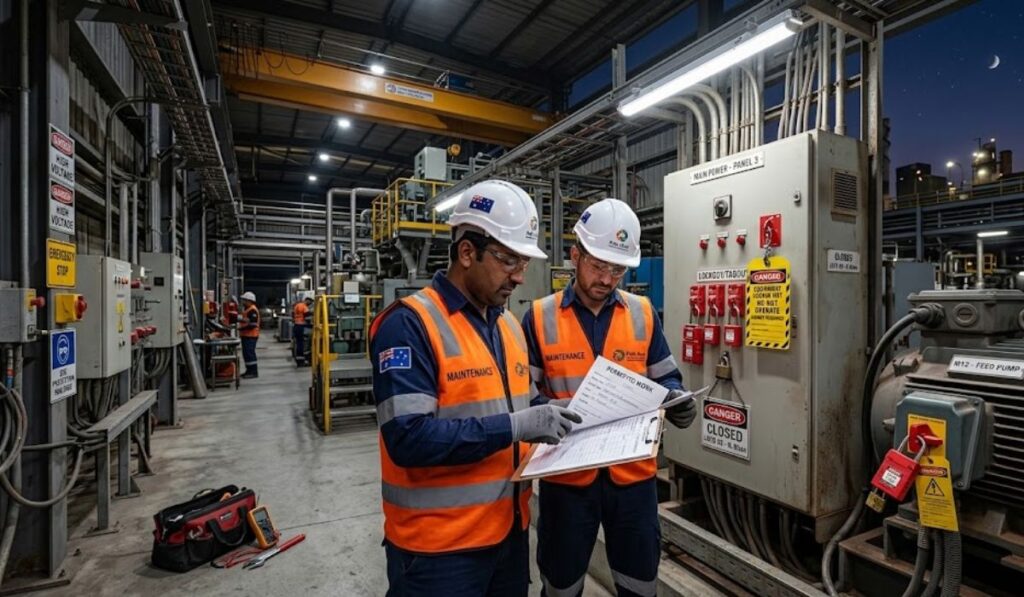

On a shutdown morning at a manufacturing plant, a maintenance crew gathers around a motor that needs servicing. One worker believes the isolation was completed the night before. Another thinks it was only partly done, and a newly started contractor isn’t sure which panel is which. No one is being careless. They’re simply working from slightly different assumptions, and around electrical equipment, that can be enough to cause harm.
Workplaces across construction, manufacturing, mining and industrial maintenance deal with hazards like this every day. Electrical equipment, complex machinery and high-risk maintenance can cause serious injury when a hazard is missed or a procedure isn’t followed.
A strong safety programme usually combines clear procedures, competent workers and good communication. Two parts of that picture are permit-to-work systems and electrical safety training. Together they help organisations manage hazardous jobs, set out who is responsible for what and reinforce safer habits on site. For Australian businesses, understanding how the two fit together is a useful step towards a more dependable work health and safety (WHS) framework.
Why Risk Management Needs More Than Written Procedures
Safety policies give you a foundation, but they’re only as good as the way they’re carried out. Workers need to understand the risks in their tasks, know which controls apply and recognise when work shouldn’t go ahead.
That matters most during maintenance, equipment installation, shutdowns and any job involving hazardous energy sources or several contractors in the same area. A task that looks routine can turn dangerous when equipment isn’t properly isolated, site conditions change or people misunderstand their responsibilities. Without a good process for identifying hazards and passing on the controls, small oversights can become serious incidents.
Under Australia’s model WHS framework, businesses must manage risks so far as is reasonably practicable and give workers appropriate information, training, instruction and supervision. The exact legal requirements depend on the jurisdiction and the circumstances, so it’s worth checking with your regulator. Permit-to-work procedures and electrical safety training can both support those duties, each from a different angle.
What Is a Permit-to-Work System?
A permit-to-work system is a formal process for controlling specified hazardous activities. It sets out the conditions under which particular work can begin, continue and be completed.
Depending on the site and its procedures, permits might be used for hot work, confined space entry, certain maintenance tasks and work that needs specific isolation or authorisation arrangements. A permit isn’t just paperwork. It’s how a site confirms that hazards have been identified, precautions are in place and everyone involved understands the job.
A typical process might involve:
- Defining the scope and location of the proposed work.
- Identifying hazards and assessing the risks.
- Putting suitable control measures in place before work starts.
- Confirming isolation requirements and other precautions.
- Obtaining authorisation from the right people.
- Communicating the conditions to workers and contractors.
- Monitoring the work and managing changes in site conditions.
- Closing the permit once the task is done and the required checks are complete.
The process has to reflect the organisation’s real hazards and operating procedures. A permit doesn’t replace risk assessments, safe work method statements where they’re required, or competent supervision.
Developing Permit-to-Work Knowledge
Workers and supervisors involved in hazardous activities need to know how permits work inside their own organisation. That includes understanding what an authorisation covers, noticing when conditions have changed and knowing when to stop work.
For businesses looking to build these capabilities, Permit to Work Training is one option to look at among the courses available. Training in this area can help people understand why permit systems exist, who is responsible for what and why safety controls need to be verified before work proceeds.
It’s especially useful where maintenance teams, contractors and operations staff have to coordinate around equipment, restricted areas or hazardous processes.
Electrical Safety: Identifying Hazards Before Work Begins
Electricity is part of almost every modern industrial operation, and it can also cause electric shock, burns, fires and fatal injuries.
Risks can come from damaged power leads, faulty equipment, exposed conductors, unsuitable equipment used in wet conditions or work near energised systems. Temporary power and portable tools deserve particular attention on construction sites and in industrial settings.
Electrical safety starts with identifying hazards and making sure the right controls are in place before equipment is used or work begins. Workers should be able to spot visible damage, report faults promptly and follow procedures for taking unsafe equipment out of service. Where isolation is needed, it has to be carried out by people who are competent and authorised to do it, following the relevant procedures.
Electrical work that requires a licence must be done by a properly licensed or registered person under the state or territory rules. General workplace safety training doesn’t authorise an unlicensed worker to carry out restricted electrical work.
Essential Electrical Safety Practices
Australian workplaces can strengthen electrical risk management through a few practical measures:
- Inspect equipment before use. Check leads, plugs, tools and other electrical equipment for obvious damage, and report defects rather than carrying on with unsafe items.
- Apply suitable isolation procedures. Equipment must be isolated and secured against unintended energisation when the task and procedures require it.
- Use appropriate protective controls. Residual current devices, suitable equipment selection and testing arrangements can help manage electrical risk where required.
- Maintain safe work areas. Water, dust, damaged cables and poorly managed temporary power all increase risk, so address them with suitable controls.
- Ensure competent inspection and testing. Equipment that needs formal inspection or testing should be assessed by a competent person under the applicable requirements.
- Provide relevant training and supervision. Employees and contractors need instruction that matches their tasks, their equipment and the hazards around them.
These measures work best as part of an overall risk management system, not as isolated checks.
How Electrical Safety Training Supports Safer Work Practices
Not everyone has the same electrical responsibilities. Some workers use portable equipment every day. Others supervise maintenance or work in environments where electrical hazards are more complex. Training should reflect those differences, so people understand the hazards of their role, the precautions they must follow and the limits of their authority.
Businesses and workers can explore Electrical Safety Training through a registered training provider to find options that suit them. Good training can reinforce hazard awareness, safe equipment use, reporting procedures and the importance of following established controls. It should sit alongside practical instruction, site inductions and any extra qualifications needed for specialised work.
Employers should check that the course they choose matches their actual workplace needs. A general electrical safety course shouldn’t be assumed to meet licensing requirements or to authorise work that legally requires an electrician.
Why Permit-to-Work and Electrical Safety Must Work Together
The two address different parts of risk management, but each depends on the other.
Consider a maintenance team preparing to service a motor. The work needs formal authorisation, an assessment of the task and confirmation that the equipment has been isolated. The permit sets the conditions under which maintenance can proceed. Electrical safety procedures deal with the specific hazards of electrical energy, isolation and verifying that conditions are safe.
If a permit is approved without anyone verifying the precautions, the authorisation alone can’t make the work safe. And electrical precautions can fall apart if contractors don’t understand the scope of the task or if changes are made without proper communication. A coordinated approach means everyone knows what work is authorised, which controls must stay in place and how changes will be handled. The same applies during shutdowns, installations, fault investigations and any maintenance involving several teams.
Common Mistakes Businesses Should Avoid
Even workplaces with documented procedures run into trouble when the processes aren’t followed consistently. Common problems include:
- Treating permits as paperwork rather than active risk controls.
- Failing to communicate changes in work conditions.
- Leaving damaged equipment in service.
- Assuming past experience removes the need for task-specific checks.
- Assigning responsibilities without confirming the person has the training or competence.
Businesses can tackle these by reviewing procedures, consulting with the workers affected, checking that controls are really in place and investigating incidents and near misses. Training should be refreshed or supplemented when risks change, new equipment arrives or people take on different responsibilities.
Choosing the Right Training for Your Workplace
Good choices start with understanding the tasks your people perform and the hazards they meet. Before picking a course, consider:
- Which activities involve formal permits or specific authorisation procedures?
- What electrical hazards are present in the workplace?
- Which employees need general awareness, task-specific instruction or specialised qualifications?
- Are practical assessments, licensing requirements or site inductions also needed?
- How will supervisors check that workers can apply the procedures?
The answers will look different for a construction contractor, a manufacturing facility and a mining operation. Select training based on the work actually being done, rather than expecting one course to cover every requirement.
Building a Stronger Safety Culture Across Australia
Effective risk management depends on how people, procedures and conditions interact. Permit-to-work systems set boundaries around hazardous activities, while electrical safety practices help workers recognise and manage the risks of electrical equipment and energy.
Neither works well alone. Both need clear responsibilities, suitable training, reliable communication and regular checks that the controls still make sense. For Australian businesses, reviewing permit procedures and strengthening electrical hazard awareness can help create more consistent practices across construction, maintenance and industrial operations, and help protect the people who do essential work every day.


