

I never think about the pipes under my own garden until something goes wrong above it, a slow drain, a damp patch that shouldn’t be there, a smell that wasn’t there last month. Underground plumbing is built to carry wastewater away quietly and stay out of sight while it does it, and for the most part it manages exactly that. But buried doesn’t mean untouched. Soil shifts, moisture levels rise and fall, ground conditions change underneath a property in ways nobody’s watching, and over time that movement can put real pressure on pipes that were never designed to bend. Cracks develop. Joints shift out of place. Drainage problems start, quietly, long before anyone notices.
That’s really the catch with this kind of damage. It happens out of sight, so a homeowner often doesn’t know anything’s wrong until the symptoms show up somewhere obvious. Understanding how ground movement actually affects underground plumbing is worth doing before that point, especially for anyone with an older drainage system, unstable soil, or construction happening nearby. When pipes do end up damaged, something like pipe relining Castle Hill may offer a repair option for the right sections of pipe without a full dig-up. Whether it’s the right call depends entirely on what’s actually gone wrong underground, which is why a proper assessment matters more than guessing.
Understanding How Ground Movement Occurs
Ground movement is simply a change in the position, volume or stability of the soil beneath the surface. It happens naturally, through seasonal weather, shifts in moisture, erosion, gradual settlement, nothing dramatic on its own. Some soils are far more prone to it than others. Reactive clay is the obvious example. It swells when it takes on moisture and shrinks back as it dries out, and that cycle repeats itself season after season.
Underground pipes feel this because they depend on stable bedding and the soil around them for support. When that ground shifts, a section of pipe can end up under pressure it was never built to handle. How much damage follows depends on the pipe material, how well it was installed originally, its depth, and its existing condition. Minor movement on its own usually isn’t a problem. It’s the repeated or significant shifts over time that tend to cause real structural issues.
How Expanding and Shrinking Soil Can Damage Pipes
Moisture does most of the damage here. Heavy rain lets soil absorb water and expand. A long dry stretch does the reverse, and the same soil contracts as it loses moisture. Where the ground is highly reactive, that back and forth repeatedly changes the support surrounding a buried pipe.
Rigid pipes bear the brunt of it, bending or carrying uneven pressure as the ground beneath them keeps shifting. Older earthenware and concrete pipes are especially vulnerable if there’s already a weak joint or a hairline crack sitting there waiting to widen. Plastic pipes handle some movement better, but they’re not immune either once ground displacement goes beyond what they’re built to flex with. Over enough cycles, this can mean joints separating, fractures forming, or the pipe’s alignment drifting out of true. Good surface drainage around a property helps manage some of the moisture risk, though it won’t stop natural ground movement altogether.
The Effects of Ground Settlement on Drainage Systems
Settlement is a slightly different problem, soil gradually compressing or sinking rather than expanding and contracting. It happens as recently disturbed ground consolidates, as materials underground break down, or as supporting soil gets washed away over time. It’s particularly common around old trench lines, where backfill that wasn’t compacted properly during installation settles unevenly later on.
Drainage depends on a consistent gradient to keep wastewater moving toward the sewer connection, so when settlement causes part of a pipe to sag, it creates a low point where water and waste just sit. Plumbers call this a pipe belly, and once it’s there, sediment and grease tend to collect in that spot, which means blockages keep coming back. Unlike a straightforward crack or a loose joint, a genuine change in alignment like this usually needs excavation and physical correction. A lining repair isn’t built to fix that kind of problem.
How Nearby Construction Can Influence Underground Pipes
Construction and landscaping work nearby can shift ground conditions around plumbing that was perfectly stable before anyone picked up a shovel. Excavation, heavy machinery, soil compaction, changes to surface drainage, all of it can affect the soil’s stability. Retaining walls, extensions, driveways, any major landscaping project, these are the ones worth paying attention to when there’s underground plumbing close by.
Digging near a drainage line can reduce the support that soil was providing. Heavy equipment adds load the ground wasn’t carrying before. Even changing the surface level can redirect rainwater toward a spot that used to stay relatively dry. Before any major work starts, it’s worth locating the underground services first and thinking through whether the planned work could reach them. A bit of planning, a service locate, and the right professional advice up front tends to save a lot of accidental damage later.
Common Warning Signs of Ground-Related Pipe Damage
Damage from ground movement often looks just like any other plumbing problem. Slow drains, blockages that keep returning, a sewer smell that won’t go away, wastewater backing up into the house, any of these could point to it. They could just as easily point to tree roots, built-up debris, or a damaged pipe surface that has nothing to do with the ground around it, which is exactly why it’s worth not jumping to conclusions.
Sometimes there’s a more physical sign above ground, a patch of soil that’s unusually damp, a bit of erosion, a change in how the ground sits. Persistent wet patches near a drainage line are worth looking into, especially when there’s no obvious reason for them. Repeated drain cleaning on its own tends not to fix anything if the real cause is structural. If the same symptoms keep coming back after a clean, it’s usually time for a proper inspection to find out what’s actually going on underground.
Why CCTV Drain Inspections Are Important
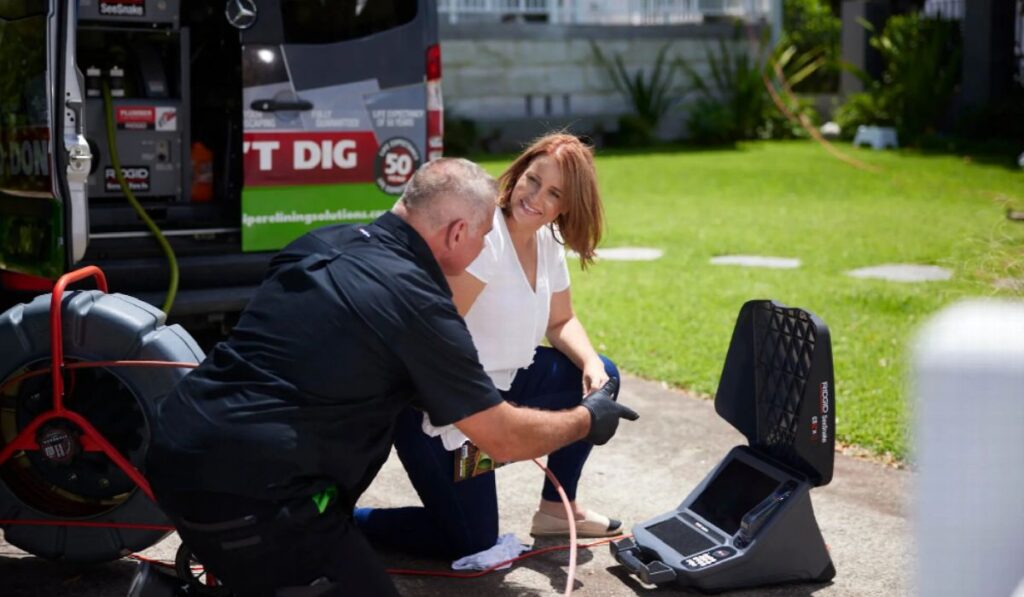
Pipes buried this deep aren’t exactly easy to get a look at directly, which is where a CCTV drain inspection earns its place. A small camera gets guided through the system to check its internal condition, picking up cracks, shifted joints, root intrusion, debris build-up, and any obvious signs of poor alignment where water’s pooling instead of flowing through.
It’s genuinely useful information, enough for a plumber to work out whether cleaning, repair or replacement makes sense. What it can’t always do is explain why the ground moved in the first place, or show what’s happening outside the pipe itself. Where there’s reason to think settlement, erosion or real instability is behind it, a further assessment is usually worth doing. Fixing the crack the camera found without addressing the ground movement causing it tends to mean doing the same job again before too long.
Choosing the Right Repair Method for Damaged Pipes
The right fix depends on the pipe’s actual condition, how much the ground has moved, and whether the soil around it has settled into something stable. For pipes in reasonable structural shape with fairly localised damage, trenchless relining can be a solid alternative to digging the whole thing up. A resin liner goes in through the existing pipe and cures into a new internal surface, sealing cracks and damaged joints along the way without tearing up a driveway or garden to get there.
It’s not the answer for everything, though. A badly collapsed pipe, serious displacement, a major change in gradient, ground that’s still actively moving, these usually call for excavation and replacement instead. And if the ground movement itself hasn’t stopped, that underlying cause needs addressing too, or the same damage shows up again down the track. A qualified plumber can walk through what’s actually possible given the pipe’s real condition, which beats assuming one repair method will solve every underground problem the same way.
Reading the Ground Before It Reads Your Pipes
Ground movement affects underground plumbing in more ways than most people expect, pressure on rigid pipes, joints separating, drainage alignment drifting out of place, all from forces happening quietly beneath the surface. Soil expansion, settlement, shifting moisture, construction nearby, each one plays a part, and because so much of it develops out of sight, the first real warning is often nothing more than a blockage that keeps coming back or a damp patch nobody can explain.
Knowing what’s actually behind that kind of symptom makes a real difference in how it gets handled. A proper inspection can identify which sections are damaged and whether relining, a targeted repair or full replacement is the right call for that specific problem. Looking into a persistent drainage issue properly, rather than treating the symptom over and over, is what actually protects the plumbing underneath a property, and saves a fair bit of frustration along the way.

