
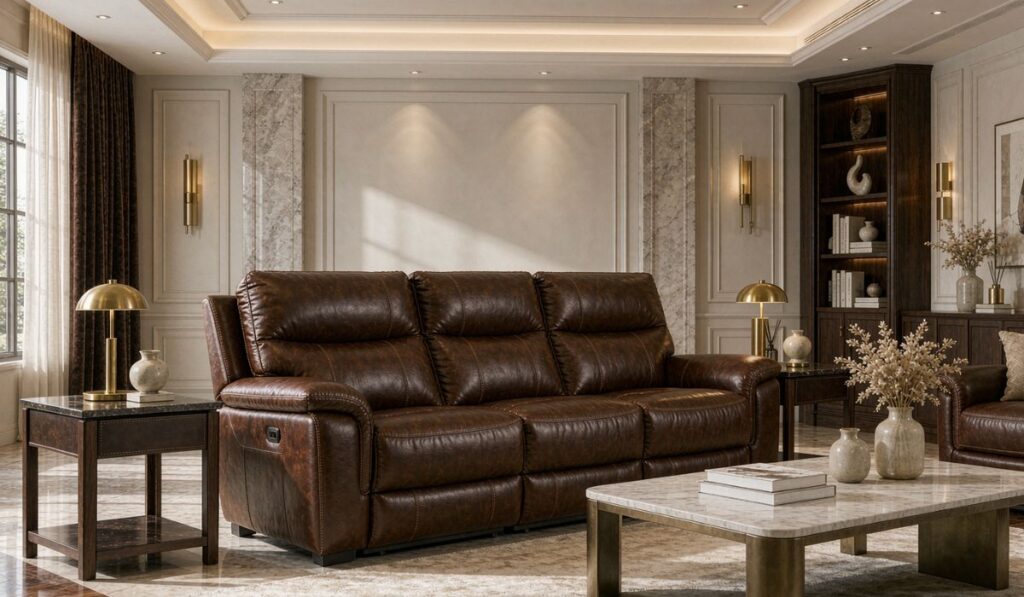

There’s a specific spot in most living rooms that ends up doing more work than anywhere else in the house, the corner you land in after a long day, coffee or wine in hand, half paying attention to whatever’s on. When that spot happens to hold a leather loveseat that reclines, the quality of the leather and the mechanism underneath end up mattering more than most people expect going in. When you consider a top-grain leather reclining loveseat, read the build before the badge, because most of what separates a good one from a disappointing one is buried in details nobody points out on the showroom floor.
What Top Grain Actually Means
Top grain leather is genuine hide, sanded smooth and finished to resist stains, and it holds up in ways bonded or lower grades simply don’t. Cheaper grades tend to peel or crack within a few hard years. Top grain ages instead, picking up a light patina rather than falling apart at the seams, which matters if there’s a cat in the house that’s decided the arm of the loveseat is fair game.
Worth asking for the grade by name, and worth feeling the surface before committing to anything. Real top grain feels alive under a palm, and it tends to smell like a tannery rather than a factory floor, a small test but a reliable one for something you’ll be sitting on daily.
Getting the Recline Right
Power recline gives a full range between upright and flat, and it’s noticeably smoother than wrestling with a manual lever at the end of a tiring day. Worth checking whether the footrest slides straight out rather than the whole back sliding toward the wall, since that decides how much clearance the piece actually needs behind it.
A steady hinge and a quiet motor matter more here than any extra feature that sounds nice in a brochure but tends to break first. The recline gets used every evening, so it should feel effortless from the first press. Worth testing the motion a few times in the store, since a recline that’s actually enjoyable to use is the one that gets used, rather than left flat and ignored in the corner within a few months.
Frame and Fill
A hardwood frame with corner blocking holds both the leather and the moving parts in shape through years of daily weight. High density foam with a fiber wrap gives a soft first sit along with support that holds up through long evenings rather than collapsing after a few months.
Press down on the seat and watch how it recovers. Slow bounce-back usually signals weaker fill underneath, the kind that starts letting a person down well before the first year is out. The frame and the fill are what decide whether a loveseat still feels good in year two, not the way it looked under showroom lighting. It’s worth putting the money into the structure first, since the leather was always meant to sit on something solid underneath it.
Where It Fits in the Room
A loveseat suits a corner, or a pair arrangement, in a way that defines a cosy area without blocking the path people actually walk through the room. Worth leaving enough clearance for the recline, and keeping the coffee table something that can move, so the footrest has room to open without hitting anything on movie night.
In a smaller room, a loveseat seats two comfortably while taking up noticeably less space than a full sofa would. Planning the footprint around the fully reclined position, rather than just how it looks sitting upright in the showroom, tends to save a headache later. A well placed loveseat can turn a dead corner into the best seat in the house, which is a quiet kind of win nobody in the household will comment on but everyone will notice.
Looking After the Leather
Conditioning top grain leather two or three times a year keeps the finish from drying out and cracking, particularly through a long stretch of indoor heating over winter. Keeping it out of direct sun matters too, since sunlight fades leather dye faster than it fades fabric, and it’s easy to end up with a noticeably lighter back than arms that happened to sit in shade.
Wiping up spills right away with a damp cloth and a touch of mild soap works far better than reaching for a harsh solvent that strips the finish along with the mess. This kind of care takes minutes rather than hours, and it tends to be the difference between leather that still looks handsome after a few years and leather that’s visibly cracking by year three.
Letting It Lead the Room
Leather makes enough of a statement on its own that the decor around it works best kept calm, a neutral rug, one wood accent, soft lighting from something already in the room. Piling patterns nearby tends to compete with the leather rather than let it stand out the way it’s meant to.
A little restraint makes the loveseat feel like a deliberate choice rather than something that just landed there. One piece of art above the seat can fill the height on the wall and tie the warm tone of the leather into the rest of the space. Often the loveseat needs nothing more than cleared space around it and one well placed object nearby to look exactly right.
Matching Colour to the Room
Top grain leather takes dye evenly, which opens up either a deep tone that hides everyday wear or a lighter shade that can brighten a corner that doesn’t get much natural light. Worth matching the tone to the walls and the light they actually get, since a colour that looks rich under store lighting can read completely differently under the bulbs at home.
A neutral brown or grey tends to sit well with most existing decor and ages better through changes in style than a bolder colour that can feel dated within a few years. Pulling a swatch and holding it against the floor before committing is worth the extra step, since leather is a lot harder to return than a cushion bought on impulse.
What to Check at a Glance
| Part | What to check |
|---|---|
| Leather | Top grain, genuine hide |
| Recline | Power, smooth motion, low clearance |
| Frame | Hardwood, corner blocked |
| Fill | High density foam with fiber wrap |
| Care | Condition regularly, keep out of direct sun |
A leather reclining loveseat earns its place by doing one thing well rather than by trying to do everything at once. Keeping the top clear of remotes and stray books lets the leather actually read as the centrepiece it is, rather than another surface for clutter to collect on. Given the space it deserves, and looked after with a bit of regular care, it tends to reward the choice every evening, comfortable, good looking, and worth the corner it’s claimed in the room.


