
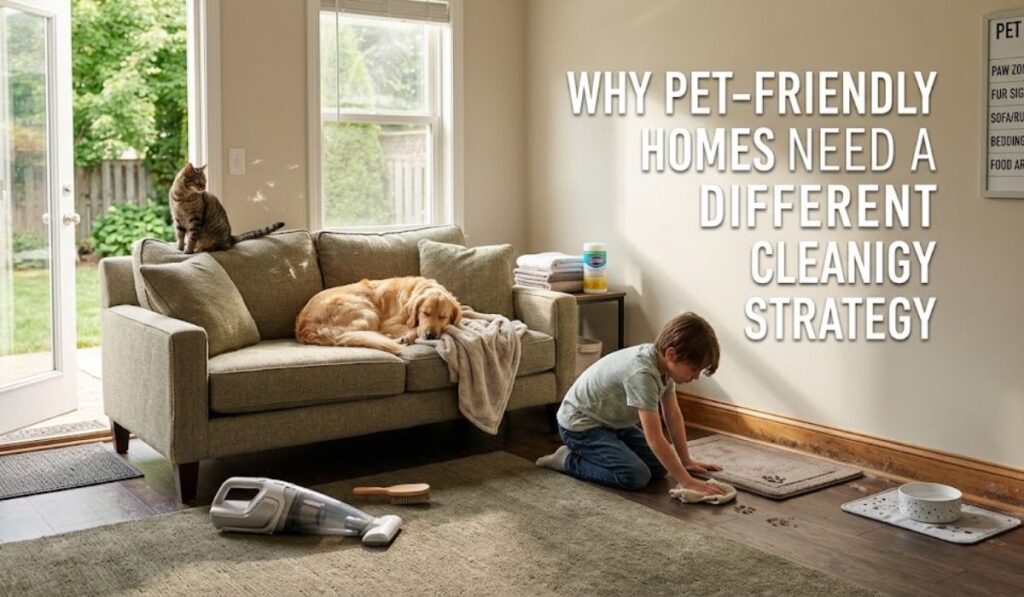

A home with pets runs on its own rhythm. Muddy paws after a walk in the rain, fur collecting in corners nobody thought to check, water splashed around the bowls, a toy wedged under the sofa, and every so often a smell that seems to come from absolutely nowhere. For a lot of pet owners, keeping the place clean was never just vacuuming once a week and wiping down the kitchen bench. It usually means building a routine around the animal, which is part of why some families lean on a professional cleaning service to help manage fur, odours, floors, and the harder-to-reach spots where pet mess quietly builds up over time.
Living with pets doesn’t mean accepting a permanently messy home though. It just means cleaning differently than you would otherwise.
Pet Hair Has a Talent for Travelling
Anyone who’s owned a shedding dog or cat already knows fur rarely stays where the pet actually sits. It moves. It sticks to clothing, drifts across hard floors, gathers under furniture, and somehow ends up in rooms the animal barely sets foot in.
On carpet, fur works its way deep into the fibres. On timber or tiled floors, it tends to collect along edges and in corners instead. Upholstered furniture holds onto it surprisingly well too, more than most people expect until they actually go looking.
This is really why pet-friendly homes benefit from more frequent vacuuming rather than one big clean at the end of the week. High-use areas like living rooms, hallways, and bedrooms might need attention several times a week, while rooms that see less traffic can go longer between cleans.
Worth vacuuming under furniture every now and then too. Hair collects under sofas, beds, and cabinets, exactly where normal airflow pushes it out of sight and out of mind.
The Entrance Becomes a Cleaning Zone
For a lot of pet owners, the front or back door is where most of the mess actually starts. Dogs coming back from a walk bring in mud, sand, leaves, and moisture. Cats that spend time outside can carry dirt on their paws and fur without anyone noticing until it’s already on the carpet.
Rather than treating the whole house as the first line of defence, it helps to set up a small cleaning zone right at the entrance. A washable mat, a towel, and a paw-cleaning cloth can stop a surprising amount of dirt from ever making it further inside.
This matters even more during wet weather. Cleaning a muddy paw print near the door takes a few seconds. Cleaning a trail of them through the kitchen, hallway, and living room takes a lot longer, and usually happens on the one day you didn’t have time for it.
Floors Need a More Flexible Routine
Pet-friendly homes often need different cleaning frequencies for different floors. Hard flooring makes pet hair easy to spot. Even a few small clumps can make an otherwise clean room look untidy at a glance.
Carpet hides hair more effectively, which can actually be misleading. Fur, dirt, and fine particles can sit between the fibres even when the surface looks perfectly fine from a distance.
Homes with both carpet and hard flooring need a mixed approach as a result. Hard floors tend to benefit from frequent vacuuming or sweeping, while carpet usually needs a slower, more thorough pass. If pets are regularly coming indoors after being outside, the high-traffic areas deserve a bit of extra attention over everywhere else.
It’s not really about cleaning the whole home every single day. It’s about knowing where the pet activity actually concentrates and focusing there.
Pet Bedding Can Become the Hidden Source of Odour
One of the most overlooked spots in a pet-friendly home is the pet bed itself. Beds, blankets, and soft toys hold onto hair, skin particles, saliva, and outdoor dirt in ways that aren’t always obvious until you actually pick them up.
Over time, these fabrics can develop an odour even when the rest of the house is genuinely clean. Regular washing makes a real difference here. If the bedding’s machine washable, following the care instructions and washing it on a consistent schedule helps keep both the pet area and the room around it smelling fresher.
Vacuuming underneath the bed matters just as much. Hair and dust tend to collect around the edges, especially if the bed’s stayed in the same spot for months without moving.
Food and Water Areas Need Daily Attention
Pet feeding zones are another part of the home that need their own routine. Water bowls create small puddles on the floor without fail. Dry food scatters around the area, and wet food can leave residue behind if it isn’t cleaned up fairly quickly.
These small messes are easy to ignore day to day, but they can make a space feel dirty faster than you’d think. A quick daily wipe around the bowls prevents buildup before it gets out of hand. The bowls themselves should be washed regularly too, not just refilled and left as-is.
A washable mat underneath makes the whole process easier, especially for the more enthusiastic drinkers who seem determined to redistribute half the water bowl across the floor every single time.
Sofas Need More Than Surface Cleaning
For pets allowed on the furniture, sofas often become one of the bigger cleaning challenges in the house. Fur sits on cushions, slips into gaps, and works its way underneath removable covers where you’d never think to look. There can also be marks from paws, moisture, and general everyday use.
Vacuuming the visible cushions is a decent start, but pulling the cushions off occasionally and cleaning underneath reveals just how much debris has actually built up over time.
Washable throws or furniture covers cut down on the amount of cleaning needed overall. They’re particularly useful for homes with dogs that spend time outside, or pets that shed heavily regardless of the season. Instead of deep-cleaning the whole sofa constantly, the protective layer can just get washed on its own.
Odour Control Starts With Cleaning, Not Fragrance
One of the biggest mistakes in pet-friendly homes is trying to cover smells rather than actually removing where they’re coming from. Air fresheners make a room smell pleasant for a little while, but they don’t touch the actual source of the odour underneath.
Pet smells can come from bedding, carpets, litter areas, soft furniture, or a damp towel left somewhere it shouldn’t be. Finding and cleaning the actual source tends to work a lot better than reaching for something stronger to mask it.
Ventilation helps too. Opening windows when the weather allows refreshes the indoor air, and good airflow around pet sleeping areas stops smells from getting trapped in one spot. A genuinely clean pet-friendly home doesn’t need to smell heavily perfumed. Ideally it should just smell neutral and fresh, nothing more.
Litter Areas Need Their Own System
Cat owners already know litter travels much further than it has any right to. Tiny pieces stick to paws and end up spread into hallways or nearby rooms without anyone realising until they step on one barefoot.
A good litter mat can capture some of that debris, but the surrounding floor still usually needs regular vacuuming on top of it. The litter tray itself deserves its own dedicated attention too. Regular waste removal, proper tray cleaning, and decent ventilation make a real difference to both cleanliness and smell.
Keeping a small brush or handheld vacuum nearby makes quick cleanups a lot less of a chore.
Pets Change Which Areas Matter Most
A standard cleaning checklist doesn’t always reflect how a pet-friendly home is actually lived in. For one household, the living room might matter most because the dog spends most of its day there. For another, it’s the hallway leading out to the backyard. A cat owner might need to focus more on furniture, litter areas, and window sills instead.
The best routine really comes down to behaviour, not just a generic list of rooms. Watch where your pet sleeps, eats, enters the home, and spends most of its time. Those spots will usually need more frequent attention than everywhere else combined.
The Best Strategy Is Prevention
Cleaning a pet-friendly home gets a lot easier once small problems get handled before they spread. Wipe muddy paws at the door. Brush pets regularly. Wash bedding before odours become noticeable rather than after. Vacuum high-traffic areas before fur builds into visible clumps you can see from across the room.
These small habits cut down on how much deep cleaning actually ends up being necessary.
Pet-friendly homes are never going to behave like homes without animals in them, and honestly, that’s part of their character. There’ll always be a little fur on a cushion, a toy under the table, or a paw print near the door somewhere.
The goal was never making the home look like no animal lives there at all. It’s building a cleaning routine that works with your pets, rather than constantly fighting the way they actually live. With the right approach, it’s entirely possible to have a home that feels clean, comfortable, and welcoming, while still giving pets the freedom to genuinely be part of the family.

