
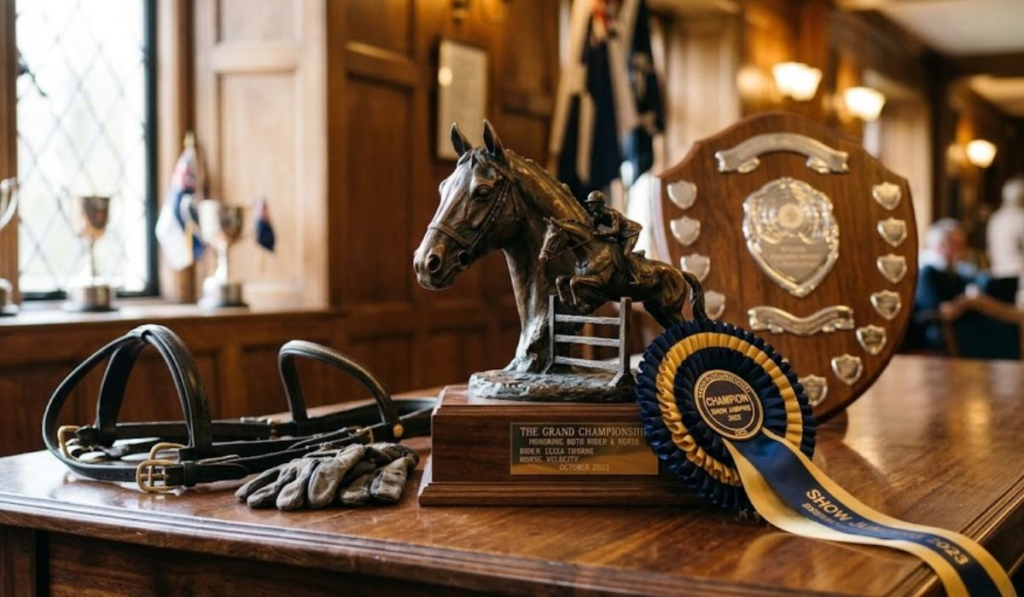

There’s a particular kind of history behind an equestrian win that a plastic trophy off a shelf just doesn’t reflect. Dressage, show jumping, eventing, pony club rallies — whatever the discipline, getting to the podium usually means months of early mornings, patient training, and a partnership with an animal that either trusts you or doesn’t. A generic award treats that the same way it treats every other sport, which is part of why it tends to feel forgettable the moment it’s handed over.
Traditional equestrian awards work differently. They lean on classic shapes, proper materials, and symbols that actually mean something to the people receiving them, rather than a generic shape stamped out for any sport that happens to order it. Here’s what actually separates a traditional award from a standard one.
1. Authentic Horse Symbolism and Detailed Sculpting
The first thing that tends to stand out on a genuinely well-made equestrian award is the sculpting itself — tack rendered accurately, movement that looks like an actual horse mid-stride rather than a rough approximation, anatomy that a rider would recognise as correct rather than close enough. That level of detail tells competitors something before they’ve even read the engraving: that whoever put the award together actually understands the sport being honoured.
Selecting specialised horse trophies honours the specific bond between horse and rider in a way a generic trophy shape never quite manages. A horseshoe base, a sculpted horse head, a figure caught mid-jump — these details tie the award to the exact discipline it’s celebrating, and that specificity is usually what turns a trophy into something a competitor actually keeps.
2. Premium Classic Materials
Weight matters more than people expect in an award like this. A trophy that feels substantial in the hand carries an echo of the effort that went into the win — the early mornings, the conditioning, the months of preparation — in a way a hollow, lightweight version never quite manages. And practically speaking, heavier, better-made materials are simply built to survive years on a clubroom shelf or in a display cabinet without looking tired.
A few materials tend to define that traditional look and feel:
- Polished timber bases — bring a warm, traditional character that suits stable and clubhouse settings
- Silver and gold plating — give a finish that catches the light well in a display case
- Heavy cast resin — allows for fine detail in rider attire, saddles, and equine features
- Engraved metal plates — keep horse and rider names clearly legible on a brass or silver background
3. Traditional Satin Ribbons and Rosettes
Rosettes have earned their place at horse shows for a reason — they’re immediate, visible, and instantly readable from across an arena. Distinct colours, pleated tails, foil printing that marks a specific placing: all of it is designed to be recognised at a glance, which matters in a sport where competitors are often photographed with their ribbon still tied to a bridle or saddle cloth minutes after the round.
A few features tend to separate a well-made rosette from a basic one:
- Multi-tiered pleats — layered satin circles reserved for major championship wins
- Colour-coded placings — a standard scheme that makes first through fourth immediately clear
- Custom centre insets — space for a club crest, event year, or discipline logo
- Bridle clips or pins — for attaching straight to horse gear or a rider’s jacket for display
4. Large Perpetual Shields for Annual Events
Plenty of equestrian clubs have championships stretching back decades, and a perpetual shield is what carries that history forward — a single wooden shield engraved year after year with the names of winning riders and their horses. Seeing a name added to a list that already includes champions from years, sometimes decades, earlier does something a standalone trophy can’t: it connects an individual win to the club’s entire competition history.
At an annual presentation, the perpetual shield tends to be the actual centrepiece of the evening — the thing people gather around, not just to see who won this year, but to trace who’s won before. A shield that’s been properly maintained over the years becomes its own kind of record, one that outlasts any single competitor.
5. Recognition of Both Horse and Rider
Equestrian sport is unusual in how directly it depends on partnership. A rider’s skill only goes as far as the horse underneath them allows, which is exactly why a properly designed award makes room for two names on the nameplate rather than one.
Including the horse’s name isn’t a small detail — it’s often the part that matters most to the people who actually keep the trophy. Long after a horse has retired from competition, its name engraved next to its rider’s is what preserves the memory of that specific partnership, in a way that a rider’s name alone never quite manages to do.
Choosing Awards That Actually Reflect the Sport
Recognising a win in equestrian sport properly means recognising what actually went into it — the training, the partnership, the specific discipline being competed in. Realistic sculpting, materials that hold up over years of display, and engraving that gets both names right are what separate an award that gets tucked in a drawer from one that stays on a shelf.
If you’re planning an upcoming presentation, it’s worth working with people who understand the sport well enough to get those details right the first time, rather than adapting a generic shape to fit.

