
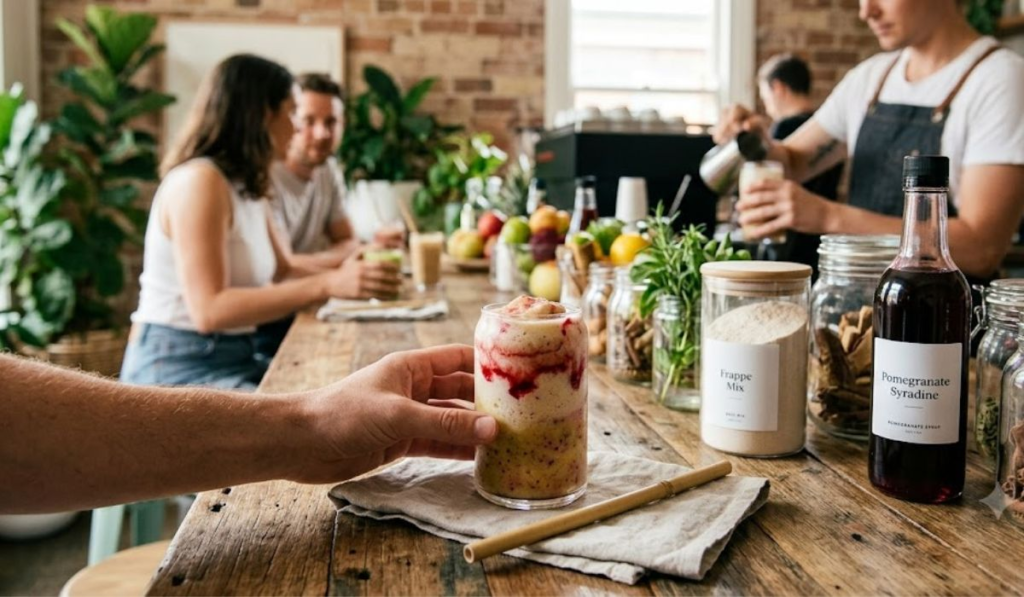

The drinks menu has changed more in the past decade than in the several decades before it. What used to be a straightforward list of coffees, teas, and soft drinks has become something considerably more considered. People who walk into a café or restaurant now arrive with expectations shaped by what they have seen, tasted, and photographed elsewhere. They want something that tastes good, looks interesting, and holds together across every cup rather than varying depending on who made it.
That shift has put real pressure on the ingredients behind the drinks. The visible part of a beverage catches attention. What brings people back is the flavour and the consistency of it. Getting both right, reliably and at pace during a busy service, is where the choice of foundational ingredients actually matters.
Ingredients like frappe mix powder have become valuable in this context because they help create rich textures while supporting a wide variety of beverage recipes without introducing inconsistency into the preparation process.
Strong Ingredients Shape Better Recipes
Every drink that works does so because the ingredients behind it were chosen with care rather than convenience alone.
The most successful beverage recipes are built around harmony. Sweetness, texture, aroma, and appearance working together rather than competing. That kind of balance does not happen by accident and it does not hold up under pressure unless the core ingredients are reliable enough to behave the same way every time they are used.
Standardised ingredients reduce the variables that cause inconsistency. When a drink tastes the same regardless of who prepared it or what time of day it was made, that consistency builds the kind of trust that brings people back repeatedly rather than occasionally.
Texture Creates a Premium Experience
Flavour is often discussed as the primary quality of a drink. Texture deserves equal attention and rarely gets it.
A smooth creamy consistency changes how a beverage is experienced from the first sip to the last. It also performs a structural function. Good texture binds different ingredients into a cohesive drink rather than allowing separate flavours to sit alongside each other without connecting. The result is a beverage that feels complete rather than assembled.
During peak service when efficiency and quality have to coexist, a consistent texture means every drink leaving the counter meets the same standard regardless of how many others are being made simultaneously. That reliability matters more than most customers consciously register but they notice immediately when it is absent.
Flavor Layers Add Greater Depth
The drinks people remember and return to rarely depend on a single dominant taste.
Successful recipes build flavour across the drinking experience. A first impression, a middle note, a finish that lingers pleasantly rather than fading abruptly. Sweet notes alongside fruity accents, creamy textures balanced with subtle aroma. These layers do not compete. They build on each other in a way that makes a drink genuinely interesting rather than simply pleasant.
Layered flavour development also gives businesses the ability to create drinks that feel distinctive rather than interchangeable with what is available everywhere else. A signature beverage built around a considered combination of ingredients is harder to replicate and easier to remember.
Balance tends to be more striking than intensity. A well-calibrated drink where nothing overwhelms anything else often leaves a stronger impression than something simply very sweet or very strong.
Color Influences First Impressions
A beverage is experienced visually before it is tasted. The colour, the clarity, the way light moves through a glass, all of this creates an expectation that the first sip then either confirms or disappoints.
Bright attractive drinks communicate freshness and creativity without requiring explanation. They also encourage the kind of social sharing that extends a business’s reach without any additional marketing effort. A visually striking drink photographed and posted by one customer reaches people who have never visited the premises.
Ingredients such as grenadine syrup pomegranate provide both rich colour and pleasant fruity sweetness, making beverages more visually appealing while supporting balanced flavour profiles rather than simply adding colour for its own sake. The best visual ingredients earn their place in the recipe rather than sitting on top of it.
Seasonal Menus Encourage Repeat Visits
A menu that never changes gives customers no reason to return beyond their existing habits.
Seasonal variation keeps things interesting for regulars and gives new customers a reason to explore. Cold blended drinks suit warm weather naturally. Richer dessert-inspired drinks find their audience in cooler months. Holiday periods and local events create opportunities for limited offerings that feel timely rather than permanent.
Rotating the menu also allows businesses to experiment with new combinations without permanently replacing what already works. A seasonal addition that performs well can earn a place in the permanent menu. One that does not can simply not return. The risk is low and the learning is genuine.
Preparation Efficiency Supports Growth
Busy services do not accommodate complexity well. A café preparing dozens of drinks within short windows needs recipes that are straightforward to follow consistently regardless of who is behind the counter.
Standardised ingredients simplify that process. They reduce preparation time, minimise waste from inconsistent measuring or uncertain results, and give staff confidence in recipes they can follow reliably. A well-structured preparation process means attention can go toward the customer rather than toward correcting avoidable mistakes.
Operational efficiency is not separate from quality. When the preparation systems work properly, quality becomes the natural outcome rather than something that requires constant correction.
Creative Menus Reflect Brand Identity
The drinks a business serves communicate something about it before a single word is exchanged.
Businesses that develop recipes specific to their character and their customer base build something that generic menus cannot. Signature drinks are memorable because they feel intentional. They combine familiar elements in ways that are specific enough to be distinctive without being so unusual that they alienate the people most likely to order them.
A familiar base ingredient can become the foundation of something genuinely original through a different garnish, an unexpected flavour combination, or a presentation that nobody else in the area has thought to try. The ingredient does not need to change for the drink to feel new.
Customer Expectations Continue Evolving
Customers increasingly expect to have some influence over what they order. Different sweetness levels, dairy-free alternatives, adjustable flavour intensity, toppings that change the character of the drink. These options have moved from being notable to being expected at most serious beverage establishments.
Flexible foundational ingredients make customisation achievable without making preparation significantly more complex. A base that works across multiple variations means a broader menu does not necessarily mean a more complicated kitchen.
Social media continues to shape what customers look for. Drinks that photograph well, that feel current, that look different from what they could make at home. Businesses that understand this and build it into their menu decisions tend to stay relevant in ways that those ignoring it find increasingly difficult.
Innovation Drives Beverage Development
The most interesting developments in the beverage industry tend to come from people who treat existing recipes as starting points rather than fixed templates.
Fruits, herbs, spices, floral notes, and creamy textures have all found their way into drinks that nobody was making a few years ago. Innovation does not always require starting from nothing. Sometimes the most impressive results come from refining an existing drink through a better ingredient, a different proportion, or a preparation method that changes the texture without changing the flavour.
Reliable foundational ingredients support this kind of experimentation precisely because they reduce the uncertainty involved. When the base behaves predictably, the creative variables are easier to isolate and the results are easier to evaluate honestly.
The Ingredient Decisions That Matter
Long term success in the beverage business comes from delivering drinks that customers enjoy reliably enough to order again. The ingredients behind those drinks shape flavour consistency, preparation efficiency, and the range of creative possibilities available.
Whether the menu centres on frozen drinks, fruit beverages, dessert-inspired creations, or seasonal specials, the quality of the foundational ingredients determines how much creative range is actually available and how consistently that range can be executed.
As customer expectations continue shifting, the businesses that invest in understanding what their core ingredients actually do and choosing them accordingly tend to be the ones that stay interesting to their customers over time. That is a simpler principle than it sometimes sounds in practice, but it is the one that holds.