

Walk into a well-styled room and something happens before you can name it. The space feels right. Not because everything is expensive or perfectly matched, but because someone made a few careful decisions and let everything else follow from those.
Most people assume that kind of result requires a renovation, a designer, or a budget that most households do not have. It almost never does. The rooms that feel genuinely considered are usually the product of small, deliberate choices made consistently over time. Getting the textures right. Thinking properly about light. Knowing when to stop adding things. These are the decisions that separate a room that looks assembled from one that feels like it belongs to someone.
Here are five of the most reliable ones.
1. Focus on Layered Textures for a Richer Look
Mix Soft and Hard Elements
A room furnished in one material type feels flat no matter how carefully each individual piece was chosen. What gives a space genuine depth is the relationship between different surfaces. The way soft and hard sit alongside each other. The way matte and reflective catch light differently. The way warm and cool materials create a tension that keeps the eye moving rather than settling and losing interest.
Velvet cushions against linen curtains. Timber furniture beside a smooth stone surface. A small metallic accent that reflects light differently from everything surrounding it. None of these combinations are complicated. Together they give a room the layered quality that makes it feel genuinely considered rather than simply tidy.
Add Texture Through Flooring
Flooring covers more surface area than anything else in a room and sets the tone for everything that sits above it. It is the decision that most shapes how the space reads overall, which makes it worth considerably more thought than it typically gets.
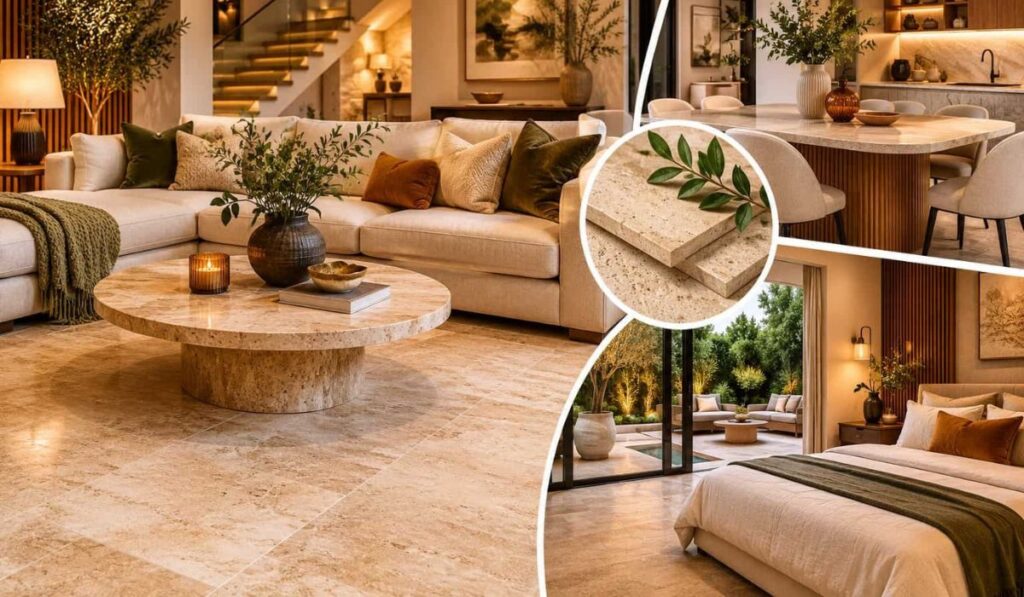
Natural stone brings a warmth and quiet individuality that manufactured alternatives do not replicate in the same way. Travertine indoor floor tiles in particular have a natural variation between tiles that means the floor contributes genuine character to a room rather than simply providing a uniform base. The surface improves with time rather than wearing out, which is a quality that most flooring choices cannot honestly claim.
2. Choose a Neutral Colour Palette with Statement Accents
Why Neutral Tones Feel Expensive
Neutral colours do something that saturated or busy palettes rarely manage. They create a backdrop calm enough to let everything else in the room speak for itself. The quality of the materials. The shape of the furniture. The architecture of the space. These things become the point rather than competing with the walls around them.
Beige, ivory, warm grey, soft earthy tones on walls and large furniture pieces create an atmosphere that feels open and considered without being cold or empty. There is nothing passive about this choice. A well-applied neutral palette takes genuine restraint and rewards it visibly.
Add Bold Decor in Small Portions
The risk of staying entirely neutral is a room that feels finished but flat. Something is technically right about it but it lacks personality. Small doses of something bolder address this without destabilising the calm that makes the palette work in the first place.
A piece of artwork that gives the eye a definite place to land. Cushions in a contrasting tone that break up a neutral sofa. Updated hardware on cabinetry. A light fitting with some sculptural presence. Each of these changes is small enough not to disrupt the overall tone while giving the room the character that a purely neutral palette cannot provide on its own.
Easy Ways to Mix Things Up
Bold artwork creates a focal point without touching anything else in the room. Accent cushions introduce contrast without any lasting commitment. Changing brass kitchen handles refreshes a kitchen or bathroom faster than almost any other single intervention. A more interesting light fitting draws the eye upward and adds a dimension to a space that might otherwise feel settled but underdeveloped.
3. Use Lighting to Create a Hotel-Inspired Ambience
Layer Different Types of Lighting
Lighting shapes how a room feels more than almost anything else in it, and most rooms get it wrong in exactly the same way. A single bright overhead source. Even, flat, undifferentiated light that flattens every texture, dulls every surface, and makes even a carefully furnished space feel like a waiting room.
The correction is not complicated. Keep the overhead source but add a focused lamp for task work, a floor lamp in a corner that would otherwise fall into shadow, and a few smaller sources that create pools of warmth at different heights across the room. The result is a space that feels genuinely inhabited rather than simply lit. The difference between the two is real and it is immediately noticeable.
Highlight Architectural Features
Light can do more than illuminate a room. It can direct attention toward the parts worth noticing. Pendant lights over a dining table or kitchen island anchor those areas and give them definition. Wall sconces soften a hallway that might otherwise feel like a corridor you pass through rather than a space you inhabit. Concealed LED lighting under cabinets or along stair edges adds a modern edge without requiring any structural work. These are small decisions with effects that are disproportionate to the effort they take.
4. Create Seamless Indoor-Outdoor Styling
Extend the Design Beyond the Living Room
The homes that feel most spacious are often not the largest ones. They are the ones where the line between inside and outside becomes something you move through rather than something that stops you. When an interior connects naturally to a courtyard, patio, or outdoor area, the sense of space expands in a way that rearranging the furniture inside could never achieve.
Match Materials for Visual Flow
The most effective way to make that connection feel real rather than aspirational is through material continuity. When flooring reads consistently across the threshold, whether through matched tiles, complementary finishes, or the same tonal family, the eye naturally reads the indoor and outdoor areas as one continuous space. The transition disappears. The home feels larger and more considered without anything having been added.
5. Style with Fewer but More Impactful Pieces
Avoid Overcrowding the Space
The interiors that feel most considered are almost always less crowded than they appear to be. Each piece has been chosen deliberately and given enough physical space around it to register properly. Overcrowding a room is not just a visual problem. It signals accumulation rather than selection, and that undermines the overall effect regardless of how good individual pieces might be.
Editing down before adding anything new is often the most useful thing that can be done to a room that is not quite working. Removing what is not earning its place almost always reveals a space that reads considerably better than it did before anything was taken away.
Invest in Timeless Design Elements
Well-made pieces in quality materials serve a room across many years in a way that trend-driven purchases simply do not. Solid timber, natural stone, quality fabric, these materials develop character rather than showing age. They look more interesting in ten years than they did when they first arrived, which is a quality that is rarer than it should be and worth paying attention to when making purchasing decisions.
The practical approach is always the same. Remove what is not earning its place before deciding what to add. Once the space is clearer, the additions that follow tend to be better chosen because there is genuine room to see what the space actually needs and what would be surplus to it.
The Things Worth Getting Right
Creating a home that feels genuinely considered is not a matter of spending more. It is a matter of choosing more carefully. Textures layered with intention. Light distributed rather than pointed. A colour palette that works as a calm foundation. Materials that hold up and improve over time. A restraint that gives every good thing in the room room to breathe and be noticed.
None of this requires a renovation or a designer or a budget that changes everything. Most of it happens one room at a time, through small decisions made consistently, each one building on the last. The results accumulate quietly into something that feels as though it was always meant to be this way.
Which is usually how the best rooms are made.

