
There is something quietly transformative about a white rug. Not in the dramatic, overnight-renovation way — more in the way you notice it a week after it arrives, when the room just feels different and you have to stop and work out why.
White rugs have that effect. They shift the light, settle the space, and somehow make everything around them look more considered. It is a difficult quality to name precisely, but it is immediately recognisable when you experience it. One can explore various styles and sizes in the white rug collection to find the perfect fit for any room — and the range of what is available might genuinely surprise you.
Why Choose White Rugs?
The honest answer is versatility — but that word gets used so often in interior decor that it has almost lost its meaning. What it actually means here is this: a white rug will work in a room you have not decorated yet, in a room you have already styled carefully, and in a room you are still trying to figure out.
It acts as a neutral base that lets other elements breathe. The bold sofa, the artwork, the statement lamp — all of them read more clearly against a white rug because there is nothing competing for attention underneath. And yet the rug itself is never invisible. There is an understated elegance to a well-chosen white rug that the room would notice immediately if it disappeared.
That balance — present but not demanding — is what makes white rugs a genuine long-term investment rather than a trend piece.
Enhancing Room Ambiance with White Rugs
Light is the most underestimated factor in how a room feels, and white rugs work directly with it. They reflect rather than absorb, which means they amplify the natural light already in a space and give smaller rooms a sense of openness that darker rugs simply cannot.
This is particularly worth considering in urban apartments, north-facing rooms, or any space where natural light is limited. The difference a white rug makes in those environments is not subtle — it genuinely changes how the room reads at different times of day. A room that feels enclosed in the morning can feel airy and calm by midday, and the rug is doing a meaningful part of that work.
Decorative Options and Styles
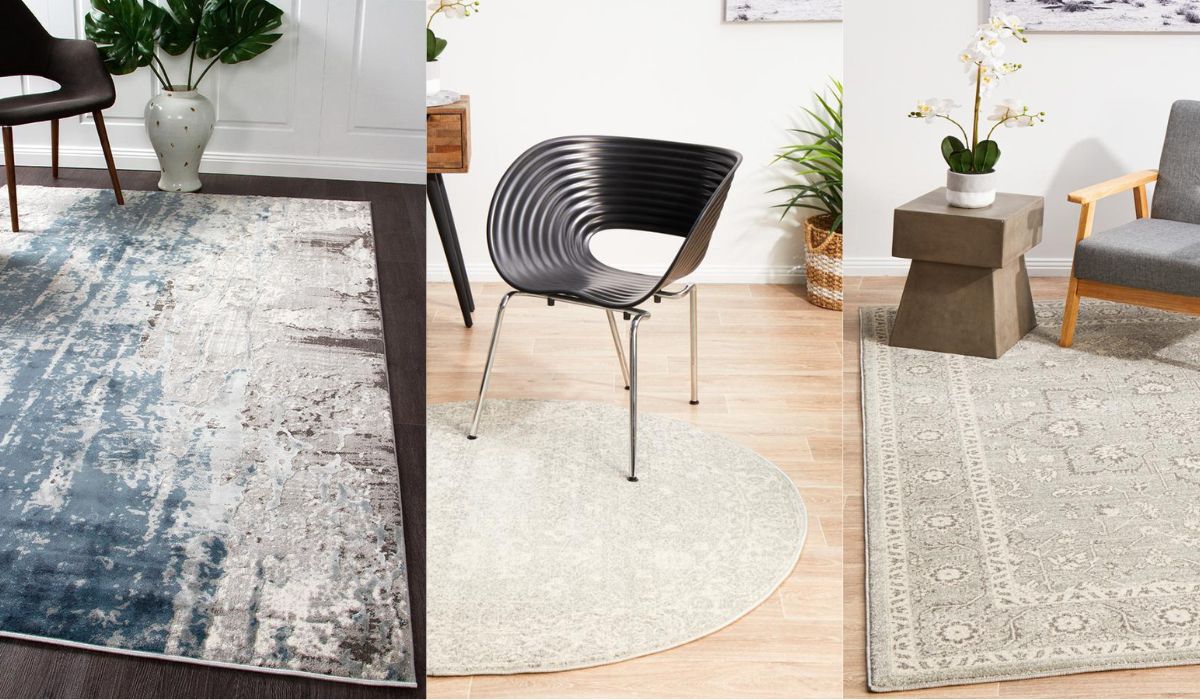
One of the more pleasant surprises about white rugs is how much variety exists within what sounds like a single category. Solid white in a high pile reads completely differently from a low, patterned weave in off-white and ivory. A textured bouclé sits in a different conversation entirely from a flat-woven cotton style.
This matters because it means a white rug can function as a quiet background element or as a genuine visual centrepiece, depending on what the room needs. For those who prefer a minimalist aesthetic, a simple solid works without drawing attention to itself. For those who want the rug to carry more personality, the range of high-low patterns, geometric weaves, and textured piles available means there is real creative scope — without stepping away from the overall palette.
Material Considerations
Material is where a white rug either earns its keep or quietly disappoints you over time, and it is worth thinking through carefully before purchasing.
Wool is the most forgiving option for everyday use. It has a natural resilience to foot traffic, a softness underfoot that synthetic fibres rarely replicate convincingly, and a degree of natural stain resistance that makes it more practical than its colour might suggest. Cotton is a good choice for rooms with lighter use — it is easier to clean and tends to come in at a lower price point, though it does not hold up to heavy traffic the way wool does. Synthetic fibres are worth considering for high-use areas or homes with children and pets, particularly where durability and ease of maintenance take priority over texture.
Understanding what each material actually feels like to live with, rather than just how it looks, will save a great deal of frustration later.
Maintenance of White Rugs
This is the question most people ask first, and the honest answer is that white rugs are manageable — they just require a little more consistency than a darker option would.
Regular vacuuming is the foundation, and catching spills immediately rather than leaving them to set makes the biggest practical difference. Most marks that seem alarming in the first thirty seconds are entirely manageable if they are addressed quickly. A rug pad underneath is worth adding regardless of the rug’s material — it prevents movement, protects the flooring beneath, and extends the rug’s life in a way that more than justifies the small additional cost. For a thorough refresh, professional cleaning every year or two keeps a white rug looking as considered as the day it arrived.
Pairing White Rugs with Other Decor Elements
One of the quieter advantages of a white rug is how much flexibility it gives you with everything else in the room. Because the foundation is neutral, changing out cushion covers, introducing a new throw, or bringing in a piece of furniture in a bolder colour becomes straightforward — the rug does not fight the change.
Against dark hardwood floors, a white rug creates a contrast that feels both deliberate and elegant. Paired with warm, natural materials — rattan, linen, pale timber — it reads as calm and cohesive. Against a more maximalist backdrop of pattern and colour, it acts as a visual rest. It is one of the few decor choices that adapts to what surrounds it rather than demanding that everything else adapt to it.
Environmental Impact and Sustainability
For those thinking about the longer-term implications of a purchase, material choice matters here too. Rugs made from natural fibres — wool, organic cotton, jute — are typically produced with fewer synthetic chemicals and carry a lower environmental footprint than mass-produced synthetic alternatives.
There is also the straightforward logic of longevity. A well-made white rug from quality materials is far less likely to need replacing within a few years than a cheaper option that shows wear quickly. Buying less, but buying better, is one of the more sustainable approaches available — and a white rug is a reasonable place to apply that principle.
Budgeting for a White Rug
The range of price points in white rugs is genuinely wide, and the differences between them are not always visible at a glance. Size, material, and construction method all influence cost significantly, and understanding what drives the price helps in making a decision that holds up over time.
A useful way to think about it: the cost per year of a quality rug used across ten or fifteen years is almost always lower than the cost per year of a cheaper rug replaced every three. Setting a realistic budget and understanding where the value actually sits — usually in material and construction rather than brand — leads to a more confident purchase.
Customised White Rugs
For rooms with unusual dimensions or a very specific aesthetic in mind, custom rugs are worth considering. The ability to specify exact measurements, pile height, pattern, and material means the result fits the room rather than asking the room to accommodate it — which is a meaningful difference in a space where the rug is meant to anchor everything else.
An irregularly shaped living area, a hallway with non-standard width, or a bedroom where the proportions are slightly unexpected — these are all situations where a custom option earns its slightly higher price point by solving a problem an off-the-shelf rug cannot.
Implementing White Rugs in Different Rooms
White rugs carry well across most rooms in a home, though each space asks slightly different things of them.
In a living room, they create a sense of occasion without formality — the kind of space that feels put together without feeling untouchable. In a bedroom, the softness underfoot matters as much as the visual contribution, and a white rug delivers both, particularly in the morning before the rest of the day has had a chance to start. Dining rooms require more thought — the combination of a white rug and a table where food and drink are used regularly is not impossible, but it does require a material with strong stain resistance and a genuine commitment to prompt cleaning when spills happen.
White Rug Trends
The current direction in white rugs is moving toward scale and texture rather than pattern. Oversized rugs that extend well beyond the furniture grouping are increasingly common, particularly in open-concept spaces where a larger rug helps define a zone within a room that has no natural boundaries. Textured piles — high-low weaves, bouclé, and hand-knotted surfaces — are also having a sustained moment, adding depth and tactile interest to what might otherwise read as a flat expanse of white.
Both directions make sense together. A large, textured white rug does not shout for attention, but it holds the room in a way that nothing else quite manages.
A white rug is one of those choices that tends to feel obvious in retrospect — the kind of thing you look at six months after bringing it home and wonder what the room was doing before. With the right material, the right care, and a little thought about where it will live, it has a way of making everything around it look more intentional.
That, in the end, is what the best decor decisions do. They make the room feel considered without making the effort visible.