
A friend of mine spent three months looking at engagement rings before she walked into a jeweller, tried on an emerald cut for the first time, and bought it within the hour. She had been convinced she wanted something with more sparkle. The emerald cut changed her mind by doing something she did not expect — it made her feel like herself.
That is the thing about this particular shape. It does not try to impress everyone. It appeals to a specific kind of person and when it lands it lands completely.
Emerald Cut Diamond Rings vs. Round Cut Engagement Rings
Round brilliant cut diamonds were engineered for one purpose — to reflect as much light as possible in as many directions as possible. Fifty-eight facets, optimised over decades, producing the kind of all-angle sparkle that catches light from across a room. They are the most popular engagement ring shape in Australia and the world for entirely understandable reasons.
An emerald cut diamond ring takes a fundamentally different approach. The step-cut facets and open rectangular table create long, controlled flashes of light rather than intense sparkle — what jewellers call a hall of mirrors effect. It is composed where a round cut is brilliant. Architectural where a round cut is radiant.
The choice between them is not really about which is better. It is about which one suits who you actually are.
What Makes Emerald Cut Diamonds Unique?
The open table is what defines the emerald cut and it is also what makes buying one require more attention than other shapes.
Those large, broad facets that create the distinctive light pattern reveal more of the stone than a brilliant cut ever would. Clarity matters more. Colour matters more. Any inclusion or warmth in the stone that would be invisible inside a round diamond’s complex facet structure becomes visible in an emerald cut’s open table.
This is not a disadvantage — it is a characteristic. The emerald cut rewards a genuinely good stone and shows it off honestly. Buyers who understand this tend to end up with a ring they feel completely confident about because they know exactly what they chose and why.
The elongated shape does something else worth knowing. On most hand shapes it creates a visual impression of longer more slender fingers. It is a subtle effect but a real one and it becomes more noticeable the longer you wear the ring.
Choosing the Perfect Emerald Cut Diamond Ring
Start with feel rather than specifications.
The emerald cut suits a particular kind of personal style — clean lines, understated confidence, a preference for things that are considered rather than decorative. If you find yourself drawn to classic tailoring, minimal jewellery, and pieces that age quietly rather than shout, an emerald cut will probably feel right the moment you try one on.
That instinct matters. An engagement ring is worn every day for decades. The intellectual satisfaction of choosing a technically excellent stone fades if the ring never quite feels like you.
Once the shape feels right the quality decisions follow clearly.
Quality Checklist for Emerald Cut Diamonds
Because the open table conceals very little, buying an emerald cut diamond requires paying closer attention to the four Cs than most other shapes demand.
Clarity is the most important consideration. Inclusions that would disappear inside a brilliant cut’s complex facets are visible in an emerald cut’s open table. VS2 or better is a sensible starting point for most budgets. SI1 can work if the inclusion sits toward the edge of the stone rather than the centre, but it needs to be assessed carefully.
Colour reads more clearly in an emerald cut than in rounds or cushions. The large facets do not scatter light in a way that masks warmth. G or H colour grades hit the right balance between quality and value for most buyers. D through F if budget allows and colour purity matters to you.
Cut symmetry is non-negotiable. The emerald cut’s entire appeal is built on proportion and balance. A stone that is slightly off-square, or where the steps are unevenly spaced, loses the composed look that makes the shape distinctive. Always look at the stone face-up before making a decision.
Face-up size relative to carat weight is one of the emerald cut’s genuine advantages. The large surface area means an emerald cut often looks bigger than a round diamond of equivalent carat weight. A one carat emerald cut tends to look more impressive in the setting than a one carat round, which is a practical consideration when balancing size and budget.
When shopping online request detailed images from multiple angles and ask to see the clarity plot showing where any inclusions sit within the stone. A diamond specialist who can walk you through the comparison is worth engaging before committing.
How to Select the Right Emerald Cut for Engagement or Wedding
An emerald cut works as a standalone statement and as part of a paired set. The setting and metal choice changes the character of the ring considerably more than most buyers expect before they start comparing options.
Setting height is the practical consideration that gets overlooked most often. A lower profile setting is easier to live with daily — less likely to catch on things, more comfortable when you are using your hands. Over years of everyday wear that detail matters considerably more than it does on the day the ring is bought.
Metal choice changes the mood of the ring entirely. White gold keeps the look clean and architectural — the stone’s geometry is front and centre with nothing to distract from it. Yellow gold feels warmer and more classic. Rose gold creates a softness that contrasts interestingly with the emerald cut’s sharp lines — romantic without being fussy.
Band pairing works best when the wedding band does not compete with the centre stone. A plain band in a matching metal or a slim pavé band that sits flush against the setting tends to work better than anything that draws the eye away from the emerald cut itself.
Exploring Emerald Cut Diamond Ring Styles
The flexibility of the emerald cut is one of its most underrated qualities. The same shape can look entirely different depending on how it is set.
A solitaire in white gold is the purest expression of the emerald cut — the stone’s symmetry and geometry completely uninterrupted. It is versatile enough to pair with almost any band and tends to feel as current in twenty years as it does now. For buyers who want the ring to be entirely about the diamond this is the obvious choice.
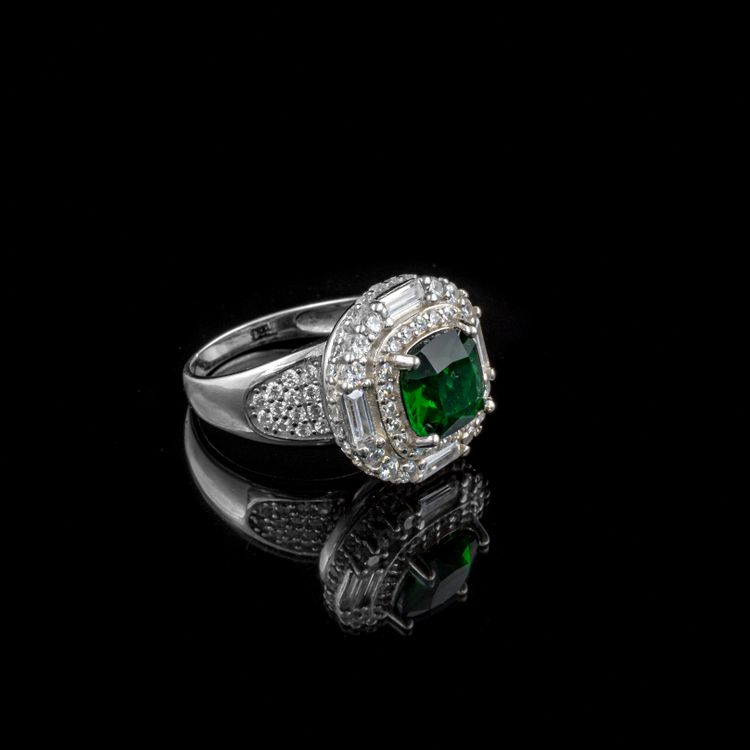
A halo setting adds visual weight and makes the centre stone appear larger. It works particularly well for buyers who love the emerald cut shape but want more presence from the overall ring. The halo frames the stone rather than competing with it.
Vintage-inspired settings bring decorative detail — milgrain edges, intricate side stone arrangements, designs that feel genuinely individual rather than assembled from standard components. Rose gold paired with these settings creates something warm and distinctive that feels far removed from off-the-shelf.
The question worth sitting with is which version you would still love wearing in twenty years. The answer to that question tends to point clearly in one direction.
Shopping for Emerald Cut Diamond Rings Online in Australia
Buying a diamond ring online in Australia is entirely practical when you have access to clear information, detailed imagery, and expert support. The factors that matter — clarity grade, colour grade, cut symmetry, setting quality, and metal type — can all be properly assessed digitally when a jeweller provides the right level of detail.
ANTON offers online browsing with free shipping within Australia and boutique appointments with diamond specialists in Melbourne for buyers who want to see stones in person before committing. Being able to compare emerald cut and round cut engagement rings side by side — either online or in the boutique — makes the final decision considerably more grounded.
Pricing varies based on whether the stone is natural or lab-grown, carat weight, and whether the ring is made to order. Custom and pre-order pieces typically have longer turnaround times, which is worth factoring in if there is a specific date in mind.
Frequently Asked Questions
Are Emerald Cut Diamond Rings Durable for Everyday Wear?
Yes. Diamond hardness is not affected by cut — an emerald cut diamond is as durable as any other diamond. What determines everyday wearability is the quality of the setting and how securely the stone is held within it. A well-made setting from a reputable jeweller protects the stone effectively for daily wear over many years. The setting height also plays a role — a lower profile setting catches on things less and tends to hold up better through everyday use.
What Are the Most Popular Metal Choices for Emerald Cut Rings?
White gold, yellow gold, and rose gold are all popular choices and each creates a genuinely different ring from the same stone. White gold reads as crisp and contemporary. Yellow gold feels timeless and warm. Rose gold adds a romantic quality that works particularly well with vintage-inspired settings.
The most useful guide is not trend but consistency with the other jewellery you wear regularly. A ring that matches your existing pieces tends to feel more naturally like yours.
Can Emerald Cut Diamond Rings Be Resized or Modified After Purchase?
In most cases yes. Plain bands are the easiest to resize. Pavé bands or eternity rings with stones running the full circumference are more limiting because removing or adding metal affects the stone setting. Before purchasing ask your jeweller specifically what modifications are practical for the ring you are considering rather than assuming all rings are equally adjustable.
The Kind of Ring That Gets Better Over Time
The emerald cut does not suit everyone and it does not try to. It suits people who prefer structure to sparkle, intention to ornamentation, and a ring that feels personal rather than simply popular.
If that description sounds familiar it probably is for a reason. Trust that recognition and spend the time getting the quality decisions right. An emerald cut diamond chosen carefully is a ring that tends to mean more with every passing year rather than less.