

Key Highlights
- Choosing the right bin size and capacity is crucial for effective waste management and depends on your household size.
- The material of your rubbish bin, such as stainless steel or plastic, impacts its durability, hygiene, and overall aesthetic.
- Specialized designs with multiple compartments can simplify waste segregation for your recycling bin and general waste.
- Lid mechanisms like pedal bins and soft-close lids offer convenience and superior odor control.
- Mobility features, like wheelie bins, and space-saving designs for smaller homes are practical considerations for modern living.
- Understanding local council requirements ensures your waste disposal methods are compliant and efficient.
Introduction
It is one of those purchases that gets made quickly and then lived with for years. A rubbish bin sits in your kitchen every single day, gets touched dozens of times a week, and affects how smoothly the household runs in ways that are easy to underestimate until you have the wrong one.
Getting it right is less complicated than it sounds — but it does require thinking through a few things before you buy.
Essential Features to Consider When Buying Rubbish Bins
Choosing the right rubbish bins improves your home’s functionality and hygiene in ways that quietly add up over time. The basics to consider are waste volume, available space, ease of use, and how much cleaning effort you are willing to invest.
A bin that is too small means constant trips to empty it. One that is too large takes up floor space and can start to smell before it is full enough to warrant emptying. Getting the size right is the first and most important decision.
Bin Size and Capacity for Different Household Needs
The right capacity depends on how many people are in the household and how much waste your daily routines generate. A household that cooks from scratch every evening produces more food scraps than one that does not. These things matter.
Use these guidelines:
- 10–20 Liters: Bathrooms, home offices, or single-person households with minimal waste.
- 20–30 Liters: Couples or small families; fits smaller kitchens.
- 30–50 Liters: Larger families or households with more waste; lasts between collection days.
- 50+ Liters: Very large households or outdoor use for garden waste.
When in doubt, go slightly larger for kitchen bins. Running out of space mid-week is a more common problem than having too much room.
Choosing the Right Bin Material for Durability and Hygiene
Material affects both how long the bin lasts and how easy it is to keep clean. The two most common options each have real trade-offs worth understanding.
Plastic bins are lightweight, affordable, and available in a wide range of sizes and colours. They are practical for most rooms, easy to carry, and simple to wipe down. The downside is that plastic can absorb odours over time and may crack with heavy use.
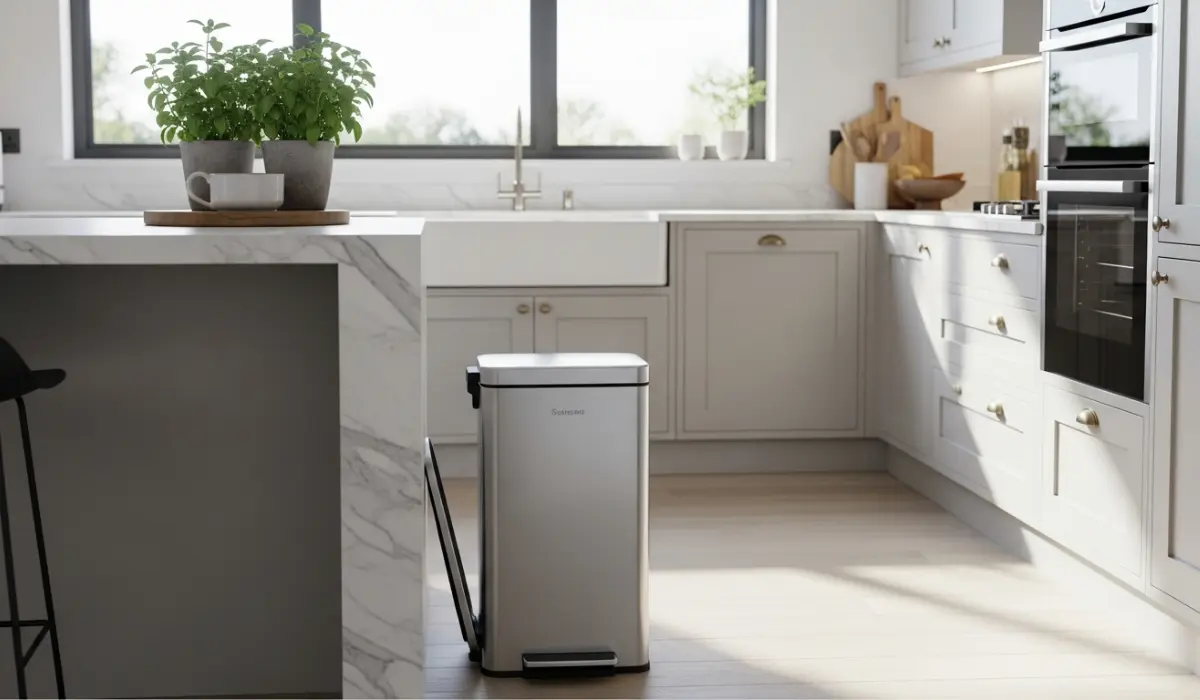
Stainless steel bins are more durable, resist odours more effectively, and tend to look better in a considered kitchen. They are heavier, often more expensive, and prone to showing fingerprints — but for a kitchen bin that gets daily use, the durability is usually worth it.
Specialised Designs for Effective Waste Management
Modern bins do more than hold waste. With recycling now part of most households’ routines, bins with built-in compartments make the process considerably easier — sorting happens at the point of disposal rather than later, which means it actually happens consistently.
Segregation Options for Recycling and General Waste
A single unit with multiple compartments keeps things organised without multiplying the number of containers taking up floor space. Most designs allow you to separate general waste, recyclables, and sometimes food scraps within one footprint.
| Feature | What It Does |
|---|---|
| Dual-Compartment Bins | One unit split into two sections for waste and recyclables |
| Stackable Bins | Separate bins that stack vertically to save floor space |
| Colour-Coded Lids | Visual cues for different waste streams |
| Integrated Food Caddies | Removable inner containers for food scraps and composting |
Having a dedicated section for recycling makes a genuine difference to how consistently it gets used. When sorting requires extra effort, it tends not to happen.
Lid Mechanisms and Odour Control
A well-designed lid is the most underrated feature of a good bin. It is the difference between a kitchen that smells fine and one that does not — and between a bin that stays hygienic and one that requires constant cleaning of the lid handle.
| Lid Type | Benefit |
|---|---|
| Pedal Bins | Hands-free operation; keeps the lid clean |
| Motion Sensor Lids | Touchless and hygienic, useful when hands are full |
| Soft-Close Lids | Quiet and gentle; no slamming |
| Charcoal Filter Lids | Actively neutralise odours rather than just containing them |
For kitchen bins especially, a pedal mechanism or soft-close lid is worth prioritising. It is a small thing that improves the experience of using the bin every single day.
Practicalities and Compliance in Selecting the Best Rubbish Bins
Beyond design, there are practical questions worth asking before buying. Is the liner easy to change? Can the bin be moved for cleaning without too much effort? For outdoor bins, does it have sturdy wheels and a handle that is comfortable to grip?
It is also worth checking your local council’s requirements. Many councils specify bin sizes, colours, and types for kerbside collection, and a non-compliant bin simply will not be emptied. This information is usually available on your council’s website.
Mobility, Wheelie Bin Choices, and Local Council Requirements
For outdoor use — garden waste, extra general waste, or simply moving the bin to the kerb on collection day — the quality of the wheels and handle matters more than it might seem.
| Need | Features to Look For | Why It Matters |
|---|---|---|
| Frequent Movement | Strong wheels, ergonomic handle | Easy to manoeuvre on collection day |
| Outdoor Durability | UV-resistant, heavy-duty plastic | Resists weather damage over time |
| Council Compliance | Approved size, colour, and type | Ensures your waste will actually be collected |
Space-Saving Solutions for Apartments and Small Spaces
Smaller homes and apartments require a different approach. Slimline bins fit into narrow gaps between appliances or in corners. Under-sink bins make use of space that would otherwise go unused. In-cabinet bins mounted on pull-out sliders keep everything hidden and the kitchen looking uncluttered.
For recycling in a small space, stackable bins that build vertically rather than spreading across the floor are one of the most practical solutions available.
The Right Bin Is a Small Decision With a Long Tail
A rubbish bin is not an exciting purchase. But it is one that affects daily life in the home more than most people account for when they buy it. Getting the size, material, lid mechanism, and design right means fewer frustrations, better hygiene, and a kitchen that functions more smoothly — quietly, consistently, every day.
Start with the room that needs it most and work from there.