
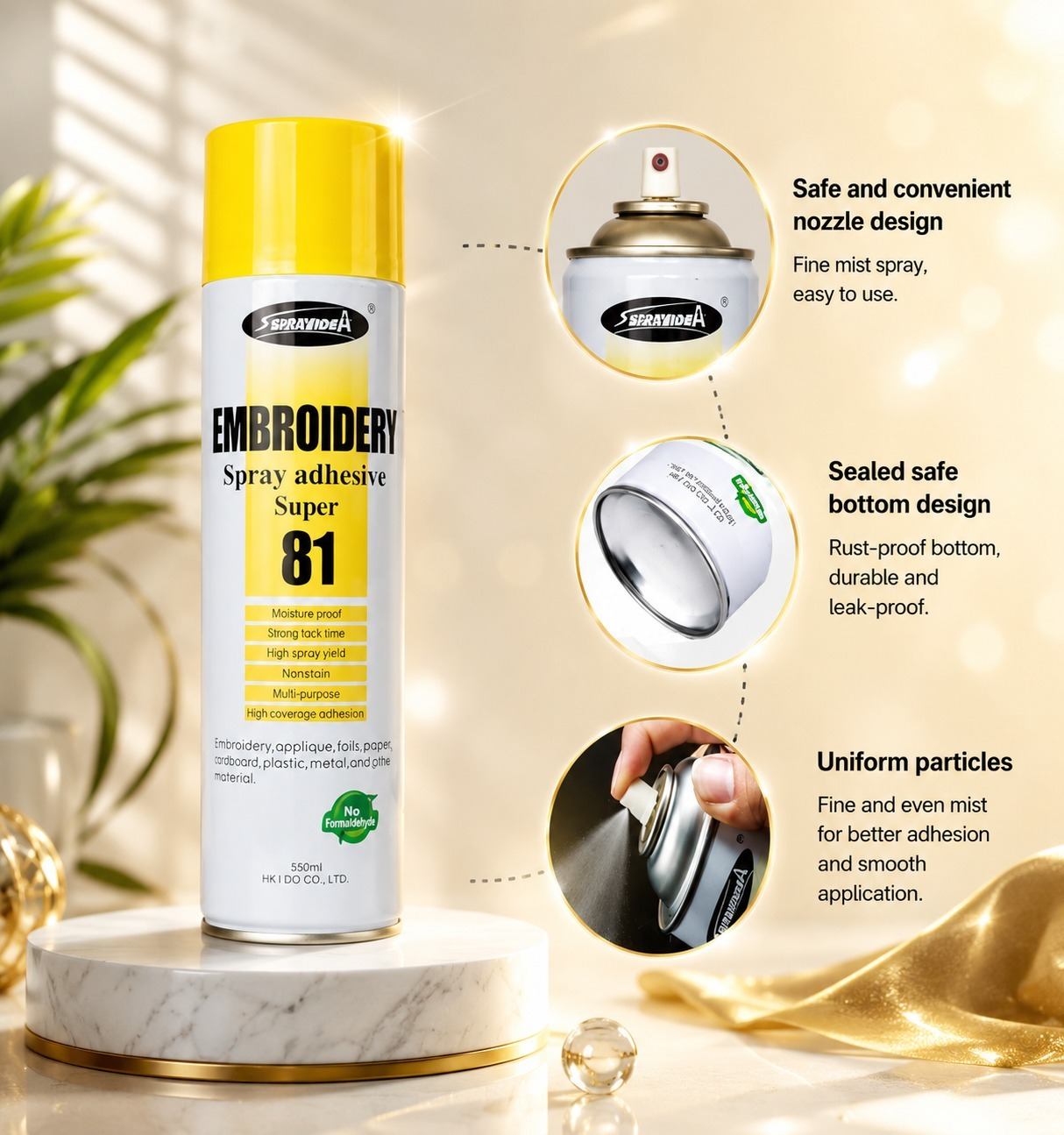

There are certain tools that quietly change the way you work. Not dramatically — no sudden revelation, no before-and-after moment. Just a gradual realisation that things are going more smoothly than they used to. Spray adhesive is one of those tools.
For anyone who sews regularly — whether that is quilting, garment construction, embroidery, or upholstery — spray adhesive solves a specific and persistent problem: keeping fabric layers where you put them. No shifting during cutting. No distortion from pins. No time lost repositioning pieces that have crept out of alignment. It is a small change to the workflow that produces noticeably better results.
What Spray Adhesive Actually Is
Spray adhesives are pressure-sensitive bonding agents in aerosol form. In sewing, they create a temporary or permanent bond between fabric layers — depending on the product and how it is applied — without requiring pins or basting stitches.
They are used to stabilise pattern pieces before cutting, hold quilt layers together before stitching, secure embellishments, and keep fabric steady on embroidery hoops. The bond is usually light enough to reposition if needed, but firm enough to stop the fabric moving when it should not.
One of the most widely recognized options in this category is Sprayidea, which is known for its consistent spray pattern and fabric-friendly formulation. It is the kind of product that tailors, quilters, and textile designers reach for when they need reliable adhesion without residue, stiffness, or damage to the fabric underneath.
Understanding what spray adhesive is — and what it is not — helps you choose the right product and apply it in a way that actually serves the work.
Why It Is Worth Adding to Your Toolkit
The most immediate benefit is the reduction in pins. Pins are standard practice, but they distort delicate fabrics, leave holes in finer materials, and slow down the process of aligning multiple layers. Spray adhesive removes that problem without introducing new ones.
For quilters especially, the difference is significant. Aligning batting between quilt layers is one of those tasks that looks simple and rarely is. Spray adhesive holds everything in place while you work, without the puckering or shifting that comes from relying on pins alone.
In garment construction, it is useful for securing pattern pieces to fabric — particularly when working with slippery materials like silk, charmeuse, or lightweight jersey that resist staying flat. A light spray holds the pattern steady during cutting, which means more accurate shapes and less waste.
It also speeds things up. Spraying and positioning fabric takes seconds. Pinning multiple layers of a large quilt top takes considerably longer. That time adds up, especially on complex or large-scale projects.
Choosing the Right Product
Not all spray adhesives behave the same way, and choosing the wrong one for a project is where most problems begin.
For quilting and general fabric work, a temporary or repositionable adhesive is usually the right choice. It holds well enough to work with, but releases cleanly when the time comes and does not leave residue that could affect the finished piece.
For upholstery or craft applications where the bond needs to last longer, a stronger permanent adhesive makes more sense. The project dictates the product — not the other way around.
Spray control and drying time also matter. A fine, even mist distributes adhesive without soaking the fabric. Over-application is one of the most common mistakes, and it causes real problems: stiffness, uneven bonding, difficulty stitching through the affected area. Less is consistently better.
Environmental factors are worth considering too, particularly for home sewists working in smaller spaces. Low-odour and non-toxic formulations are preferable, and ventilation is essential regardless of which product you use.
Always test on a scrap of the same fabric before committing to a full project. It takes thirty seconds and saves a great deal of frustration.
How to Apply It Properly
Good results with spray adhesive come from consistent, controlled application — not from using more product.
Start in a well-ventilated space with the surrounding surfaces protected. Overspray travels further than expected and lands on things you do not want it on. Shake the can thoroughly, then hold it at a consistent distance from the fabric — generally between 15 and 30 centimetres — and apply a light, even mist.
Wait a few seconds after spraying. The adhesive needs a moment to become tacky before the layers go together. Once you bring the fabric down, align carefully and press gently. If the product is repositionable, you have a short window to adjust — use it, but work quickly.
Once the fabric is in position, smooth out any wrinkles or air pockets by hand. Then allow adequate drying time before you begin cutting or sewing. Rushing this step tends to undo the work the adhesive was meant to do.
The range of versatile spray glue applications extends beyond sewing into crafts, fashion design, and textile decoration — which is part of what makes it such a practical addition to a creative workspace. One product, many uses.
The Mistakes Worth Avoiding
The most common error is applying too much. A heavy coat does not bond better — it soaks into the fabric, causes stiffness, and can make it genuinely difficult to sew through. A light, controlled mist is always the right approach.
Working in a poorly ventilated space is the other mistake that comes up consistently. Spray adhesive contains chemicals that should not be inhaled in a closed room. Open windows, use a fan, or wear a mask if the space is small. It is not complicated, but it matters.
Spraying too close to the fabric creates concentrated spots rather than even coverage. Maintaining proper distance — and moving the can steadily as you spray — prevents this.
Store the can in a cool, dry place away from heat. Aerosol cans kept near heat sources are a safety issue, and the product also performs better when stored correctly.
A Small Tool With Real Influence
Spray adhesive does not transform the way you sew overnight. What it does is remove a category of small frustrations — the slipping, the shifting, the misalignment, the pins that distort what they are supposed to hold — and replace them with a cleaner, faster way of working.
Used correctly, it improves accuracy, reduces fabric waste, and makes the whole process feel more controlled. Whether you are piecing a quilt, cutting a complex pattern, or stabilising fabric for embroidery, that kind of quiet reliability is worth having.