
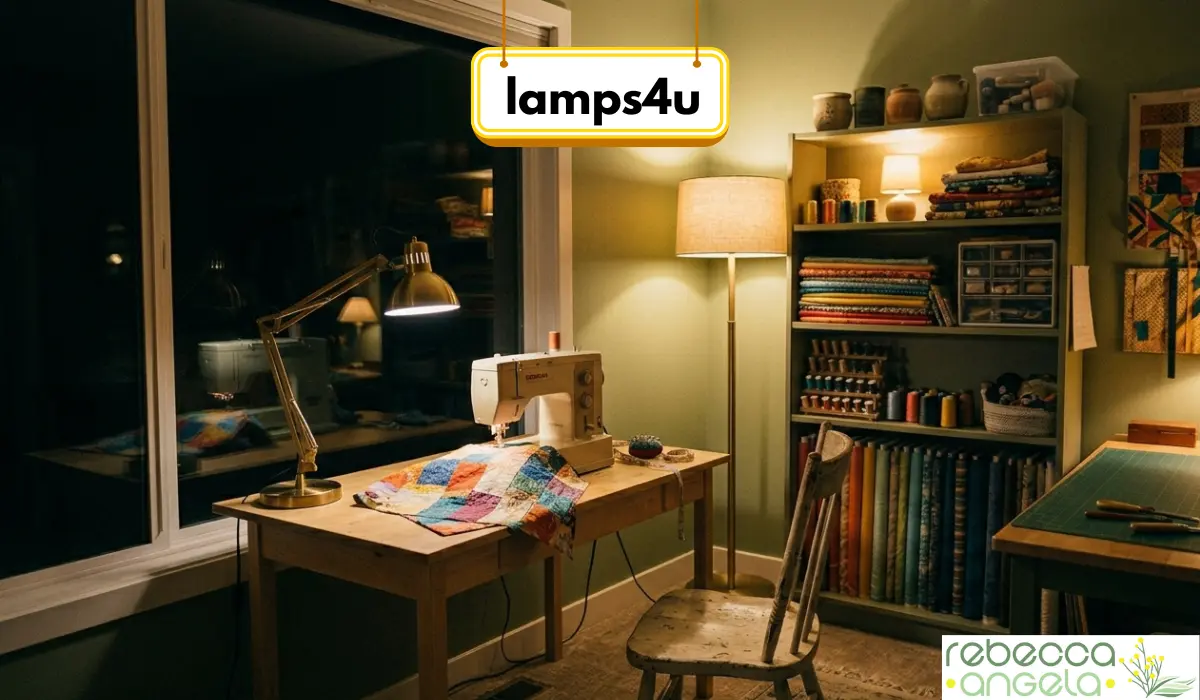
I rearranged my studio last winter. Moved the sewing table closer to the window, shifted the shelving, changed where things lived. It took most of a Saturday and I felt good about it.
But the room still felt wrong. Flat. A little lifeless once the natural light dropped away in the evening.
I hadn’t touched the lighting. That turned out to be the whole problem.
The moment I started thinking properly about lamps4u — lamps chosen specifically for the spaces I actually use — everything shifted. Not just aesthetically. The room felt different to be in. Easier to settle into. More like somewhere I wanted to spend time.
What Lighting Actually Does
Most of us think about lighting last. We sort the furniture, the paint, the storage — and then grab whatever lamp is nearby because the room needs a light source and we have run out of decision-making energy.
The result is a lot of otherwise considered spaces let down by lighting that was never really chosen. Just placed.
Light does not simply illuminate a room. It shapes how the room feels. A warm lamp at the right height makes a space feel settled and inhabited. The wrong overhead light at the wrong temperature makes the same room feel like a waiting area. The furniture you chose carefully, the colour on the walls, the objects you have collected — none of it reads the way it should under bad light.
The idea behind lamps4u is simple but easy to overlook. The right lamp is not just a light source. It is a decision about atmosphere, about how a room feels at seven in the evening, about whether you want to be in that space or just tolerate it.
The Three Layers Every Room Needs
Interior designers talk about layered lighting and it sounds more complicated than it is. The principle is simple. There are three types of light a room needs and most rooms only have one.
Ambient light fills the room broadly. Ceiling fixtures, overhead pendants, large floor lamps that throw light upward and outward. This is what most rooms have and nothing else.
Task lighting is focused and specific. A reading lamp angled over a chair. A desk lamp that illuminates work without casting shadows across it. A bedside light at the right height for actually reading rather than straining. In a sewing room or creative studio it means being able to see the detail of what you are working on rather than squinting under general room light.
Accent lighting is where personality lives. A small lamp on a shelf that makes the objects around it glow. Light that picks out a painting or a collection. The kind of lighting that makes a corner feel designed rather than assembled.
A room with all three layers feels completely different from a room with just one. Not dramatically. Quietly. Noticeably. The kind of difference you feel before you can name it. That is the whole point of thinking carefully about lamps4u — not chasing a look but building a quality of light that works for how you actually use the space.
Lighting a Creative Workspace
This is the part I care about most.
The environment you work in has a real effect on the work that comes out of it. I have written before about the importance of sustaining creativity and how the conditions we set for ourselves matter — not just the big things like time and motivation but the small accumulated things. The quality of the space. Whether it feels inviting or purely functional. Lighting is one of those small things that adds up considerably.
In a studio or making space the priorities are different from a living room. You need enough light to see accurately — colour, texture, seam lines, paint tones — without the harshness that causes eye strain over a long sitting.
Colour temperature matters more than most people realise. Bulbs around 5000K are closest to natural daylight and render colour most accurately. This matters enormously if you work with fabric, thread, or any medium where colour judgment is central to the work. A warm 2700K bulb in your workspace shifts your colour perception in ways you might not consciously register but that quietly affect your decisions.
That said, task lighting alone makes a workspace feel clinical. A single bright overhead with nothing else makes a room hard to work in for long stretches. Adding a warmer lamp at a lower level — a table lamp beside the cutting mat, a floor lamp in the corner — gives the room a quality that makes you want to be in it. A space you want to be in is a space you actually use.
This is the lamps4u principle in practice. Not one lamp doing everything. Multiple light sources, each doing one thing well, together creating a room that works.
The Studio After Dark
A lot of creative work happens in the evening. After other things are done, after the day has settled into something quieter.
The natural light is gone and what remains is entirely what you have put there.
If the only light is a single overhead, the evening hours feel harsher and more tiring than they need to. Adding a warm floor lamp beside the chair where you hand-sew, or a directed lamp over the cutting table, changes the character of the room at night. It starts to feel like a deliberate place to be rather than a room you are making do with.
Getting this right is part of how you find balance in a creative life. A room that feels good in the evening is one you return to. The small investment of thinking properly about lamps4u pays back every single time you sit down to make something.
Practical Notes Worth Keeping
Colour temperature is more important than brightness. Warm white around 2700K to 3000K suits living spaces and anywhere you want to feel relaxed. Daylight around 5000K suits work requiring colour accuracy. Getting this wrong is the most common lighting mistake and one of the easiest to fix.
Height matters more than people think. A lamp positioned too high throws light downward harshly. One at roughly seated eye level creates a softer, more comfortable quality. Table lamps beside a reading chair should sit at about shoulder height when you are seated.
Dimmable bulbs are worth having. The ability to adjust brightness means one room can serve different moods. A sewing room needing full brightness at two in the afternoon can feel calm and quiet in the evening with the same fixtures dimmed.
Start with the room that matters most. One well-chosen floor lamp in a space that only has overhead lighting makes an immediate and noticeable difference. You do not need to rethink every room at once. See what one good lamp changes. That is usually enough to understand the rest.
The Bigger Thought
Lighting does more work in a home than it ever gets credit for. When it is right you do not think about it. When it is wrong you feel vaguely uncomfortable in your own space without quite knowing why.
The concept of lamps4u — lamps chosen specifically and thoughtfully for the spaces you actually live and work in — is not really about products. It is about paying the same attention to light that you would pay to anything else in a home you care about.
For creative people especially, people who spend real time in their homes making things and thinking things and needing the space to support that — that attention is worth giving.
A well-lit room is one you return to. One you settle into. One where the work actually happens and the evenings feel like they belong to you.
That seems worth getting right.
Have you ever changed a single lamp and felt the whole room shift? I would love to know what made the difference — drop a comment below.

