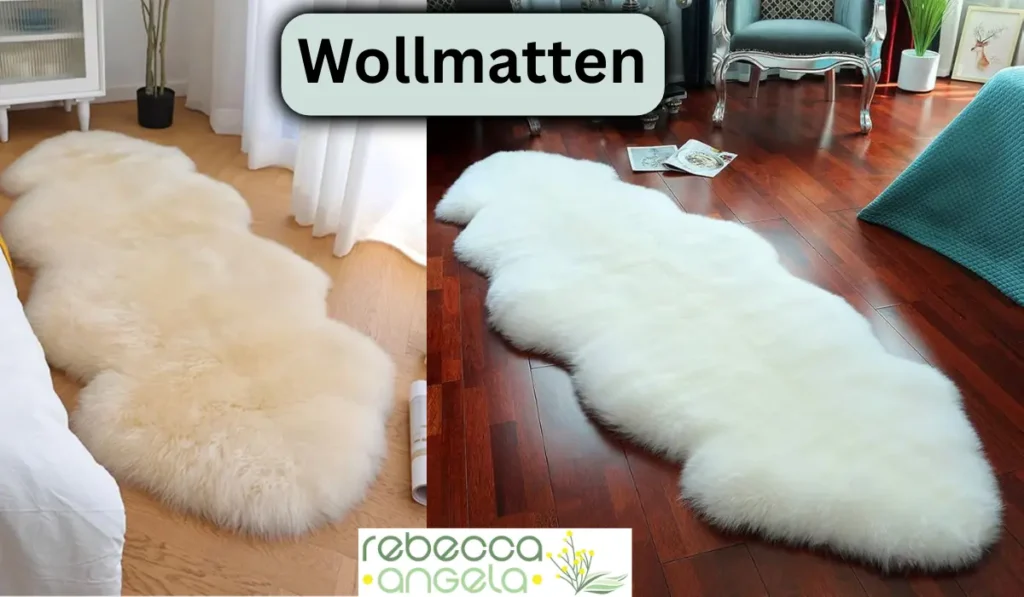

I came across the word wollmatten the way I come across most things I end up writing about. I wasn’t looking for it specifically. I was somewhere else entirely in my thinking, and it appeared.
I’d been reading about natural materials in home interiors — one of those slow afternoon rabbit holes that starts with one image and ends two hours later somewhere unexpected. And there it was. Wollmatten. A German word. Wool mats.
I almost scrolled past it.
I’m glad I didn’t.
So What Are Wollmatten, Exactly?
The word is straightforward enough. “Woll” is wool. “Matten” is mats. Wool mats. That’s the whole thing.
But the simplicity of the name is a little misleading, because what these mats actually are — and what they do — is considerably more interesting than the label suggests.
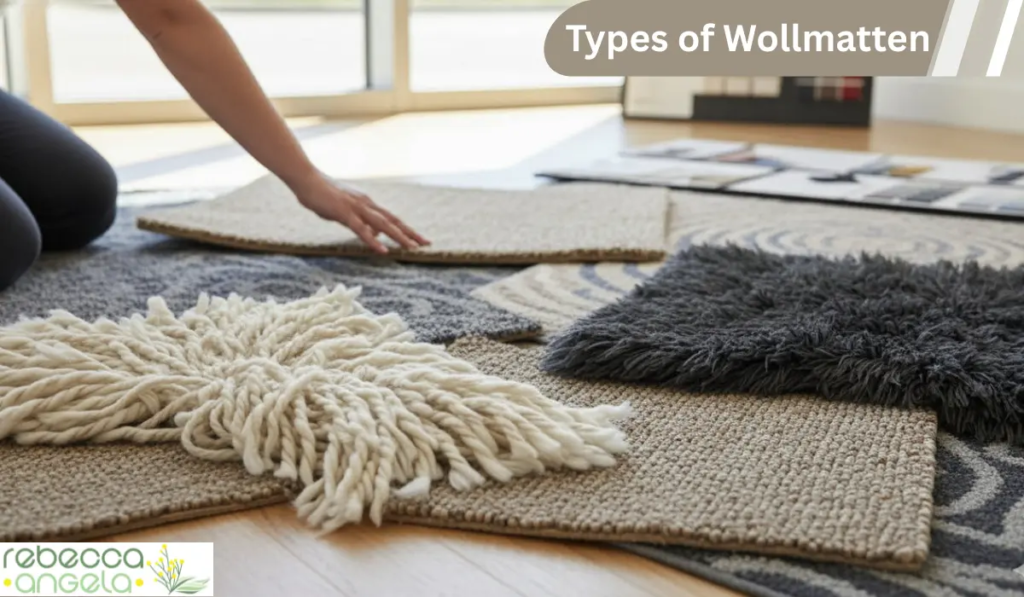
Wollmatten are mats made from natural sheep’s wool that has been processed into a dense usable form. Some are woven by hand. Some are felted — where fibres are compressed with heat and moisture until they bond together without any binder or adhesive. Some are needle-punched, which mechanically entangles the fibres into a firm structure that holds its shape under pressure.
The result is a mat that is genuinely soft but also genuinely resilient. Not precious. Not something that needs to be kept away from real life.
They’ve been around for centuries — in Alpine homes, in nomadic dwellings, in farmhouses across Northern and Central Europe. People used them because they worked. And here’s the thing about wool: it still works in exactly the same way.
Why Wool Is Actually Remarkable
There is a reason I keep coming back to natural fibres in almost everything I write about — from fabric choices in sewing to the materials we bring into the home. If you’ve read my post on why linen outperforms synthetic alternatives, you’ll recognise the same logic at work here with wool.
Wool fibres have a natural crimp. That crimp creates tiny air pockets throughout the mat structure. Those pockets trap warmth. A wool mat underfoot in winter is genuinely warmer than a synthetic one — not because of any treatment, but because of how the fibre is built.
Wool also breathes, which makes it useful in warmer months too. It can absorb a significant amount of moisture without feeling damp. It’s resilient — the fibres bend and return to their original shape under pressure rather than flattening permanently. And it’s naturally flame retardant without any chemical additions.
If you want to understand how different fibres behave and why it matters for the things you make or bring into your home, my all about fabric guide covers a lot of this ground in more depth.
None of what wool does is new knowledge. People have relied on it for thousands of years. We just forgot for a while when cheap synthetic options became available everywhere.
The Sustainability Angle — And I Mean It Genuinely
I’m careful about the word sustainable now. I’ve been burned enough by marketing claims to approach it with some scepticism, and I think that scepticism is healthy.
But with wollmatten, the sustainability case is actually solid.
Wool is renewable. Sheep are shorn once or twice a year and the wool grows back. The production process uses significantly less energy than manufacturing synthetic fibres from petroleum. Unlike polyester or nylon, wool doesn’t shed microplastics when it’s washed or worn.
And when a wool mat eventually reaches the end of its useful life — which, if it’s quality, will be decades from now — it is fully biodegradable. It breaks down and returns to the soil. It doesn’t sit in landfill for a century.
Many wollmatten are also made from lower-grade wool that isn’t suitable for clothing. Rather than going to waste, that material gets a productive second life as a durable household object. That’s the kind of quiet resourcefulness that tends to disappear in the era of fast everything.
If you’ve been thinking about sustainability in your home choices — not just in the obvious places but in the details, the textiles, the floor coverings — wollmatten are worth your attention.
Where They Work in a Home Like Mine
This is the part I find most useful to think through concretely, because “wool mat” sounds nice in theory but the question is always: where does it actually go?
In the living room. A wollmatte under or around a seating arrangement grounds the space and adds real warmth to hard floors — both visually and literally underfoot. Wool also absorbs sound in a way hard surfaces don’t, which makes a room feel quieter and less echoey. For creative spaces especially, that matters.
In the bedroom. The first step out of bed in the morning onto a warm surface is a small thing that makes a surprisingly big difference. I don’t know how else to explain it other than that. Place it beside the bed and you’ll notice it every single morning.
In the studio or workspace. This is the one I keep returning to. Long hours on your feet are easier with wool underfoot. The natural acoustic quality also makes the room feel calmer and easier to think in — and anything that supports a more settled creative practice is worth paying attention to. I’ve written about the importance of sustaining creativity before, and the environment you work in is a bigger part of that than we usually admit.
In the entryway. Wool naturally resists dirt and staining because of how the fibre is structured. Particles tend to sit on the surface rather than embedding into it, which is why vacuuming is usually enough to keep a wool mat looking good. That makes the entryway — where most people would assume a delicate natural material wouldn’t survive — actually a practical choice.
In the garden. This one is less obvious and I genuinely didn’t know about it until I looked into wollmatten properly. Wool mats placed over soil suppress weeds, retain moisture, buffer temperature shifts around plant roots, and slowly release small amounts of nitrogen as they break down. For new plantings, raised beds, or the base of trees and shrubs, they’re a thoughtful and fully biodegradable alternative to plastic landscape fabric.
How to Choose One Without Getting It Wrong
Start with size and go bigger than you think. The most common mistake people make with any kind of floor mat is buying one that’s too small. In a living room, the mat should sit under the front legs of the sofa and extend past the edges of the coffee table. In a bedroom, it should be generous enough that you actually land on it when you get out of bed. Measure the space first.
Think about construction. Hand-knotted wool mats are the most durable and the most expensive. A good one can last decades. Felted mats are dense and lower maintenance. Shaggy or hand-tufted versions are softer and warmer but accumulate dust more readily and need more careful vacuuming. Match what you choose to what the space actually demands.
Check the fibre content honestly. Look for 100% natural wool. Mats blended with synthetic fibres lose most of what makes wool worth choosing — the breathability, the resilience, the ability to biodegrade. If it doesn’t say 100% wool clearly on the label, ask before buying.
Colour and pattern are worth thinking about. Neutral, undyed, or naturally dyed tones are the most forgiving and tend to work with changing interiors over time. Cream, warm grey, oatmeal, and natural brown are classic for a reason. If you want something with pattern, geometric designs in natural dyes can be genuinely beautiful and they won’t date the way trend-driven palettes do. Think about what your room already has and whether the mat should anchor it or lift it.
Look for certifications if sustainability matters to you. The Global Recycled Standard and certifications from artisan organisations are meaningful markers. They’re not self-reported claims — they’re verified by a third party. As I’ve found in other areas of my own research into natural materials, the brands that genuinely care tend to be upfront and specific. The ones that don’t tend to get vague when you ask directly.
Caring for a Wool Mat
This is simpler than most people expect.
Vacuum regularly with the suction set low to medium. High suction on a wool mat pulls at the fibres over time and will eventually stress the weave or felt structure. A gentler setting does the job without the damage.
For spills, blot immediately rather than rubbing. Rubbing pushes the liquid deeper into the fibres. A dry cloth pressed firmly against the spill will absorb most of it before it sets. Wool is naturally resistant to staining — it’s part of how the fibre works — but speed matters.
Rotate the mat every few months so wear distributes evenly. This is especially true in spots where people tend to stand or walk in the same place every time.
For deeper cleaning, once a year or so, professional cleaning is worth it for anything hand-knotted or particularly fine. Home washing can work for simpler felted mats but follow the care instructions precisely — wool that’s washed incorrectly can shrink and distort permanently.
One thing to know: wool mats can attract moths in storage, particularly if stored for a season in a dark, undisturbed place. Cedar blocks or dried lavender nearby help. A mat that’s in active daily use is rarely troubled by this — moths prefer things that are left alone.
A Word on the Creative Side of This
There’s something that connects wollmatten to a broader way of thinking about the home that I keep coming back to.
I wrote recently about the pyjamaspapper idea — the Scandinavian concept that the things you live with at home deserve the same creative care and intention as the things other people see. A well-made pair of pyjamas. A considered fabric choice. Beauty that exists for your own sake, not for display.
Wollmatten fit into that same frame of thinking. A wool mat placed in the corner of a studio where only you work. A beautiful, considered thing that makes the space feel more intentional. Not for anyone else. Just because it’s better to be surrounded by things that are honestly made and genuinely useful.
That’s the creative home to me. Not perfectly decorated. Not showroom-ready. But full of choices that were made with some real thought behind them.
Wollmatten are one of those choices.
Practical Notes Worth Knowing
A few things that didn’t fit anywhere else but are genuinely useful.
In wet climates, wollmatten used in the garden will break down faster than in dry ones. This is the mat doing exactly what it’s supposed to — protecting the soil and then returning to it. Most gardeners get one to two productive seasons before the mat has decomposed enough to till in.
For people who find wool clothing itchy, it’s worth handling a mat before committing. Most wollmatten use outer coat wool rather than fine merino, and the texture is quite different. Many people who are sensitive to wool against their skin have no issue at all with a wool mat underfoot.
If you’re buying online and can’t feel the mat first, look for reviews that mention texture specifically. “Soft” is a relative term. “Soft enough to sit on” tells you something more useful.
The Honest Summary
Wool has been used in homes for thousands of years. Not because people had no other options but because it genuinely performs. It insulates. It breathes. It lasts. It does all of this without chemical enhancement or synthetic additives.
Wollmatten are the floor expression of that same logic. A material that has been doing its job quietly and effectively for centuries, now finding its way back into homes where people are thinking more carefully about what they bring in and why.
If that’s where you are in your thinking — and if you’ve read this far, I suspect it is — then wollmatten are worth knowing about properly.
And if this sparked something for you, I’d love to know. Drop a comment below or come find me on Pinterest where I share a lot of my material and making inspiration.


