

If you’ve got a genuine creative skill, launching a jewellery brand is one of the more rewarding ways I know to turn it into real income. It used to be all about the big, expensive brands. That’s shifted. Australian shoppers are increasingly drawn to unique, handcrafted pieces over anything mass-produced, and buyers don’t just want a brand name stamped on a box anymore. They want a story, real talent, something with a bit of art behind it. There’s genuine demand waiting for makers who can pair good design with consistent execution.
But talent alone won’t get you there. You also need a sensible roadmap and the right tools working quietly in the background if you actually want to make it at a commercial level. Here are five steps that build toward a jewellery brand that lasts.
Step 1: Test the Market on Low-Cost Marketplaces
Before sinking money into a website or ad spend, the smartest move is starting lean. Arts and crafts platforms like Etsy matter here because they hand you access to a built-in audience already searching for handcrafted, personalised jewellery, without the upfront cost of building your own storefront from scratch.
At this stage, you’re testing, not scaling. You’re finding out which designs actually resonate, what price points customers accept without blinking, and what kind of packaging or presentation earns repeat interest rather than a one-off sale. Put your energy into the fundamentals: strong product photography, clear and engaging descriptions, and pricing that genuinely reflects your time and materials rather than undervaluing both out of nervousness. Even a handful of listings can start generating early sales and genuinely useful feedback, and any profit here is worth reinvesting into better materials or your next piece of equipment.
Step 2: Build Your Own Branded Storefront
Once you’ve got some traction and a real sense of what sells, it’s time to move beyond marketplace listings and build a space that’s fully yours. This is where a more serious platform like Shopify comes in. It’s genuinely accessible now, free trials and ready-made templates mean you can have a professional, branded store live without needing design or development skills you don’t have time to learn.
At this stage, prioritise consistent branding across colours, fonts, and messaging. A layout that makes browsing and buying easy. Solid payment options. A site that looks just as good on a phone as it does on a laptop, since most of your traffic will be on a phone whether you plan for it or not. A well-built storefront doesn’t just process sales. It signals to customers that you’re a real, trustworthy brand, not a one-off hobby seller who might vanish in six months.
It doesn’t have to cost much to get there. Makers who set up their brand’s storefront on Whop, a platform for starting and running an online business where the site, checkout and payouts sit in one dashboard, describe the shop in a few sentences, get a hosted store built for them, and edit it by chat as the range grows.
Step 3: Shift Toward Direct-to-Consumer and Build Loyalty
As your brand matures, building a genuine sense of community and trust with your customers becomes the real work. Real growth in a business like this comes from moving away from relying solely on marketplaces and building direct relationships instead. You get more control over the experience you’re offering, and better margins on every sale, since you’re not splitting revenue with a third-party platform anymore.
One strategy here is sharing the inspiration behind your designs and a look at your actual creative process, through Pinterest, YouTube, Instagram, or wherever your audience actually spends time. It turns one-time buyers into repeat customers who feel genuinely connected to your work rather than just your product. Worth not skipping the admin side either. Registering your business properly and understanding your tax obligations under Australian regulations protects the brand you’re actually building, even though it’s the least exciting part of any of this.
Step 4: Nail Your Brand Fundamentals
Before pouring energy into heavy marketing, it’s worth getting clear on a few foundational questions that shape everything downstream. Who exactly are you designing for? Are they drawn to sustainable materials, minimalist style, or heavily personalised pieces? What actually makes your jewellery different from the dozens of other handmade sellers online, whether that’s your story, your materials, or the precision of your work?
Spend real time figuring out where your audience actually hangs out online, niche Facebook groups, Instagram, TikTok, wherever it is, and engage there directly rather than marketing at people from a distance like a billboard. A clear point of difference paired with genuine community presence tends to matter a lot more than ad spend in the early stages of a jewellery brand, no matter what the growth hacks promise.
Step 5: Add Laser Engraving to Elevate Your Product
At this point we’re talking about high-level personalisation, adding a touch of class, permanence, and real artistry to your jewellery. Laser engraving is how that gets done. In a crowded jewellery market, consistency and craftsmanship are what separate brands people remember from brands they scroll straight past. Laser engraving gives you that edge, intricate cuts, fine detail, and precise personalisation that’s genuinely difficult to replicate reliably by hand, all while saving real production time as your order volume grows past what you can manage manually.
Choosing a Laser Engraver for a Jewellery Shop: Key Lessons
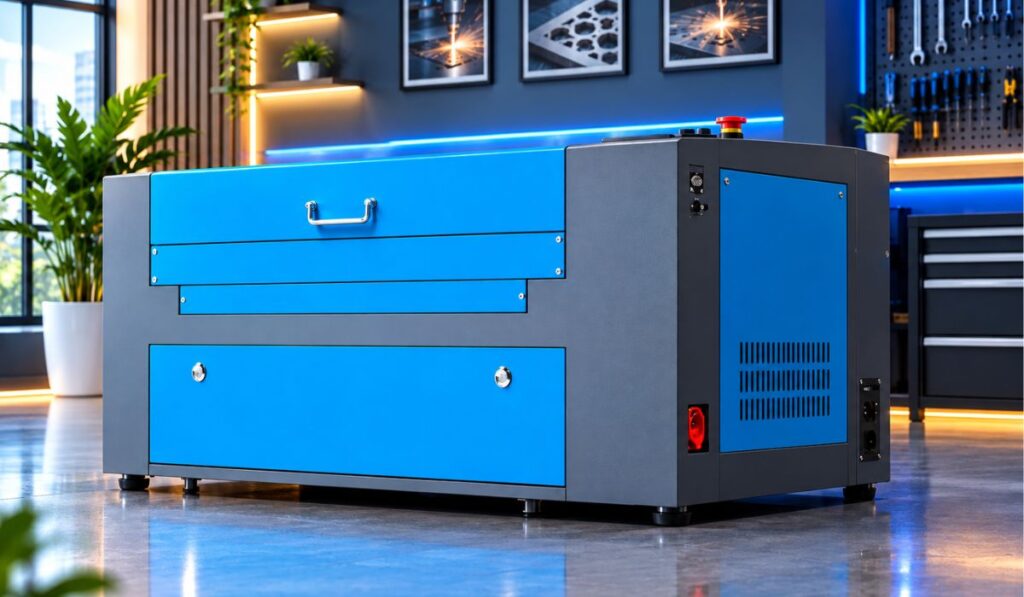
When it comes to jewellery engraving, the right laser really depends on your materials. If your designs lean toward acrylic, wood, leather, or lightweight plastics, think statement earrings, engraved tags, layered pendants, a CO2 laser engraver is the better fit. It offers clean, intricate cuts and fast engraving across a wide range of non-metal materials. If your work centres on metal pieces instead, rings, bracelets, pendants in stainless steel, gold, or silver, a fiber laser is what you actually want, since it marks hard metals with a permanence and fine detail a CO2 laser simply can’t match.
For metal jewellery specifically, a fiber laser engraver, and particularly a MOPA fiber laser engraver, delivers the precision needed for fine text, logos, and delicate artwork on rings, pendants, and other metal pieces, with options suited to both beginners and more advanced makers. OMTech Laser Engravers are worth looking into here. For non-metal designs, their desktop CO2 laser engravers are a practical starting point, compact enough for a home studio, with built-in cooling and air assist that keep setup simple, plus rotary capabilities for engraving cylindrical pieces like bangles or tumblers. As production scales, their higher-powered CO2 machines add faster speeds and thicker cutting capacity for higher-volume runs.
There’s also a solid range of high-quality fibre and MOPA laser engravers in Australia to consider, ranging from 20W to 100W+, so you can choose between a more affordable Galvo laser engraver for basic engraving on metal and jewellery, or a MOPA fiber laser for deeper engraving and more colourful designs.
Bringing It All Together
Building a jewellery brand from nothing can feel like a lot all at once, but each of these steps builds naturally on the last. Test cheaply. Build your own space. Deepen customer relationships. Get your fundamentals right. Use the right equipment to make your craftsmanship consistent and scalable rather than something you’re recreating from scratch every time.
Marketplaces get you started. Your own storefront lets you actually grow. The right laser engraver makes sure your product quality keeps pace with your ambitions instead of lagging behind them. With a clear plan and the right tools behind you, turning your creativity into a genuine jewellery brand is well within reach.

