
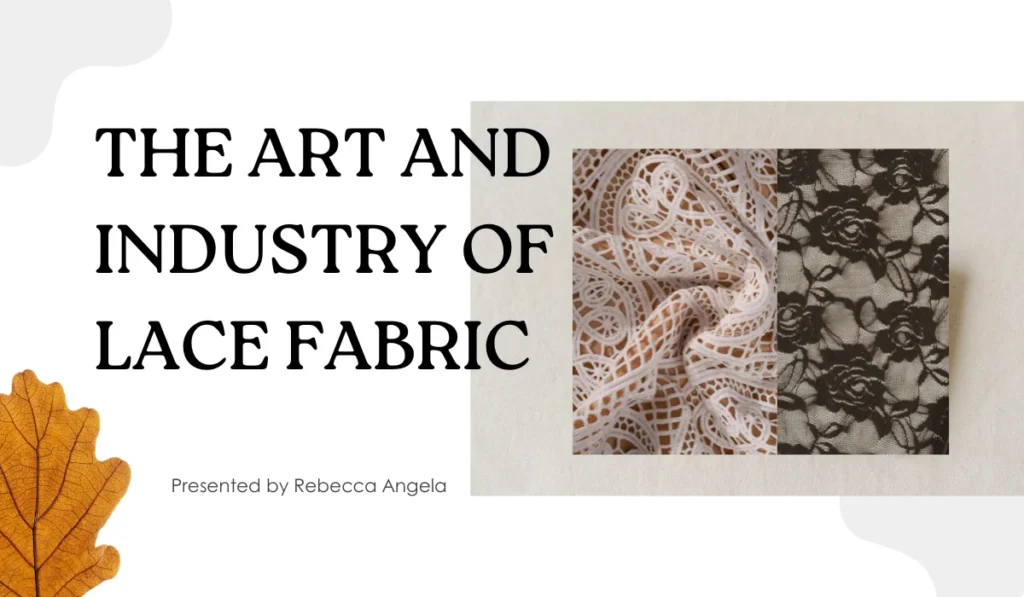

I have a complicated relationship with lace.
Not emotionally complicated — just the kind of complicated that comes from years of working with a fabric that looks effortless and absolutely isn’t. Lace is one of those materials that reveals everything. How it was made. How it was stored. Whether whoever designed the garment actually thought about the body underneath it, or just the photograph.
When lace is right, it’s extraordinary. When it isn’t, you know immediately — and so does everyone else.
So over the years I’ve spent a lot of time thinking about what makes lace genuinely good. Not just visually, but structurally. Where it comes from. How it’s produced. What questions are worth asking before you commit to it — whether you’re a maker sourcing a metre for a personal project, or a brand ordering at scale.
Here’s what I’ve come to understand.
The Fabric Itself Is Only Half the Story
There’s a version of lace appreciation that stops at the surface. It looks beautiful, it photographs well, it carries a certain romantic quality that other fabrics simply don’t. All of that is true.
But lace is also an incredibly technical fabric. The patterns you see — whether delicate florals, geometric repeats, or intricate all-over designs — are the result of a production process that requires both precision machinery and genuine human skill. The two things have to work together. A machine running a pattern without someone who understands yarn tension, stitch density, and finishing will produce lace that looks fine on a bolt and falls apart on a body.
This is why the factory behind the fabric matters as much as the fabric itself. A good lace fabric factory is where that technical knowledge and creative sensibility actually live together — where the people running the machines are paying attention to how the finished fabric drapes, how it recovers after wear, how it behaves when cut on the bias. That knowledge doesn’t happen by accident. It’s built over years of making, testing, and genuinely caring about the outcome.
Why High-End Lace Has Stayed Relevant for So Long
Fashion moves fast. Most fabrics cycle in and out with the seasons. Lace doesn’t really do that — and I’ve always found that interesting.
Part of it is versatility. Lace can be dyed, layered, embroidered over, combined with everything from silk charmeuse to heavy denim. It carries weight in bridal wear, in lingerie, in evening wear, in contemporary ready-to-wear. It shifts meaning depending on context, which is genuinely rare in textile terms.
But I think the deeper reason lace endures is that it’s one of the few fabrics that still feels handmade even when it isn’t. The intricacy of a well-produced lace pattern reads as human effort — as time and attention — in a way that a plain woven fabric simply doesn’t. That quality is hard to manufacture artificially. Either the pattern has it or it doesn’t.
For designers working in the premium space, that quality is worth protecting. Which is why sourcing decisions matter so much — and why cutting corners on lace, specifically, tends to show in a way that cutting corners on a cotton interlining simply doesn’t.
What Wholesale Sourcing Actually Changes
If you’re a brand or designer working at any kind of scale, buying lace through a wholesaler rather than a retailer changes a few things worth understanding properly.
The obvious one is price. Buying in volume reduces the cost per metre considerably, which matters when you’re doing production runs rather than one-off makes. But the less obvious benefit is consistency.
When you’re making multiples of the same garment, your lace needs to behave identically across every metre. The dye lot needs to match. The pattern repeat needs to land in the same place. The weight and handle need to feel identical from the first cut to the last. Retail fabric buying — even from good shops — can’t guarantee that. Wholesale sourcing from a reliable supplier gives you far more control over it.
There’s also the question of range. Established wholesale lace fabric suppliers typically carry a far broader selection than any retail store — different weights, constructions, pattern scales, and finishes. That breadth matters when you’re searching for exactly the right lace for a specific application, rather than choosing the best available option from a limited selection.
The Questions Worth Asking Before You Source
Whether you’re approaching a factory directly or working through a wholesale supplier, these are the things I’d want to know before committing to anything.
What are the fibres? Cotton lace, nylon lace, polyester lace, and viscose lace behave completely differently in terms of drape, durability, dye uptake, and how they feel against skin. Know what you’re working with before you order.
How does it perform after washing? Ask for this information directly. Good suppliers know it. If they don’t, that tells you something important.
Can you get a sample first? Always, without exception. A swatch photographed in good light on a white background tells you almost nothing useful about how a lace will behave in a real garment. You need to hold it, stretch it gently, drape it over your hand, and if possible sew a small test piece before committing to volume.
What’s the minimum order quantity? This varies considerably between suppliers and affects whether a source is realistic for your production volume. A high-volume factory that’s not set up for smaller orders rarely handles them well — and a rushed small order from the wrong facility is rarely a good experience for either side.
Are there sustainability certifications? Increasingly important — not just from a values perspective, but commercially. Brands that can speak clearly and specifically about their supply chain are better positioned with customers who care about these things, and that group keeps growing.
On Sustainability — Honestly
I want to say something straightforward here, because the fashion industry has developed a habit of treating “sustainable” as a marketing word rather than a meaningful standard.
Lace production is resource-intensive. The dyeing process uses significant water. The machinery uses energy. The fibres themselves have environmental footprints that vary depending on source and processing method.
None of that means lace can’t be produced more responsibly — it absolutely can. But vague sustainability claims deserve scrutiny. Look for specific certifications. Ask specific questions about water and energy use, fibre sourcing, and waste management. Find out whether those commitments are verified externally rather than just self-declared.
The manufacturers doing this well tend to be proud of it and specific about it. That specificity is always a good sign.
Finding the Right Sourcing Partner
The relationship between a designer or brand and their fabric supplier is one of the most practically important relationships in the whole production process. A supplier who understands your aesthetic, knows your quality standards, communicates clearly, and flags problems early — that’s genuinely worth a lot.
It’s worth taking real time to find that, rather than defaulting to whoever appears first in a search.
Talk to other designers and ask who they work with. Order samples from several suppliers before choosing. Pay attention to how questions get answered — whether responses are thoughtful and specific, or rushed and vague. Notice whether they push back when something won’t work, or just take the order.
The fabric you use defines what you make. In lace especially, where the quality difference between a mediocre source and a great one is visible to anyone paying attention, that sourcing decision carries real weight.
A Final Thought
I keep coming back to something that’s true of most things in making: the decisions that feel the most administrative — where to source, what to ask, how to evaluate a supplier — tend to be the ones that most determine the quality of the final result.
The romance of lace is real. The craft behind it is real. But so is the supply chain, and so are the questions worth asking before a single seam gets sewn.
Get those right, and the rest of the process has a much better chance of going the way you hoped.

