

I came across the word pyjamaspapper on a Tuesday afternoon when I was supposed to be doing something else entirely.
I was down a rabbit hole of Scandinavian design inspiration — the kind where you start looking at one minimalist bedroom and end up two hours later reading about textile philosophy and wondering where your afternoon went. And there it was: pyjamaspapper. Just sitting there, looking interesting.
I didn’t know what it meant. And I had a feeling once I figured it out, it was going to resonate.
I was right.
So What Actually Is Pyjamaspapper?
The word is Scandinavian in origin — and when you break it down, it does exactly what it says. “Pyjama” we all know. “Papper” in Swedish means paper. So literally: pyjama paper.
But the concept goes well beyond that literal reading. At its heart, pyjamaspapper describes something that sits at the intersection of two things I genuinely love: the comfort of considered loungewear, and the creative, almost papery lightness of garments that feel effortless to wear.
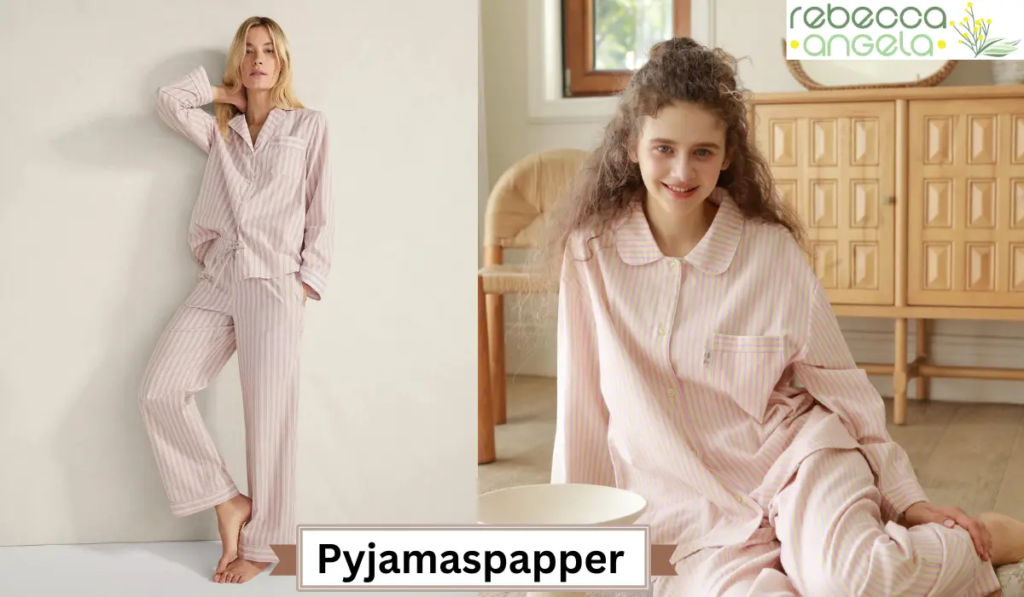
Think about your favourite pyjamas. Not the old worn-out ones you’ve had since forever — I mean the ones you deliberately chose. The ones made from fabric that feels genuinely lovely against your skin. The ones with a print you’re a little bit proud of. The ones you’d be happy to be seen in.
That considered approach to comfort — the idea that what you wear at home deserves the same thought and care as what you wear outside — is pyjamaspapper.
And in the Scandinavian design tradition — where simplicity, functionality, and beauty are never treated as separate things — this makes complete sense, a philosophy widely associated with modern Scandinavian design principles.
Why This Idea Landed So Hard For Me
Here’s the thing. I’ve been sewing for a long time. And one of the observations I’ve made over the years is that sewists — people who will spend weeks on a coat, who will agonise over the right interfacing for a jacket collar — will often reach for a terrible pair of supermarket pyjamas to wear at home.
We put our craft into what other people see. And we shortchange ourselves on the things that are just for us.
Pyjamaspapper, as a concept, pushes back on that entirely.
It says: the garments you wear when nobody is watching are worth making well. Worth choosing carefully. Worth sewing from fabric you actually love, in a silhouette that actually suits you, with seams that hold up wash after wash.
There is something genuinely lovely about that idea. It’s the same energy as making your bed every morning, or using the good plates on a Tuesday. It’s deciding that your own comfort is worth the same creative attention you’d give to anything else.
The Fabric Is Everything
If there’s one place where pyjamaspapper thinking makes the biggest practical difference, it’s fabric choice.
Most mass-produced sleepwear is made from synthetic fabrics that pill quickly, don’t breathe, and feel increasingly uncomfortable as the night goes on. They’re made to look good on a hanger in a store, not to feel good twelve hours into a night’s sleep.
The pyjamaspapper approach to fabric is the opposite of that.
Cotton lawn is one of my personal favourites for this kind of project. It’s lightweight, has a beautiful subtle sheen, and drapes in a way that feels genuinely luxurious. It’s also easy to sew — which matters when you’re making something for pleasure rather than challenge.
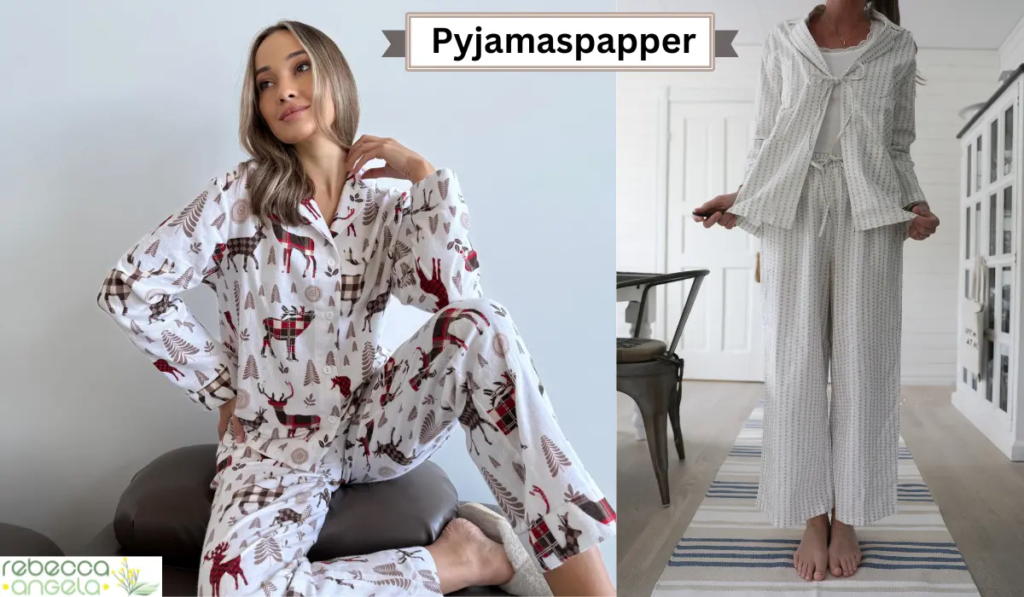
Brushed cotton and flannel are the colder-months answer. The softness of a well-chosen flannel is genuinely hard to beat for winter pyjamas. If you’ve never sewn with a good brushed cotton before, it’s one of those experiences that makes you wonder why you waited.
Bamboo viscose has become one of my favourite recent discoveries for sleepwear. It’s temperature-regulating, incredibly soft, and has a beautiful fluid drape. It requires a little more care when cutting and sewing — it can slip around on you — but the result is worth the extra attention.
Linen is a less obvious choice but a genuinely good one for warmer climates and summer nights. It softens beautifully with washing, breathes better than almost any other natural fibre, and ages in a way that synthetic fabrics simply don’t.
The general principle holds across all of these: natural or natural-blend fibres, chosen for how they feel rather than how they photograph. That’s the pyjamaspapper sensibility in action.
Choosing natural fibres and comfortable textures is part of the broader pyjamaspapper philosophy, where the focus is on garments that feel as good as they look.
The Design Philosophy — And What It Means for Creative Makers
What I find most interesting about pyjamaspapper as a concept is how closely it aligns with the broader philosophy of conscious making.
In surface design, we talk a lot about intention. About choosing prints that mean something, colours that resonate, patterns that reflect a point of view rather than just a trend. It brings exactly that energy to sleepwear and loungewear — and it opens up some genuinely exciting creative possibilities.
Imagine making a pyjama set from fabric you’ve designed yourself. A print that references something you love — a botanical pattern, a geometric repeat, something abstract and personal. Worn in your own home, just for you, made from fabric that started as your own creative idea.
That’s not a small thing. That’s a whole creative loop closed.
I’ve been thinking a lot about this in relation to my own practice. The fabrics I design could absolutely translate to sleepwear — and there’s something freeing about the idea of making things that aren’t for sale, aren’t for display, aren’t for anyone else’s approval. Just beautifully made, thoughtfully designed, and completely personal.
The pyjamaspapper concept gives a name to that impulse.And having a name for something always makes it feel more real.
How to Bring Pyjamaspapper Into Your Own Making
If this is resonating with you, here are a few practical thoughts on where to start.
Start with one great fabric. You don’t need a whole capsule wardrobe of handmade sleepwear. You need one piece made from a fabric that makes you genuinely happy when you put it on. Visit your local fabric shop with pyjamaspapper in mind — reach for the things that feel good in your hands, not just the things that look good on the bolt.
Choose a simple pattern. Pyjama bottoms are one of the most beginner-friendly sewing projects there is — essentially two leg pieces, a waistband casing, and some elastic. A well-fitted pair made from beautiful fabric is genuinely one of the most satisfying things you can sew. If you’ve been putting off making your own sleepwear because it seems complicated, I promise it isn’t.
Think about what you’re printing, if you print. If you do any surface design work — screen printing, digital print design, fabric painting — consider what a pyjamaspapper project might look like using your own work. There’s something particularly lovely about wearing fabric you designed.
Don’t over-engineer the silhouette. Part of the pyjamaspapper philosophy is ease — not just comfort in wearing, but simplicity in the making. Wide-leg trousers with an elastic waistband. A relaxed long-sleeved top. A soft robe with minimal construction. The beauty is in the fabric and the fit, not in complicated technique.
Finish your seams properly. This is the one place I’d encourage you not to cut corners. A French seam, a flat-felled seam, or a careful overlocker finish means your pyjamas will wash beautifully and last for years rather than months. The inside of a well-made garment is a quiet pleasure all its own.
The Bigger Picture
I keep coming back to something that the pyjamaspapper idea surfaces, and it’s this: the way we treat our private, domestic lives reflects something real about how we think of ourselves.
When we make beautiful things only for other people’s eyes, we’re quietly placing our own comfort and joy at the bottom of the list. And most of us do this without even noticing.
The Scandinavian design tradition has always understood that the home is as worthy of beauty and intention as anywhere else. That the clothes you wear when you’re alone matter. That a well-made thing, seen only by you, is still worth making well.
Pyjamaspapper is a small word for a bigger idea. And I think it’s one worth sitting with — ideally in a beautifully made pair of cotton lawn pyjamas, with something warm to drink, and nowhere to be.
That sounds about right to me.
You may also love this: Blazertje: The Little Blazer That Does More Than You Think
Let’s Keep Talking
Have you ever deliberately made sleepwear for yourself — or is your at-home wardrobe an afterthought the way mine used to be? I’d love to hear what fabrics you love for this kind of project, or whether pyjamaspapper as an idea lands the same way for you as it did for me.
Drop a comment below, or come find me on Pinterest where I’m always sharing fabric inspiration and making ideas.
And if this post has sent you off to look at cotton lawn with new eyes — good. That’s exactly what it was supposed to do.


