
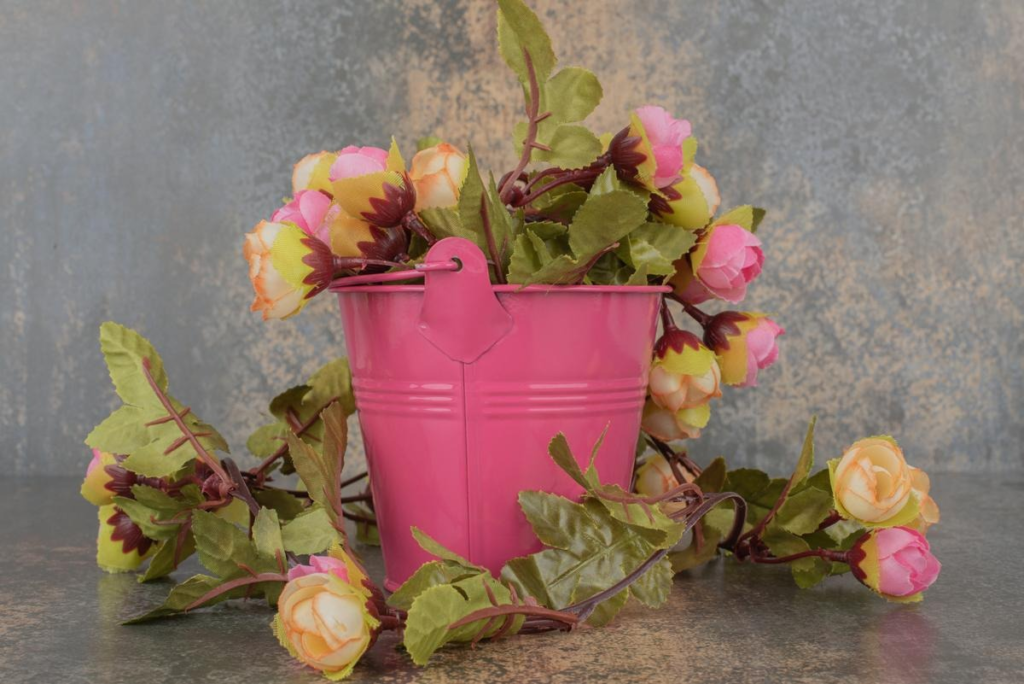

Metal planters represent a real challenge. Sure, they’re durable and good-looking, but at the same time, they also require regular maintenance. And since they’re always exposed to moisture, protecting them against rust may feel like mission impossible.
It’s not impossible though! And despite the moisture and humidity, the truth is you can maintain your metal planters in an effective manner. All it takes is a bit of patience, the right products, and a clear step by step approach. With this thought in mind, here’s everything you need to know about this idea.
The Secrets of Successful Painting
Learning how to paint your metal planters for garden implies understanding the two main secrets behind a successful job. One of them is the elimination of current rust. The second one is the actual preparation.
Clearing current rust must be done thoroughly. If not eliminated, the rust will spread relatively fast.
- Get rid of all the loose rust. You can use a soft wire brush. Sandpaper also works, let alone steel wool. All the flaky rust must be thoroughly removed upfront. Take your time with this step because any leftover flakes will stop the new paint from bonding properly.
- Clean and dry your planters. Use water and a mild detergent. You need to get rid of soil leftovers, as well as other forms of debris. Planters must be perfectly dry before painting.
- Prevent further rust. While removing rust, there might be small bits that can go unnoticed. To ensure they don’t turn into a real problem, use a rust inhibitor or converter. Such things are also useful when struggling to eliminate stubborn rust spots.
The preparation work is the second most important aspect, as well as a secret to a good job. Ask any professional painter out there, and they’ll all agree that preparation is a crucial step in the process.
- Clean your metal planters with a thorough product once you’re done removing rust. Make sure there’s no grease left behind. White vinegar is useful if you want a natural option.
- Smooth the surface as well. Indeed, some planters may come with certain patterns and textures, but otherwise, sand the surface to get rid of all sorts of peeling paint. The rougher the metal is, the better the paint will adhere to it.
Finally, keep in mind that if it’s not perfectly dry, the planter will rust in no time. When trapped under a point, moisture won’t be able to escape. Instead, it will cause rust to reappear.
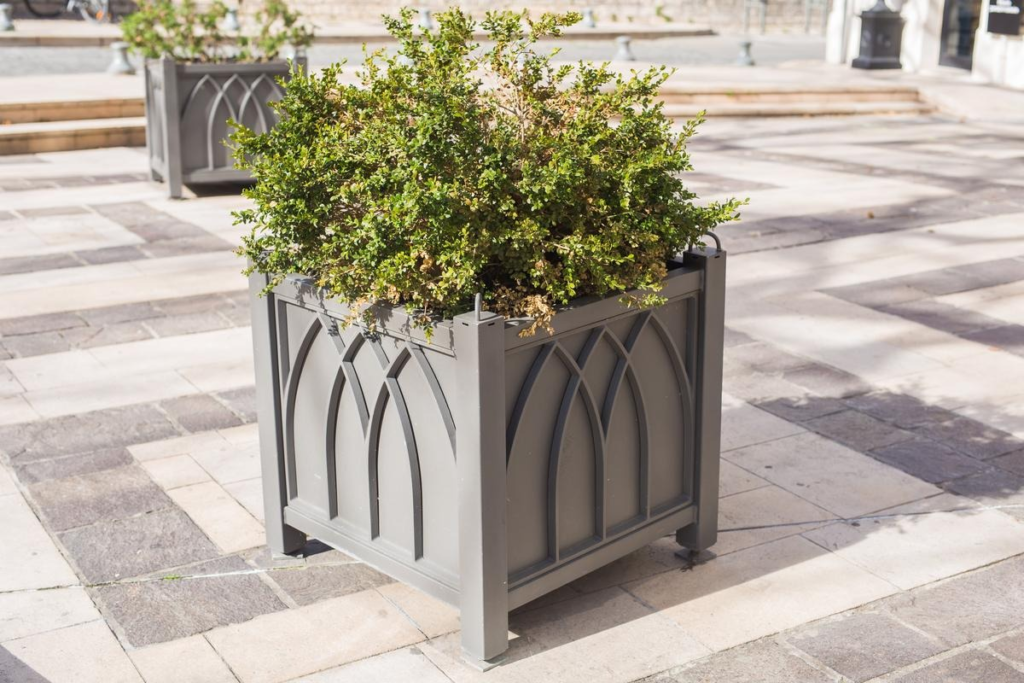
Working with the Primer
Some say the primer is part of the actual preparation. To others, it’s the first step in painting. Either way, the primer goes under the paint and helps the paint adhere to the metallic surface. It also adds an extra shield against moisture, which is exactly what you want for outdoor planters.
The primer should be professional. It should prevent the appearance of rust. It should also be specifically made for metallic elements. There are more types of primers out there. Some work well on wooden surfaces, others are better on metal.
Apply the primer in an even coat. Let it dry completely. Check the manufacturer’s instructions and give it an extra hour. Apply a second coat and follow the same procedure. Make sure all the bare metal is successfully covered. Don’t forget edges, corners, and the underside, as these hidden areas often start rusting first.
Paint the Planters
This is one of the easiest parts in the process. Once the primer is fully dried, get a metal paint that’s also advertised for outdoor use. Even if your planters are indoors or covered, outdoor paint is simply much more effective. Plus, don’t forget about the moisture.
Just like the primer, the paint should be applied in two or three layers. Apply thin layers and let them dry. Thick layers will look uneven, not to mention the drips. That’s why it’s wiser to do it in thin layers.
When spraying, a sweeping motion is likely to cover everything. Overlap slightly to ensure you cover everything.
Make sure to follow the drying recommendations from the manufacturer between coats. Normally, you should wait at least an hour between coats.
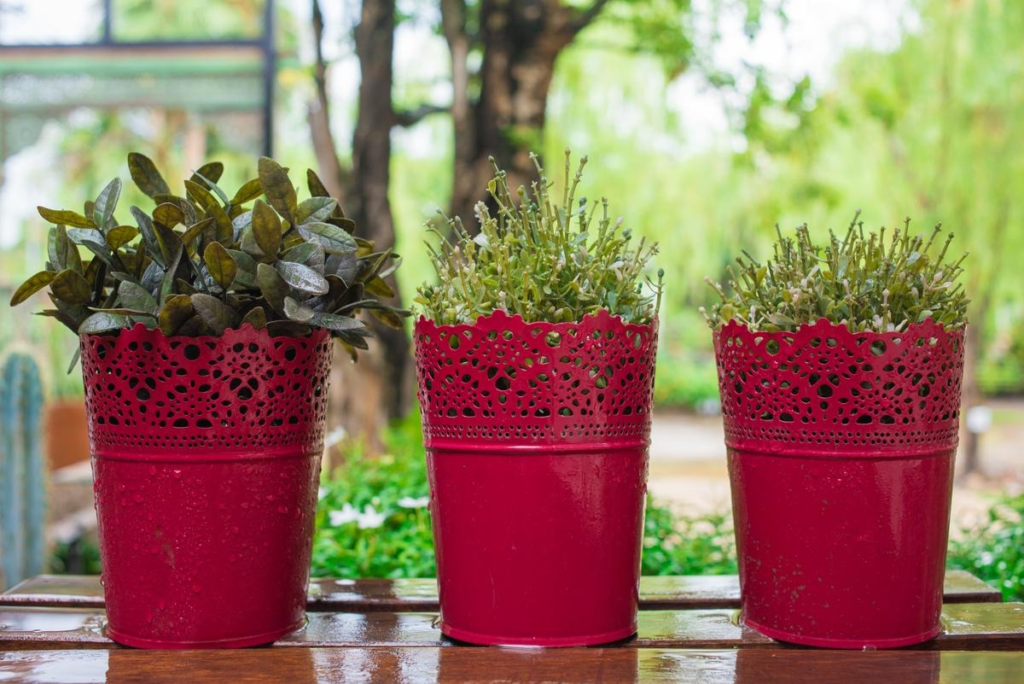
How to Protect the Interior
The interior doesn’t really need painting. However, you should still protect it to prevent paint from getting inside. Sealing it is still a good idea. Use the same spray against rust. It’s a primer, but no one will see it. You don’t need any fancy colors.
Furthermore, check the current drainage holes. You may need to drill a few more. After all, drainage prevents the water from clogging it and causing rust.
Finally, if you can, use a plastic liner to keep the soil and water away from the metal.
Remember that just because the drying time has passed, paint requires more than that to harden and provide 100% protection. Give your planters at least two days before adding any soil or water inside. Treat this waiting period as an investment in a finish that will last through multiple seasons.
As a short final conclusion, painting your metal planters isn’t as difficult as it may seem, but it does require a bit of work prior to the actual painting process. While the steps are straightforward, the truth is that preparation may require more than a day at times.


