
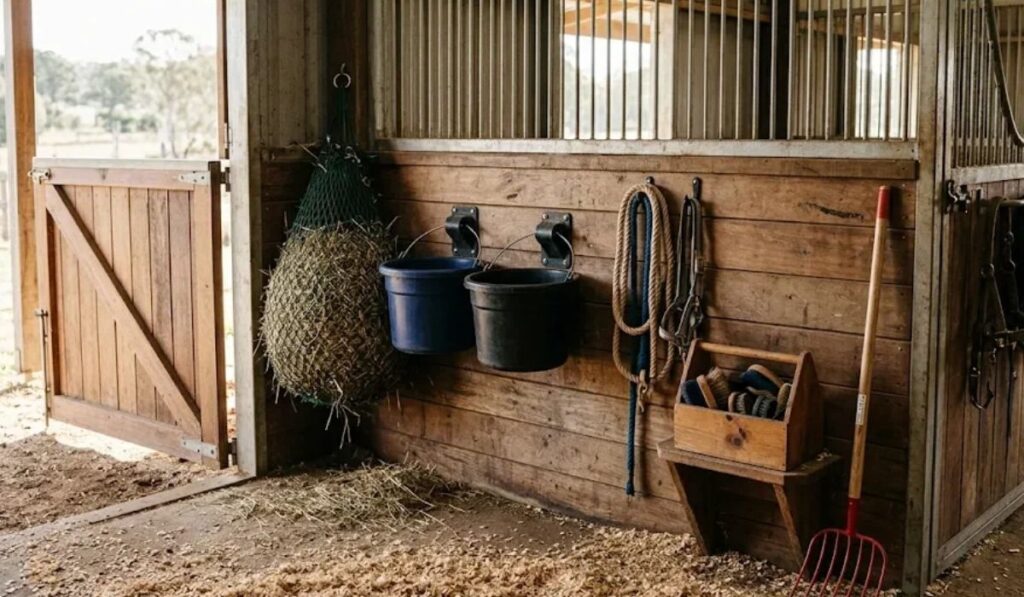

A well-organised stable makes daily horse care easier, safer and more efficient. Having the right horse stable supplies close at hand helps owners manage feeding, grooming, cleaning and routine checks without unnecessary delays. The essentials should be practical, durable and suited to the individual horse, and no single list suits every yard. A horse’s age, health, workload and diet all change what’s needed, so treat this as a starting point and ask your vet, farrier or an experienced equine professional about your own horse.
Feeding Essentials
Every stable needs reliable feed and water equipment. Feed buckets, water buckets, hay nets and feed scoops are basics for most yards. Buckets should be sturdy, easy to clean and free from sharp edges or cracks that can trap bacteria or injure a horse.
Hay nets can reduce waste and encourage slower eating, though they have to be used with care. Hang them high and secure enough that a horse can’t get a leg caught as the net empties, and use safe tying methods such as a quick-release knot. Slow-feed nets with small holes suit some horses but may not suit others, so watch how your horse responds.
Feed scoops make portioning more consistent, which matters because feeding amounts are best based on your horse’s weight, workload and a vet’s or equine nutritionist’s advice, not a rule of thumb. Sealed storage containers are useful for concentrates, supplements and treats. Keeping feed protected from moisture, pests and contamination helps maintain its quality, and mouldy or spoiled feed shouldn’t be given to horses. Containers should be clearly labelled, particularly when several horses have different diets.
Fresh, clean water should always be available. Check and scrub water buckets daily, especially in hot weather.
Grooming Equipment
Regular grooming supports cleanliness and gives owners a chance to notice changes in a horse’s coat, skin or general condition, such as lumps, heat, swelling, sores or hair loss. A basic kit can include a curry comb, dandy brush, body brush, mane and tail comb, hoof pick and soft finishing brush.
Grooming tools should be cleaned regularly and kept dry between uses. Sharing brushes between horses can spread skin conditions such as rain scald or ringworm, so keep a separate set for any horse with a skin problem. A hoof pick is especially important because picking out the feet helps remove stones, mud and other debris before they cause discomfort, and it lets you spot thrush, cracks or heat in the hoof. Depending on the season, owners may also need sweat scrapers, sponges and coat-care products. Check that any product is suitable for horses and follow the label.
Stable Cleaning Tools
A clean stable is central to everyday welfare. A strong shavings fork, stable shovel, broom and wheelbarrow make mucking out considerably easier. Bedding should be removed and replenished according to the horse’s routine and the stable’s ventilation, and good airflow matters because dust and ammonia can affect a horse’s respiratory health.
Disinfectant suitable for stable surfaces can help with periodic deep cleaning, but products should always be used according to their instructions. Keep chemicals away from feed, water and the horse, rinse surfaces as directed and store products securely. Separate cleaning tools for feed areas can help maintain hygiene.
Handlers should also protect themselves. Wear gloves and sturdy boots, lift with care when moving full barrows and make sure you’re up to date with tetanus vaccination. In parts of Australia where Hendra virus is a risk, talk to your vet about vaccination and biosecurity practices.
First-Aid and Care Items
A stable first-aid kit is worth keeping accessible. Useful contents may include sterile gauze, bandages, wound dressings, saline solution, medical tape and disposable gloves. A thermometer can also help you monitor a horse that seems unwell. A healthy adult horse’s resting temperature is commonly around 37.5 to 38.5°C, but ask your vet what’s normal for your horse and when a reading is a concern.
These items don’t replace veterinary advice. They provide basic support while you contact a qualified professional. Call your vet promptly if a horse shows signs of colic, such as pawing, rolling, repeatedly looking at its flank or refusing food, or if there’s a deep wound, lameness or breathing difficulty. Keep emergency contact details, including your vet’s after-hours number, somewhere visible and easy to find. Check the kit regularly and replace anything that’s out of date or used.
Everyday Organisation
Good organisation makes routines smoother and safer. Hooks, storage boxes and labelled containers keep equipment off the floor and reduce trip hazards. Spare lead ropes, halters and buckets are handy when something is damaged or needs cleaning.
Fire safety deserves a mention too. Stables hold dry hay, shavings and dust, so keep hay stored away from ignition sources where possible, avoid smoking in and around stables, keep electrical fittings and cords in good condition and know where your fire extinguisher is.
When buying equipment, specialist equestrian retailers, local feed stores and online suppliers can all be reasonable places to compare options. Whichever you choose, consider the horse’s requirements, the product’s construction and how often it will be used, rather than choosing on appearance alone. Check materials, strength and safety features, compare more than one supplier and read return and warranty terms before you buy.
A Safer, Simpler Stable Routine
A thoughtfully equipped stable supports consistent feeding, grooming, cleaning and basic care. From dependable buckets and grooming brushes to cleaning tools and first-aid essentials, each item has a practical role. Choosing suitable gear and keeping it clean, organised and ready for use makes everyday management simpler and helps create a safer environment for both horses and handlers.

