
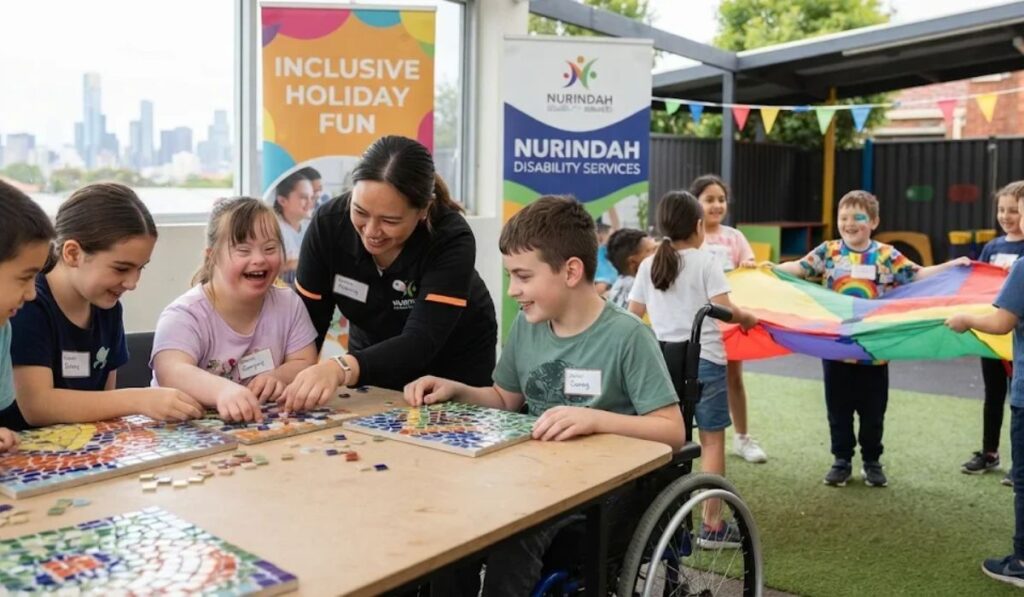

For many children, school holidays are a welcome break from timetables, bells and classroom routines. For children with disability, they can also be a quieter stretch of weeks where friendships are harder to keep going and the structure of the school day disappears. A good holiday program can help fill that gap, not by packing the days with activities, but by giving children a comfortable place to try things, meet other kids and build skills at their own pace.
For families exploring disability services in Melbourne, it helps to know what an inclusive program can realistically offer, what it can’t, and what to ask before enrolling. This guide covers the main benefits and the practical questions around funding and choosing a provider. It’s general information and not a substitute for advice from your child’s health professionals, school or NDIS contacts.
1. Encouraging Communication and Social Interaction
Social interaction is a big part of childhood development, and holiday programs create regular, low-pressure chances to practise it. Group games, creative workshops, music sessions and outdoor play can all encourage children to:
- express their thoughts and preferences
- practise listening and responding
- learn sharing and turn-taking
- take part in group activities
- build connections with other children
Support workers can help children join in comfortably, depending on how each child communicates and what they need. The aim is participation, not performance. Some children will chat freely, and others will connect through gestures, devices, shared play or simply sitting alongside someone. All of that counts.
2. Building Confidence Through New Experiences
Trying something unfamiliar can show children what they’re capable of. Programs may include cooking, arts and crafts, nature exploration, sports and sensory-based activities. Finishing a small project, learning a new skill or taking part in a group activity can give a child a real sense of achievement.
What matters is fit. Activities should be adapted to each child’s abilities, interests and comfort levels, and the focus should be on personal progress rather than competition or comparison with others. A child who watches for the first two days and joins in on the third is making progress, and good staff will treat it that way.
3. Developing Cooperation and Teamwork
Many holiday activities depend on working towards a shared goal. Group games, creative projects and simple challenges give children a practical way to learn how cooperation works. Over time, they may practise:
- taking turns and following instructions
- sharing materials and resources
- asking for help when needed
- respecting other people’s choices
- working together to finish an activity
These skills can support participation in everyday situations at school, at home and in the community, though every child develops differently and progress isn’t always steady or quick.
4. Encouraging Independence and Decision-Making
School holiday programs in Melbourne can give children chances to make choices and take part in everyday tasks. A child might choose an activity, organise craft materials, prepare a simple snack or help plan a group game.
With suitable guidance, small decisions like these can build problem-solving and independence. Individual support can also help a child join in with things that would otherwise feel challenging or unfamiliar. The best support steps back as confidence grows, rather than doing things for the child.
5. Creating Opportunities for Community Participation
Visits to local parks, libraries, recreation facilities and community spaces can help children feel more familiar with their surroundings and more connected to the people in them. With good planning, accessibility checks and the right individual assistance, outings can be enjoyable and build a sense of belonging.
It’s reasonable for families to ask how outings are planned, including transport arrangements, supervision levels, what happens if a child becomes overwhelmed and how accessibility needs such as toilets, quiet spaces and mobility access are handled.
6. Understanding NDIS Support for School Holiday Programs
The National Disability Insurance Scheme (NDIS) may fund eligible disability-related supports that help a child take part in social, recreational and community activities during school holidays. Depending on the child’s plan and circumstances, that could include support worker assistance to take part in suitable activities and work towards relevant goals.
However, ordinary school holiday program fees, general childcare costs and recreation expenses are not automatically funded by the NDIS. The difference between a program’s general costs and an eligible disability-related support is worth understanding before you commit.
Before making arrangements, review your child’s NDIS plan and talk to your plan manager, support coordinator or the National Disability Insurance Agency (NDIA) about what can be claimed. Funding depends on the individual plan and on what’s considered reasonable and necessary, so check with these sources for current rules.
What to Look for in a Holiday Program Provider
Providers differ in size, approach and experience, and the right fit depends on your child. Whichever you consider, it’s worth looking at:
- Registration and quality: Check whether the provider is registered with the NDIS Quality and Safeguards Commission if you plan to use NDIS funding, and ask what that registration covers.
- Staff checks and training: Ask about NDIS Worker Screening Checks, Working with Children Checks, first aid training and experience supporting children with similar needs to yours.
- Staffing ratios: Ask how many staff support each group and whether one-to-one support is available if your child needs it.
- Individual planning: A good provider will ask about your child’s communication style, sensory needs, routines, interests and any behaviour supports, and will record the information.
- Health and safety: Ask how medication, allergies, emergencies and incidents are handled, and how families are kept informed.
- Costs and cancellations: Request a written service agreement that sets out fees, what the NDIS can be claimed for and what happens if plans change.
It can also help to visit, meet the staff and see how they speak with the children. If you have concerns about a provider, the NDIS Quality and Safeguards Commission has a complaints process.
Providers across South East Melbourne offer holiday programs of different kinds, from home-based and one-to-one support to group outings, so it’s worth comparing a few before choosing.
What School Holidays Can Offer
School holiday programs can offer more than entertainment. They can give children with disability chances to build communication skills, form friendships, practise independence and grow in confidence through new experiences. With suitable activities, personalised support and a provider you trust, the holidays can become a positive time for children and their families.
Every child is different, so if you’re unsure what kind of support would suit yours, a conversation with their health professionals, school or support coordinator is a good place to start.

