
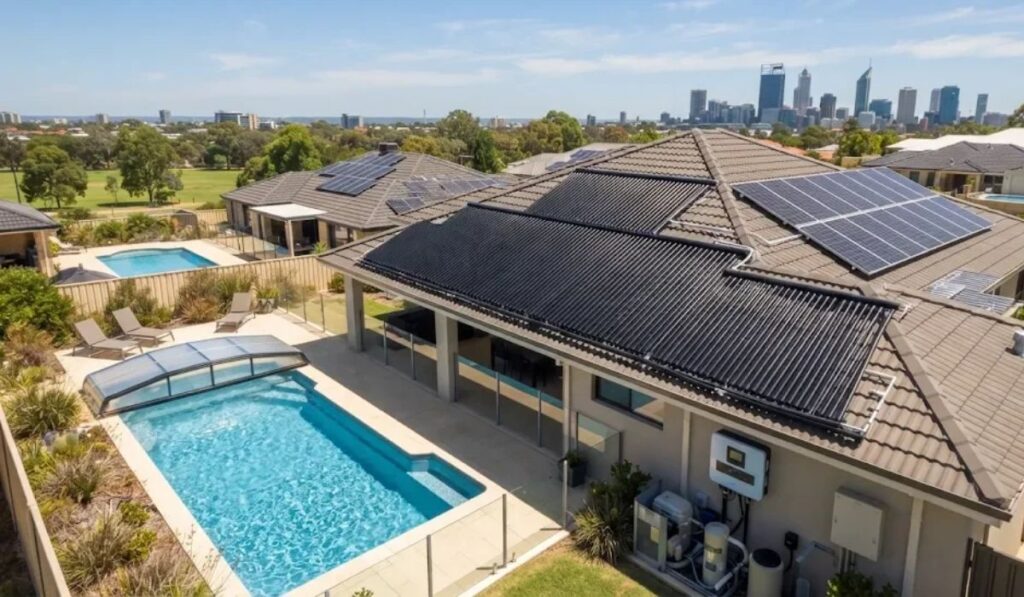

Perth enjoys long, sunny days, yet many backyard pools sit unused once temperatures drop. For homeowners researching solar pool heating Perth, the goal is usually simple: spend more time in the water without relying on expensive heating methods.
Solar heating uses the sun’s natural warmth to raise pool water temperatures. The results, however, depend on more than Perth’s sunny climate. Your roof, pool size and swimming habits all play a part.
Making the Most of Perth’s Sunshine
Perth’s climate gives solar heating a clear advantage. Long periods of sunshine help collectors capture warmth and pass it into the pool.
The process is straightforward. Pool water travels through collectors installed on the roof, absorbs heat and returns to the pool. This cycle continues for as long as conditions allow.
Solar heating works best on sunny days and in the warmer months. In winter, shorter days and cloud cover can limit the heat available. Understanding these seasonal changes helps homeowners set realistic expectations.
Why Your Roof Matters More Than You Think
Not every roof offers the same conditions for solar heating.
A north-facing roof with good sunlight can support strong performance, but direction is only one factor. Nearby trees, neighbouring buildings and roof structures can all cast shade during the day.
The available roof area matters too. Larger pools need more heating capacity, which may mean additional collectors. Roof shape can also influence the type of system installed. A professional assessment is the most reliable way to work out which arrangement suits a particular property.
Choosing Between Solar Matting and Rigid Panels
Homeowners comparing options will usually come across two common collector designs.
- Solar strip matting uses flexible tubes to circulate water across the roof. It can adapt to different roof shapes and make use of limited or unusual spaces.
- Rigid solar panels use fixed collectors designed to capture sunlight and warm the circulating water. Their solid construction suits roofs with enough suitable space and support.
Both use solar energy, and neither suits every property. Suppliers such as Pool Heating Solutions WA offer both types, including Boss strip heating and Heliocol rigid panels, and typically assess a property’s layout before recommending a system.
Getting Better Results From Solar Heating
Installing a system is only part of the picture. How you manage the pool also affects performance.
- Use a pool cover. Without one, wind and evaporation can remove much of the warmth collected during the day.
- Check circulation. Water needs to flow through the collectors at the correct rate for the system to work as designed.
- Consider a controller. Modern controllers can run the system based on water temperature and available solar warmth, so heating happens when conditions suit.
These small details can improve comfort without adding much work for the homeowner.
Planning for a Longer Swimming Season
Solar heating can help Perth families enjoy their pools beyond the hottest summer months, but no two properties will achieve the same results. A sheltered pool with good roof exposure may hold warmth better than a shaded pool exposed to strong winds.
Before choosing a system, think about when you want to swim, how much sunlight your roof receives and whether you will use a pool cover. A suitable system should match your property rather than follow a standard package.
With sound design and installation, Perth homeowners can make better use of their pools through more of the year.

