

We put a lot of thought into our homes. The paint colour that took three weekends to decide on. The rug that finally arrived after being backordered for two months. The shelf arrangement that looked wrong four different ways before it looked right.
And then there is the plumbing. Which nobody thinks about at all until it stops working.
Hidden beneath floors and behind walls, drains carry away water from showers, sinks, washing machines, and toilets every single day without acknowledgement. When they are working the way they should, they are completely invisible. When they block, they have a talent for choosing the worst possible moment to make themselves known.
The good news is that most drain problems are preventable. A handful of consistent habits is usually enough to keep things flowing and your home smelling the way it should.
Room by Room: Where Blockages Start
Every room with water has its own particular weakness.
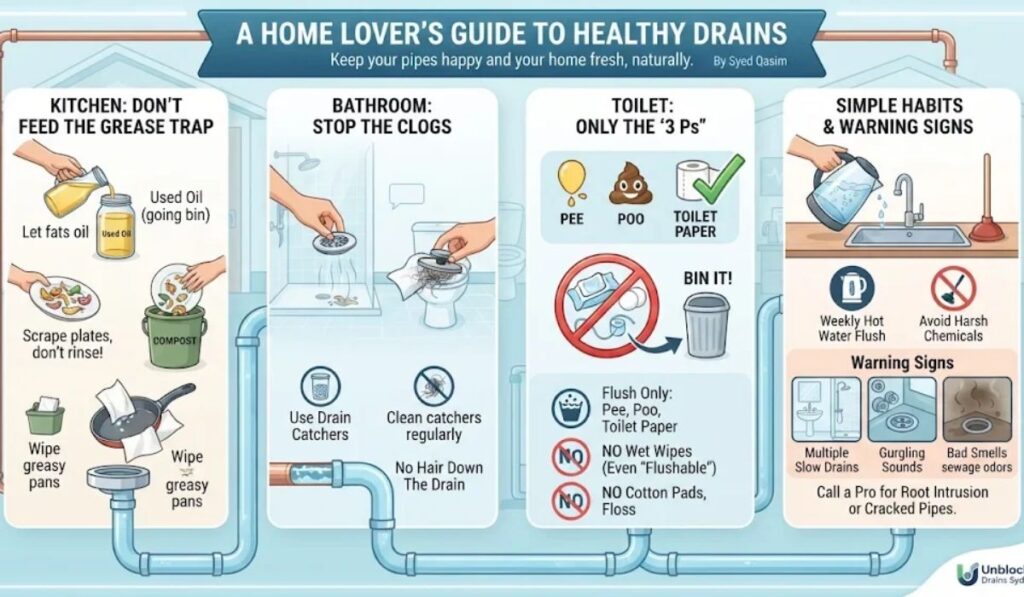
The kitchen is where grease does its damage quietly. Cooking oils, butter, and fat pour easily when hot and look harmless going down the drain. What happens next is less pleasant. They cool, solidify, and begin collecting food scraps on their way through the pipe. Coffee grounds, rice, and pasta compound the problem by swelling and clumping together over time. The result is a blockage that built itself gradually and then announced its existence at the worst possible moment.
The bathroom has hair as its main antagonist. On its own, hair is manageable. Combined with soap scum, conditioner, and the residue from various body products, it forms stubborn clumps that slow showers and basins progressively rather than all at once, which is part of why it goes unnoticed until the water is pooling around your feet.
The toilet is where good intentions go wrong. Wet wipes are the most common culprit. Wet wipes have become a well-known problem for sewer systems around the world precisely because they do not break down in water the way toilet paper does, regardless of what the packaging claims. They travel partway through the system and then stop, catching everything that follows them.
The laundry collects lint, sand, and pet hair, particularly if the household regularly washes beach towels, work clothes, or anything that belongs to a dog. These accumulate slowly and rarely cause drama until there is a lot of them.
If blockages keep returning in any room despite making changes to habits, specialists such as Unblocked Drains Sydney can look further into the pipe and identify whether the problem is a grease build-up, root intrusion, or something structural that surface-level maintenance cannot address.
Simple Habits for Fresh, Free-Flowing Drains
The habits that protect drains are not complicated. Most of them are small adjustments to things you are already doing.
Scrape plates into the bin or compost before rinsing rather than sending food scraps down the sink. Wipe greasy pans with a paper towel before washing them so the bulk of the fat never enters the pipe. Keep a jar for used cooking oil, let it set, and dispose of it in the bin rather than down the drain.
Use drain catchers in the shower, bath, and kitchen sink and clean them regularly. A drain catcher that has been left too long becomes a source of smell rather than a solution to one.
For the toilet, the rule is straightforward. Only flush the three Ps: pee, poo, and toilet paper. Everything else, including wet wipes, cotton pads, and dental floss, goes in the bin.
Running hot water through the kitchen sink after washing up takes thirty seconds and helps flush residual grease before it has a chance to cool and stick. For a more thorough refresh, many people pour boiling water down the kitchen drain once a week.
Avoid relying on harsh chemical drain cleaners as a regular maintenance tool. They can damage older pipes and are not something you want to keep around a household with children or pets. Sydney Water encourages households to think carefully about what goes down the sink and toilet, since fats and wipes are significant contributors to blockages in both private pipes and public sewers across the city.
When It Is Time to Call a Professional
There are signs that indicate a problem a plunger will not solve. These are worth knowing so you do not spend time and energy on DIY fixes that are not going to work.
If several drains in the house are running slowly at the same time, the blockage is likely further down the system rather than in any individual fixture. Gurgling sounds from plugholes or the toilet after water drains elsewhere suggest air is being pushed back through the system, which is not normal. Water rising in the shower when you flush the toilet is a clear signal that something is blocking the shared pipe between them.
Persistent sewage smells inside the house or in the garden, and wet or sunken patches in the lawn near sewer lines, often point to a cracked or blocked pipe underground.
These situations, particularly in older Sydney homes in established suburbs with large trees nearby, frequently involve root intrusion in clay pipes that have been in the ground for decades. A licensed plumber can inspect with a CCTV camera, identify exactly where the problem is, and clear it with high-pressure water jetting without guesswork.
Do not put off making the call. A slow drain left unattended has a reliable tendency to become a sewage overflow, usually at the least convenient moment possible.
Plumbing and Your Next Renovation
If a kitchen or bathroom renovation is on the horizon, include the drains in the planning conversation. It is considerably easier and less expensive to inspect, repair, or reposition pipes before new tiles, cabinetry, and flooring go in. Once the finishes are in place, the same work becomes a demolition project.
Ask your builder or plumber about a camera inspection of existing drains before work starts, the location of the sewer line in relation to planned changes, floor waste placement in showers and laundries, and whether there are access points that will make future maintenance straightforward.
Choosing fixtures with good drainage design is also worth the conversation. Linear shower drains have become popular for their appearance but they also tend to be easier to clean than traditional grates, which is a practical consideration alongside an aesthetic one.
The Parts of a Home That Work Without Being Noticed
A well-cared-for home is one where everything functions as well as it looks. Drains sit in the category of things that only get attention when they fail, which means the best outcome is that they never demand any.
A few consistent habits, the right equipment in the right places, and knowing when a problem has gone beyond what you can handle yourself are usually sufficient to keep them that way. The home stays fresh, the pipes stay clear, and the moments that could have been a crisis remain ordinary Wednesday mornings instead.


