
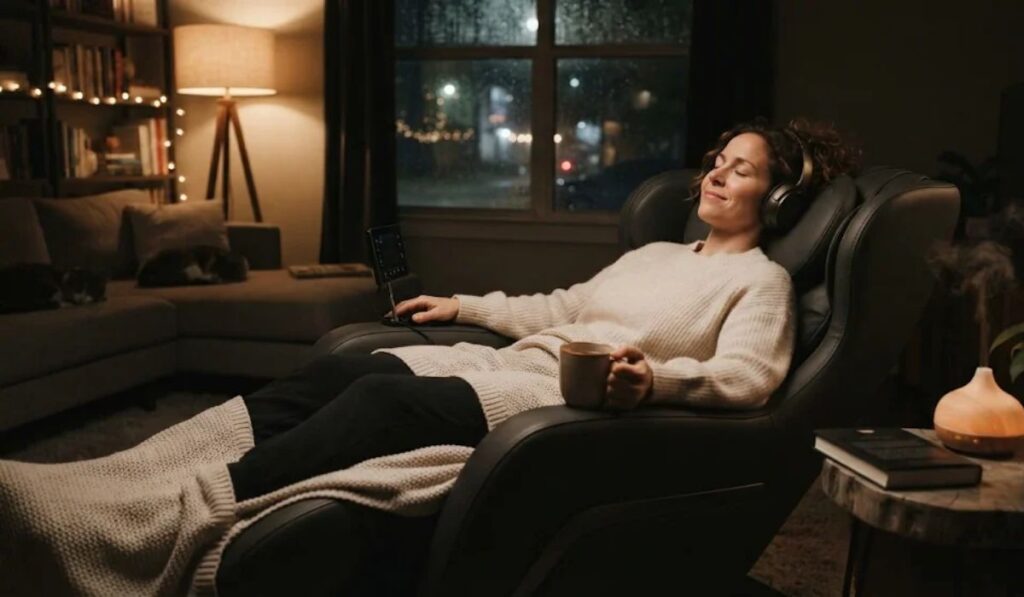

After a day of work, finding the time to unwind can feel difficult. Many people get home with tight muscles and a busy mind, and booking a therapist takes scheduling effort and travel time that’s hard to find during the workweek.
A home massage chair is one option some people consider. It isn’t the right choice for everyone, and it’s far from the only way to ease tension. This article looks at five ways a chair may fit into an evening routine, along with its limits, its costs and the alternatives worth comparing.
1. Delivering Immediate Muscle Relief
Sitting at a desk or standing on your feet all day tends to build tension in the lower back, and a standard sofa does little to help. Massage chairs can provide some relief when you sit down: you press a button and mechanical rollers work on stiff areas.
The main practical advantage is access. There’s no need to book a late appointment or travel in the evening. What a chair can’t do is replace an assessment. It may ease everyday stiffness, but it isn’t a substitute for professional advice if you have ongoing or severe pain. In that case, see a GP or physiotherapist.
2. Customising Your Recovery Sessions
Everyone feels fatigue differently, depending on daily activities, fitness and posture. Many models can scan your body shape and adjust their rollers to your proportions, although how well this works varies between products and may not match the feel of a trained therapist.
Typical adjustable settings include:
- Roller intensity: a gentler kneading motion or firmer pressure. Starting low is sensible if you’re new to it.
- Targeted areas: focusing on the neck or lower back.
- Heat: built-in heating pads can warm tight muscles. Take care if you have reduced skin sensation, and don’t fall asleep with the heat on.
- Pre-set programmes: some chairs include a slower relaxation mode for winding down.
3. Promoting Better Sleep Quality
Racing thoughts and physical discomfort can make it hard to fall asleep. Some people find that a gentle evening session helps them relax, and part of the benefit may come simply from having a calming routine. The evidence that a massage chair improves sleep is limited, and results differ from person to person.
A routine before bed can create a boundary between work and downtime, which many people find useful whether it involves a chair, a warm shower or stretching. If sleep problems persist, a doctor can look for the underlying cause, which a chair can’t treat.
4. Reducing Daily Stress
Stress affects the body in many ways, and relaxation habits, including massage, may help some people feel calmer. A chair is only one of many options, alongside sleep, regular movement, time away from screens and talking to someone.
Here’s how a regular evening habit might help:
- Easing physical tension: gentle pressure can reduce the tightness that lingers after work.
- Supporting relaxation: rhythmic kneading can feel comforting.
- Easing tension in the neck and shoulders: this may help some people with tension-type headaches, though it won’t suit every headache, and frequent or unusual headaches should be checked by a doctor.
- Encouraging slower breathing: sitting reclined can make it easier to breathe slowly and steadily.
5. Saving Time and Travel Expenses
Regular sessions with a therapist can be expensive and time-consuming once travel, parking and waiting rooms are included. Having equipment at home removes those ongoing costs, but a chair is a significant upfront purchase, and some models also need space, power and servicing. Comparing the price against what you’d realistically spend on sessions, and against cheaper options such as a heat pack, a massage ball or stretching, is a fair way to decide.
Convenience can make regular use more likely, but it also depends on the person. If a chair ends up unused, the saving disappears. Keep sessions short, as the manufacturer’s instructions recommend, and treat it as one tool among several.
Before You Buy or Use One
A few checks make this a safer and better-informed decision.
- Check with your doctor first if you’re pregnant, use a pacemaker or other implanted device, have a history of blood clots, osteoporosis, a spinal condition, a recent injury or surgery, or any other health concern. Massage chairs aren’t suitable for everyone.
- Try before you buy if you can. Fit matters, and a chair that suits one person’s height and shape may not suit yours.
- Compare more than one option, including price, size, warranty, servicing, delivery, returns and independent reviews, not just supplier descriptions.
- Use it safely: keep children and pets away while it’s running, and stop if anything hurts.
Upgrade Your Home Relaxation Routine
Ignoring physical tension can leave you drained and irritable by the end of the week. A massage chair is one way to manage everyday muscle tightness at home, but it’s not a medical treatment, and it works best alongside good sleep, regular movement and professional advice when you need it.
Take a look at how you spend your evenings and whether a small change might help. If a chair seems worth considering, compare several options carefully, and weigh the cost against simpler alternatives before deciding.

