

Most new pool owners hit the same wall somewhere around week two. Someone mentions chlorine, pH, alkalinity, and a handful of other things that apparently need watching, and suddenly a backyard pool feels like it came with a chemistry exam nobody studied for. It really isn’t that complicated once a few basics click into place. After that, it folds into the kind of routine you barely think about, like checking the letterbox.
Why Water Chemistry Actually Matters
Balanced water isn’t just about looking inviting in the sun, though that’s a nice side effect. It’s what keeps a pool safe to swim in, pleasant to be around, and not slowly eating through its own equipment behind the scenes. Water that’s drifted out of balance can turn cloudy fast, grow algae nobody invited, and irritate anyone who gets in for a lap.
Getting the chemistry right keeps things clean and comfortable, and it protects what’s usually a fairly serious chunk of money sitting in the backyard. It’s the foundation everything else in pool care sits on, so it’s worth actually understanding rather than just topping up chemicals and hoping.
The Role of Sanitiser
Sanitiser is what keeps the water free of harmful bacteria, and chlorine is the one most pools lean on. Keeping it at the right level is one of the more important habits in regular pool care, full stop.
Without enough sanitiser, water can turn unsafe and algae-prone faster than people expect, sometimes within days. Keeping that level steady is really what keeps the water clean day to day, so it’s worth treating as a habit rather than something you only think about once the water’s already gone a bit green.
Understanding pH
pH measures how acidic or alkaline the water is, and keeping it in a sensible range matters more than the number itself might suggest. Water that swings too far either way can sting eyes, irritate skin, and quietly mess with how well the sanitiser is actually doing its job.
Balanced pH keeps the water comfortable and lets everything else work the way it’s meant to. It’s one of the core numbers worth keeping an eye on, and nudging it back into range when it drifts is just a normal part of owning a pool, not a crisis.
Alkalinity and Balance
Total alkalinity works alongside pH, mostly by keeping it from swinging around too wildly. When alkalinity sits where it should, pH tends to behave itself a lot better on its own, with far less fiddling required.
Think of alkalinity as the quiet buffer sitting underneath everything else. Keeping it in range is part of the broader balance that keeps water clear, comfortable, and genuinely easy to maintain, rather than something you’re constantly chasing.
Testing the Water
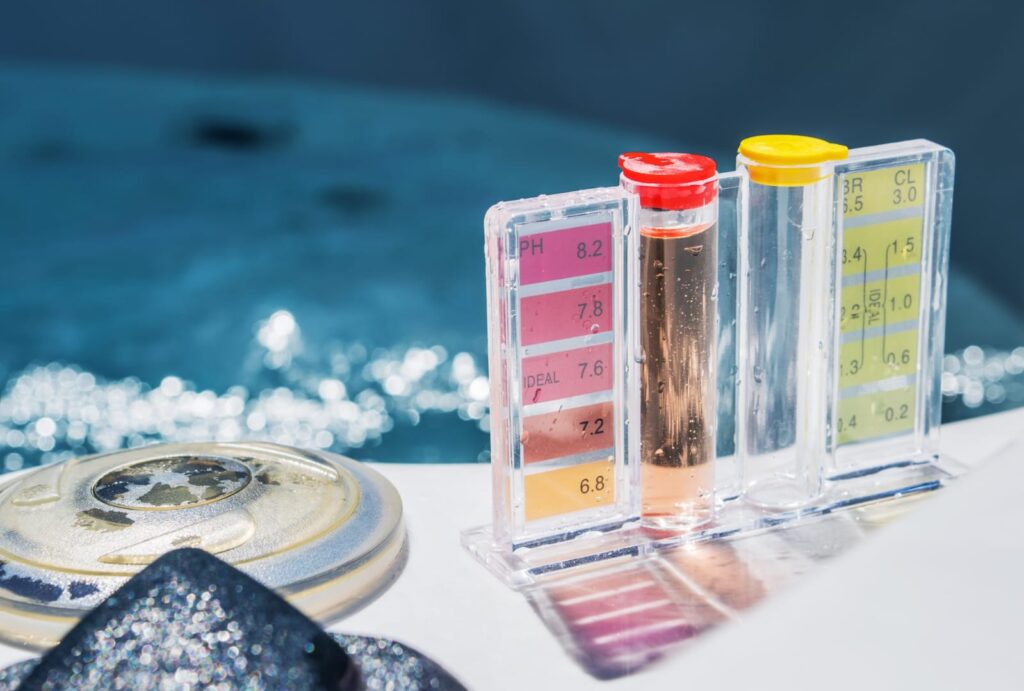
Regular testing is really the whole key to this. It tells you exactly where the water stands and what it actually needs, instead of guessing based on how it looks from the edge of the pool. A decent testing kit makes checking the important numbers pretty painless.
Testing often enough catches things early, well before an imbalance turns into cloudy water or a full-blown algae situation. Getting into the habit is probably the single most useful thing a new owner can do for themselves, more than any chemical on the shelf.
Making Adjustments
Once the water’s been tested, adjusting it just means using the right chemicals to bring whatever’s off back into range, correcting pH, alkalinity, or sanitiser as needed.
The process is simpler than it sounds. Test, see what’s off, adjust accordingly. Small, regular tweaks keep water balanced far more easily than trying to rescue a pool that’s been left to drift for a month while life got busy.
Keeping a Routine
The real trick to simple pool chemistry is just consistency. Testing and adjusting on a regular schedule keeps things balanced and stops problems building up in the first place, quietly, in the background.
A pool that’s kept up with consistently is a lot easier to manage than one that’s ignored for a while and then needs rescuing. A little regular attention goes further than most people expect, and it keeps the water something you actually want to jump into rather than something to worry about.
Common Mistakes Worth Avoiding
A few mistakes catch out new owners again and again. Adding chemicals before testing is a big one, since guessing can push the balance further off rather than fixing anything. Always test first, every time, even when the water looks fine.
Letting the pool go for a stretch and then trying to rescue water that’s drifted badly out of balance is another, and it’s considerably harder than steady upkeep ever is. Dumping chemicals in all at once, rather than making measured adjustments, tends to cause its own headaches too.
Avoiding most of this really comes back to the same two habits. Test regularly, and adjust in small, informed steps rather than big dramatic ones.
It’s Simpler Than It Seems
Pool water chemistry sounds daunting at first, but it really comes down to a handful of basics: keep the sanitiser right, keep pH and alkalinity balanced, test regularly, and adjust as needed. Get comfortable with those, and the rest tends to take care of itself.
With a bit of routine and a little practice, keeping the water healthy becomes second nature before long, about as automatic as remembering to feed the dog. And if you’re ever unsure, pool supplies professionals can help you work through it.

