
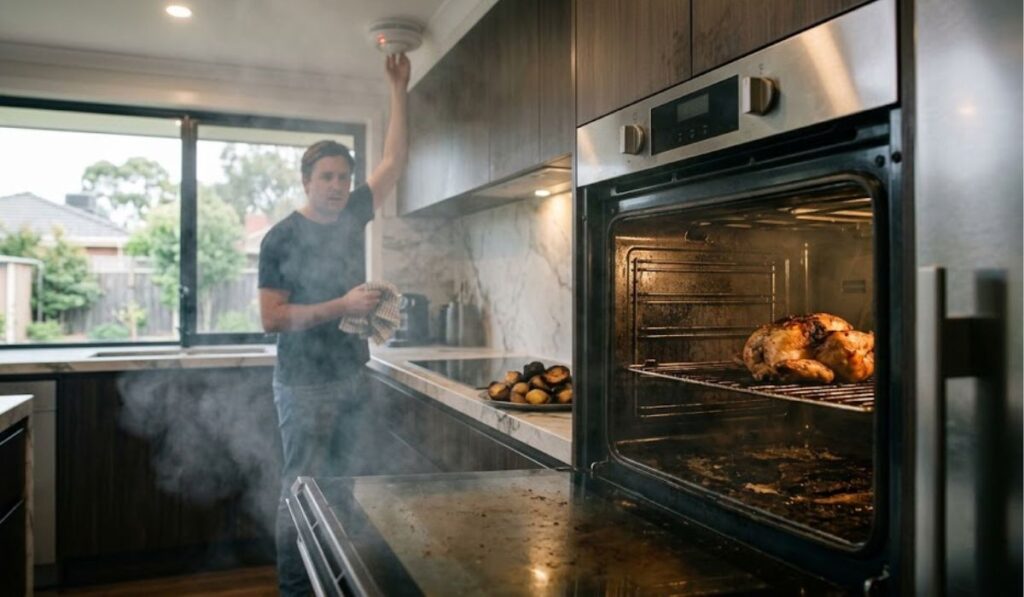

You set the temperature, slide the roast in, and walk away with the quiet confidence of someone who’s done this a hundred times. Forty minutes later the kitchen smells like a diner that closed down sometime in 1994. Smoke is drifting toward the ceiling. One side of dinner is charred, the other’s still practically raw.
The oven isn’t dying. It’s choking on months of bacon grease and a lasagne spill nobody got around to wiping up. Here’s what that buildup is actually doing to the appliance, and what it takes to clear it out.
Slower Heating
An oven that seems to take forever to warm up doesn’t necessarily need replacing. Worth a look inside first.
Grease and burnt-on food coating the walls and floor form a layer that soaks up heat instead of letting it move through the cavity the way it’s meant to. So the oven works harder and runs longer just to hit the number on the dial.
It’s most obvious with anything that needs a hot start, a pizza, a batch of scones. Instead of reaching 220°C in a few minutes, the oven sits there grinding away while you hover nearby, half-convinced the thermostat’s given up.
Uneven Cooking
Even once it gets there, the trouble doesn’t stop. A roast browning nicely on one side while the other stays pale isn’t bad luck. It’s usually grease.
Hot air needs to move freely around the cavity for an oven to cook evenly. Old residue on the walls, the fan, or the heating elements gets in the way of that, and some spots end up noticeably hotter than others.
Baking trays show it too. Biscuits golden on the left, still doughy on the right, and it’s tempting to blame the tray or the oven’s age. More often it’s a layer of grease from three months back quietly messing with the airflow.
Stubborn Odours
Turn the dial and within two minutes the house smells like last Tuesday’s fish. That’s old grease heating back up, releasing whatever it’s been sitting on, and the rangehood can only fight it so far.
Every high-heat cook reheats that residue and sends the smell out along with whatever’s actually meant to be cooking.
In a Melbourne summer, with the kitchen already warm and the windows thrown open, that smell travels through the whole house. Once it’s settled into the curtains, a spray of air freshener isn’t fixing anything.
Excessive Smoke
Smells are one thing. Smoke is harder to wave away. Once grease gets hot enough, it starts to burn, and that’s what fills a kitchen with haze.
Usually it’s spills on the floor or splatters baked onto the roof of the cavity. Crank the heat for a roast or a pizza, and those deposits start to smoulder. Grease sitting on a grill element goes up even faster.
That’s the point where every fan in the house gets switched on, someone’s fanning a tea towel at the smoke alarm, and dinner is quietly turning to charcoal behind the glass.
Safety Hazards
Smoke is a nuisance. Grease hot enough to ignite is something else.
Old grease burns. Once enough of it builds up inside an appliance that regularly runs above 200°C, it’s sitting there as fuel next to an open flame.
A small grease fire inside an oven can usually be contained just by keeping the door shut and switching the appliance off. But thick, widespread buildup raises the odds of it spreading further, especially if it reaches the fan motor or the back panel.
None of this is cause for panic. It’s cause for a bit more attention than the oven’s probably been getting.
How to Remove Grease Buildup
Good news, an oven at the smoking, unevenly-cooking stage doesn’t need replacing. It needs cleaning. Here’s how that actually goes.
Remove Loose Debris
Wait until it’s cool, then clear out everything that shouldn’t be in there, crumbs, burnt scraps, whatever’s charred onto the floor.
Getting the loose stuff out first makes the grease underneath far easier to deal with, and it’s usually the moment the real scale of the job becomes obvious.
Soften Stubborn Grease
Don’t reach for a scouring pad and start attacking it. Baked-on grease lifts far more easily if it’s given time to soften first.
A simple paste of bicarb soda and water, spread across the interior and left overnight, softens most of it without touching the enamel. For anything stubborn, a splash of white vinegar over the bicarb sets off a fizzing reaction that loosens the rest.
Clean the Racks Separately
Pull the racks and trays out and deal with them in the sink or the bathtub. Trying to scrub them inside the oven usually just means missing half the spots.
An hour soaking in hot, soapy water before scrubbing with a non-abrasive pad tends to do most of the work on its own. It’s a little satisfying, honestly, how much comes off once it’s had time to loosen.
Wipe Away Residue
Once the grease has softened, wipe it all down with a damp cloth, then go over it again with clean water to lift any leftover cleaning product, especially if a commercial spray was involved.
Don’t skip the door glass and the seal around the edges. Grease collects there more than people expect, and it’s easy to rush past.
Keep Up with Spills
This one habit saves redoing everything above in another three months. Wipe up spills once the oven’s cooled, before they get the chance to bake onto the surface for good.
If even that feels like more than there’s time for most weeks, services that offer professional oven cleaning in Melbourne can take the deep clean off your hands and make the appliance far easier to keep on top of afterwards.
An oven earns better than a thick coat of old grease slowing it down. Clean, it heats faster, cooks evenly, and stops turning the kitchen into a smoke alarm test every time it’s switched on. Worth a proper scrub this weekend, if only to wonder why it took this long.

