
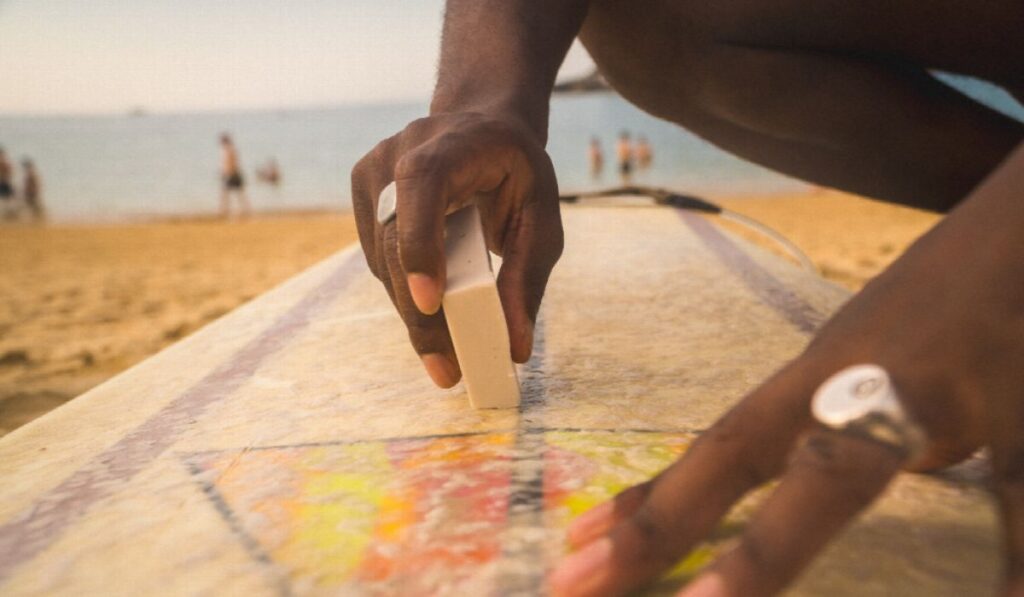

Surf wax is a small piece of equipment, but it plays an outsized role in keeping a surfer connected to the board. Its main purpose is increasing traction between bare feet and the deck, though the material turns out to be useful in a few other situations around surfing and watersports too. For anyone spending time in the water, including those interested in surf in Lembongan, understanding how and why surf wax actually works makes equipment prep a fair bit easier.
What Is Surf Wax?
Surf wax is a soft, grippy material applied to the deck of a surfboard. It creates friction between the surfer’s feet and the board, cutting down on unwanted slipping while paddling, standing, turning, or just shifting position across the deck.
Different waxes are formulated for different water temperatures. A wax built for warm tropical water behaves quite differently from one designed for colder conditions, so choosing the right type is genuinely part of preparing a board properly, not an afterthought.
Creating Grip on the Surfboard Deck
The primary use of surf wax is providing traction. A polished or unwaxed surfboard deck can be extremely slippery once wet, making it hard to hold a stable position at all.
Why does surf wax improve grip? Wax creates a textured, slightly tacky surface that increases friction between the board and the surfer’s skin or wetsuit. That lets a surfer shift their weight and control the board without constantly losing contact with the deck underneath them.
The amount and pattern of wax matter here too. Surfers generally build up a textured layer rather than spreading an extremely thin, smooth coating across the whole surface, since texture is really what does the work.
Supporting Foot Placement and Balance
Surf wax also matters for maintaining consistent foot placement once a surfer stands up. Reliable grip gives the feet a more stable connection to the board while adjusting position mid-ride.
How does wax help with balance? Surfing demands constant small movements as the rider responds to the wave in real time. Without enough traction, even a minor shift in weight can send the feet sliding out from under them.
This matters especially when turning, trimming, or riding more powerful sections of a wave. The wax doesn’t control the board on its own, but it provides the physical grip a surfer needs to make those movements with real confidence.
Improving Traction During Paddling
Surf wax isn’t only useful once a surfer is standing. The deck also needs to hold enough grip while paddling into waves in the first place.
Why is grip important while paddling? During paddling, the surfer’s chest and legs stay in contact with the board while the upper body moves repeatedly. A suitable wax layer cuts down on unwanted movement and helps maintain a more consistent position throughout.
This becomes especially useful paddling through moving water or getting ready to catch a wave, exactly the moments when holding the right position on the board matters most.
Helping Surfers Adjust to Different Water Conditions
Surf wax comes in different temperature ranges because its consistency shifts depending on the surrounding water. A wax that works well in cold water can turn too soft in tropical conditions, while a warm-water formula might not provide the same grip once the water cools down.
Why does water temperature matter? Water temperature directly dictates how hard or soft surf wax becomes. Harder formulas are built specifically to withstand warm, tropical water without melting, while softer waxes hold onto their sticky traction in colder conditions.
That’s why ocean enthusiasts travelling between regions need to adapt their gear carefully to the local climate. Just as someone preparing for snorkeling in Lembongan needs to research local water temperatures to pick the right wetsuit thickness, a travelling surfer needs to pack the right wax for their destination, so the grip’s actually there no matter what region they end up exploring.
Maintaining Grip During Surf Trips
A final practical use of surf wax is holding onto usable traction throughout an entire surf trip. Wax gradually wears down, gets dirty, flattens out, or picks up sand and other debris along the way.
How often should surf wax be replaced? There’s no single schedule that fits every surfer. Frequent surfers may need to refresh the surface regularly, while occasional riders can often keep the same wax going for longer stretches.
Removing old layers before applying fresh wax helps restore the intended texture properly. Just adding more wax indefinitely tends to create an uneven surface that’s genuinely hard to maintain over time.
How should surf wax be applied? Applying wax correctly is less about covering every part of the deck and more about creating a consistent area of traction exactly where the surfer’s feet and body actually make contact.
A base coat gets applied first to create a foundation, followed by a top coat suited to the water temperature. Small circular movements are commonly used to build up bumps across the surface. The exact pattern matters less than achieving an even, textured layer that doesn’t go smooth over time.
Can Surf Wax Be Used for Other Water Activities?
Surf wax is primarily designed for surfboards, but its basic purpose always comes back to improving grip. It shouldn’t automatically be treated as a universal traction product though, since different equipment often calls for different materials entirely.
Does every board need surf wax? Not necessarily. Some boards use traction pads or other grip systems instead of traditional wax. Longboards, shortboards, and specialty boards can also have different deck setups depending on how they’re designed to be ridden. Wax and traction pads can even be used together sometimes, particularly when a surfer wants extra grip in specific areas of the deck.
Surf Wax and Tropical Water Sports
Surf wax is one small piece of preparing equipment for tropical watersports generally. The same trip often involves several different activities, and each one calls for its own equipment and preparation.
Why does equipment preparation matter? Conditions can shift dramatically between locations, which makes it genuinely important to prepare for different marine environments separately. Equipment that works well in one spot may not hold up somewhere else entirely. If you’re combining different activities across a trip, surfing coastal breaks, swimming in sheltered bays, or getting ready for diving in Lembongan, you should treat each activity and its specific location on its own terms when preparing gear, rather than assuming one setup covers everything.
For surfers, that means checking water temperature, board condition, and wax type before ever entering the water. For divers, different considerations, exposure protection, equipment checks, surface conditions, become more important instead.
What Should Surfers Remember About Surf Wax?
Surf wax is simple, but how well it works depends on using the right formula, applying enough of it, and keeping the deck in reasonable shape. Temperature matters more than people expect, since wax that’s too soft or too hard simply won’t provide the traction it’s supposed to.
Keeping the deck clean, refreshing worn areas, removing heavily contaminated wax, and choosing a formula suited to the local water temperature are all straightforward habits that genuinely improve consistency session to session.
The goal was never to build the thickest possible layer. It’s creating a reliable surface that keeps the surfer connected to the board throughout the whole session.
Where This Leaves You
Surf wax may seem like a minor part of surf equipment, but traction actually affects almost every stage of riding, from paddling and positioning through to standing and turning. Its five main uses really come down to creating grip, supporting balance, maintaining foot placement, adapting to water temperature, and keeping that grip reliable throughout an entire trip.
For surfers travelling between destinations, paying attention to water conditions and equipment preparation can be the difference between a board that feels predictable and one that turns genuinely difficult to control. A small amount of preparation before entering the water goes a long way toward making a surf session more comfortable and consistent from start to finish.

