
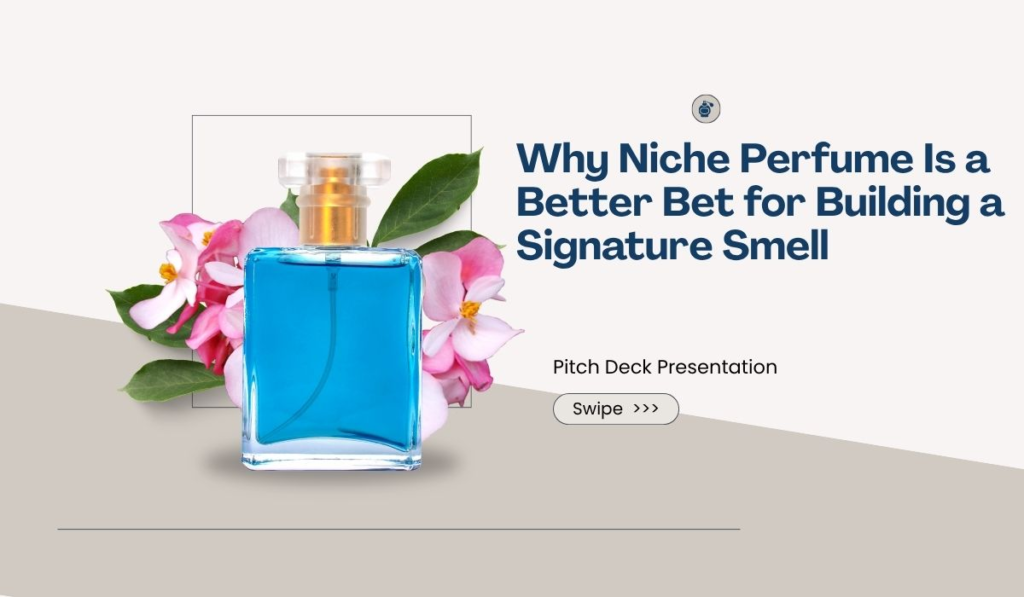

Most people don’t choose their signature scent. It chooses them, usually by accident, in a department store, from whatever was sitting at eye level on the counter. Which is fine, until you notice you’re wearing the same fragrance as three other people in the lift.
That’s usually the moment someone starts looking past the mainstream shelf and toward smaller, independent perfume houses, which build fragrances around a specific idea rather than a specific sales target. Not because independent automatically means better, but because the way niche houses are built changes what actually ends up in the bottle, and that matters if the goal is a scent that reads as yours.
What “Niche” Actually Changes About a Fragrance
The word gets thrown around loosely, so it’s worth being precise about what it means in practice. A house like Réminiscence is a useful example of what that distinction looks like in practice, having spent decades building fragrances this way rather than chasing broad appeal.
A designer fragrance is usually built to travel. It has to work in a boardroom and a bar, appeal to a wide age range, and survive years on a shelf next to a hundred competitors. That’s a legitimate design goal, and a lot of genuinely good perfumes come out of it. But it also means the formula gets shaped by committee, tested for broad approval, and often diluted down to a lighter oil concentration so it can be produced at scale without the cost of the raw materials spiraling.
Niche houses aren’t working under those constraints. Smaller batches mean the brief can stay artistic instead of commercial. That usually shows up in two concrete ways: the fragrance oil concentration tends to run higher, often landing between 20-30%, compared to the 10-15% typical of a mainstream eau de parfum, and the ingredients tend to be chosen for how they behave on skin over the course of a day rather than how cheaply they scale. Higher concentration doesn’t automatically make a fragrance better — a badly composed 30% extrait is still a badly composed fragrance — but it does mean more of what the perfumer actually intended reaches your skin, and stays there longer.
Why That Matters for a “Signature” Scent Specifically
A signature scent isn’t really about smelling nice. It’s about being recognisable — the thing someone associates with you specifically, the way a certain smell in an elevator makes you think of a particular person before you’ve even turned around. That only works if the fragrance is distinctive enough to attach itself to you rather than blending into the general hum of the ten most-purchased perfumes at any airport duty-free.
Mainstream fragrances are, almost by design, hard to build that association with. They’re deliberately inoffensive and widely worn, which is exactly why they sell well and exactly why they don’t stick to any one person’s identity. Niche perfumery tends to work the other way. Smaller houses often build around a single strong idea — a specific memory, a particular material, a mood rather than a market — and that specificity is what makes a fragrance easier to remember and harder to confuse with someone else’s.
There’s also a practical, less romantic reason niche wears better as a signature scent: distribution. A fragrance sold in every airport and department store is, statistically, going to end up on a lot of strangers. A fragrance sold through a smaller number of boutiques or directly from the house itself simply has less chance of showing up on the person standing next to you at a dinner party. Exclusivity here isn’t about status — it’s about the basic odds of overlap.
How to Actually Choose One
This is where a lot of people get stuck, because niche perfumery doesn’t come with the same instant recognisability as a well-known designer name. A few things help narrow it down:
Start with a mood, not a note list. Instead of asking “do I like vanilla,” ask what you want a fragrance to communicate — warmth, restraint, sharpness, comfort. Most niche houses build collections around a coherent identity, so once you know the mood you’re after, you can usually find the house whose whole catalogue sits closer to it.
Test on skin, not on paper. Niche fragrances, with their higher concentration and heavier reliance on natural materials, tend to shift more over the course of wear than a lighter designer spray does. A blotter test tells you almost nothing about how a fragrance will actually behave three hours in.
Pay attention to how a house talks about its own work. It’s a reasonably reliable signal — a perfume house that can explain why a fragrance is built the way it is, rather than just what it’s supposed to make you feel, usually has more going on beneath the surface. Browsing something like all Réminiscence fragrances side by side is a decent way to see whether a house’s overall philosophy actually lines up with what you’re looking for, before narrowing down to one bottle.
Don’t ignore categories that feel unconventional for you. People often rule out entire families of scent — gourmand, animalic, heavily resinous — based on one bad experience with a mainstream version of that style. Niche interpretations tend to be built with more restraint and better balance, which is worth revisiting even if you think you know you don’t like a category. Réminiscence’s selection of gourmand fragrances, for instance, treats those notes with more precision than the cloying, one-dimensional versions that give gourmand scents a bad name in the first place.
The Honest Trade-Off
None of this means niche is automatically the right call for everyone. It’s usually more expensive, harder to replace on short notice while traveling, and occasionally too unconventional for situations where you need something quietly inoffensive rather than distinctive. A well-made designer fragrance still does its job well, and there’s nothing wrong with wanting something reliable and easy.
But if the actual goal is a scent people associate specifically with you — not just “nice perfume,” but your perfume — the odds are simply better in niche territory. Smaller houses, built around a point of view rather than a sales chart, are structurally more likely to produce something that doesn’t sound like anyone else’s story. That’s not marketing. That’s just how the two ends of the industry are built.

