
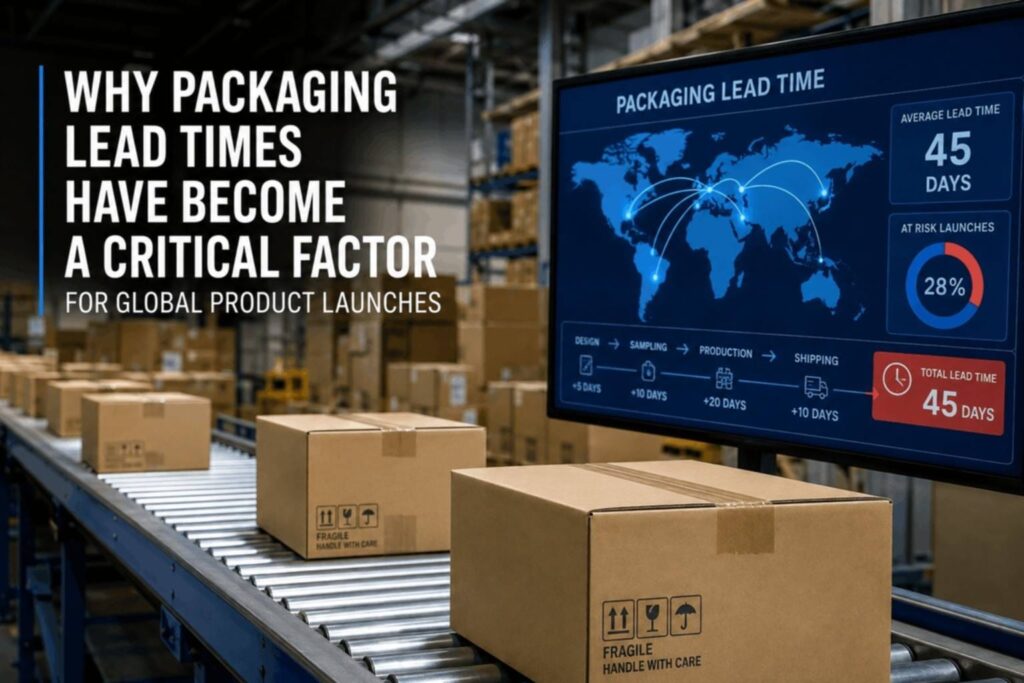

There is a particular kind of panic that sets in about three weeks before a launch date. The product is finished. The marketing is booked. The influencers have been briefed, the retail partners are expecting stock, the countdown graphic is already live on Instagram. And then someone asks the question nobody wants to hear at that stage: where is the packaging?
It happens more often than most brands would like to admit. Design gets the attention, marketing gets the budget, distribution gets the spreadsheet. Packaging gets penciled in somewhere near the end, treated like a formality rather than a production process with its own timeline. Then the timeline turns out to be longer than anyone planned for, and a launch that was otherwise sorted starts slipping.
What a Packaging Lead Time Actually Covers
Packaging lead time is the full stretch of time between placing an order and having finished packaging in hand. Not just the manufacturing part. Design approval, sourcing the right materials, production, quality control, and shipping all sit inside that window. For custom packaging, that whole run can take anywhere from a few weeks to several months, depending on what’s being made and where it’s coming from.
Skip that planning and the consequences are predictable: a delayed launch, higher freight costs from rush shipping, and a sales window that’s already closing by the time the boxes arrive.
Why This Has Become a Bigger Deal Than It Used To Be
Launch windows have gotten shorter. Seasonal drops, limited runs, influencer collaborations, they all come with a date attached, and that date rarely moves for anyone. If packaging isn’t sitting in a warehouse ready to go, the whole schedule slips, and a competitor with better timing gets the attention instead.
International shipping is less predictable than it used to be. Manufacturing packaging overseas means factoring in customs, freight schedules, and raw material availability that can shift without much warning. Brands that assume everything will arrive on time are usually the ones scrambling closest to launch.
Packaging is doing more work than it used to. It’s not just there to protect what’s inside anymore. It’s the first physical thing a customer touches, and for a lot of brands it’s doing as much storytelling as the product itself. That kind of design takes longer to get right, and rushing it tends to be obvious the moment someone opens the box.
Inventory has to arrive in sync. Finished product with no packaging just sits in a warehouse racking up storage costs. Packaging that shows up early with no product to go in it causes its own kind of mess. Neither side of that equation is supposed to move ahead of the other.
Regulated categories add another layer entirely. Food, cosmetics, pharmaceuticals, electronics, all of them require labels, certifications, ingredient lists, and warnings to be signed off before packaging can even go into production. Leave that compliance step too late and it stretches the whole lead time out from underneath the rest of the schedule.
What Actually Determines How Long It Takes
A few things tend to decide whether a packaging order comes in on time or not.
- How complex the design is
- Whether the materials are actually available
- The printing method and any special finishes
- Order volume
- How long the prototype approval process runs
- What the factory can actually produce at scale
- Inspection and quality control
- International shipping logistics
Most delays trace back to one of these, usually more than one at once.
How Brands Actually Avoid the Last-Minute Scramble
The brands that don’t end up in that three-week panic tend to do a handful of things differently. They start packaging design at the same time as product development, not after it’s finished. They get artwork approved quickly, because slow sign-offs and endless revision rounds are one of the most common reasons packaging runs behind. They keep communication open between the design team, the packaging supplier, and whoever’s handling shipping, so a problem shows up as a small delay instead of a crisis. They forecast sales as accurately as they can, because that number is what production scheduling actually gets built around. And they work with suppliers who genuinely know how to run manufacturing, quality control, and international shipping together, because that combination is usually what separates a supplier who hits deadlines from one who apologizes for missing them.
Why the Supplier You Choose Matters More Than the Price Tag
Picking a packaging supplier used to come down to who was cheapest. That calculation has shifted. Reliability, communication, and how well a supplier actually manages production now matter just as much, sometimes more, because a cheap supplier who misses a date can cost far more than the difference in price ever saved.
The packaging companies that tend to hold up under real deadlines are usually the ones that understand shipping regulations across different countries, plan production with some precision, and keep clients in the loop as things move through the process instead of going quiet until the shipment shows up. Working with the same supplier across multiple launches also tends to pay off over time, since approval processes get faster and production gets smoother once a supplier already understands how a brand operates.
Common Questions, Answered Honestly
How long does custom packaging actually take?
It depends on the design, the order size, the materials, and where it’s shipping to. As a general range, most custom packaging runs several weeks from design approval to the shipment actually leaving the factory.
What usually causes the delays?
Late artwork sign-off is the most common one. After that it’s material shortages, complicated customization requests, factories running at capacity, and shipping delays that nobody could fully predict.
Can a business actually shorten this timeline?
Yes, to a point. Planning early, approving artwork quickly, forecasting accurately, and working with a supplier who has real production experience all help. There’s a floor to how fast physical manufacturing can happen, but most of the delays that actually occur have nothing to do with that floor.
Does it matter which supplier a brand chooses?
More than most people expect going in. A supplier with established production, quality control, and shipping processes is far more likely to deliver on time and to spec than one still figuring those things out on your order.
Where This Leaves Most Brands
Global competition means launch timing has become one of the things that actually decides whether a product does well or gets lost in the noise. Retailers need shipping they can rely on. E-commerce brands need stock that doesn’t fluctuate without warning. And none of that works if packaging is the piece nobody planned for properly.
The brands that avoid the three-week panic aren’t the ones with better luck. They’re the ones who treated packaging as part of the actual plan from the start, not a box to tick once everything else was already done. Suppliers like Yiruixing Packaging operate in this space, working through the same design-approval-production-shipping sequence outlined above, which is a useful reference point for what that process actually looks like in practice


