
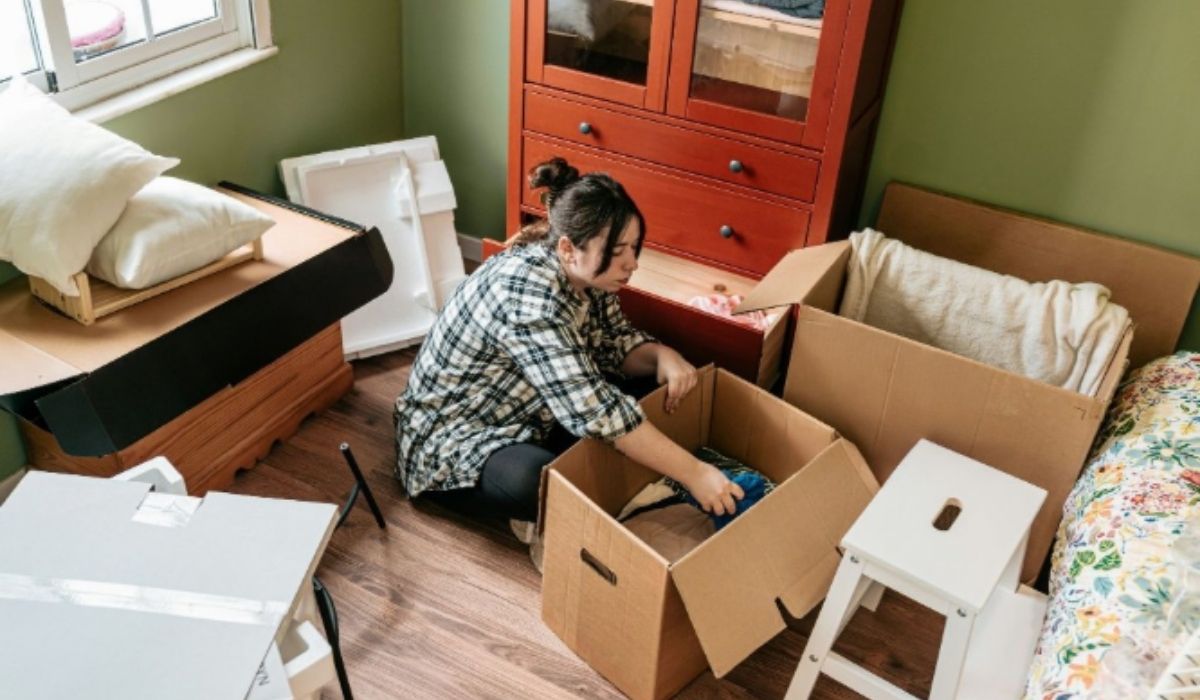

There’s a familiar pattern to house moves. For weeks the date feels comfortably far away, so nothing much happens about it. Then it isn’t far away anymore, the boxes need filling, and everything you own ends up shoved into cartons with zero time to actually think about whether you want any of it. Moving day lands in a blur, and the accumulated clutter of years travels straight to the new house, where it sits in boxes that might not get opened for months.
It doesn’t have to go that way, and the fix is almost annoyingly simple: clear out before you pack, not during. Deciding what’s genuinely coming with you, well ahead of moving day, turns a move from a last-minute scramble into something calm and manageable. It saves money, effort, and a fair amount of stress, and it means arriving at the new place with only what you actually want. Here’s how to run that clear-out properly, so the move ends up being the fresh start it’s supposed to be.
The Real Cost of Packing Everything “Just in Case”
The instinct when moving is to pack everything and sort it later, because deciding what to keep feels like one more job stacked on an already enormous one. That instinct is the actual mistake, and it costs more than it seems to at the time. Transporting things nobody wants means a bigger van, more of your own effort, or both — all spent moving belongings destined for the back of a cupboard or straight into the bin anyway.
Then there’s the other end of it. Moving the clutter means unpacking the clutter, so instead of settling into a clean, fresh space, the new home fills up with the same stuff that never actually got used in the old one. A move is one of the rare genuine chances to reset — to decide, on arrival, what actually earns a place in the new life — and dragging everything along burns that chance for nothing. It also just makes the job bigger across the board: more to pack, more to carry, more to unpack at the other end. Clearing out first shrinks the whole task, which is the entire point.
Start Early and Go Room by Room
Starting early is the single most useful thing here, because the clear-out is what turns a move from panic into calm, and it genuinely can’t be rushed at the end. Beginning weeks ahead, where possible, means working through the home steadily instead of in a desperate last-minute sweep — and an early start allows actual decisions instead of the reckless keep-everything calls panic tends to force.
Working room by room beats tackling the whole house at once, which is overwhelming and tends to end in giving up halfway through. Pick a room, sort it properly, finish it, then move on — that’s what builds real momentum rather than dread. The question worth asking in each space isn’t what’s owned, it’s what’s genuinely coming to the new place. Defaulting to “keep it all” is exactly the habit that fills the van with clutter, so each room gets approached on the assumption that things need to earn their spot, not the other way around. Room by room, week by week, the whole thing gets done without ever turning into the crushing task it becomes when it’s left for the end.
Deciding What Goes
A simple sorting system keeps this moving instead of turning into agonising over every object: keep, donate, sell, discard, decided reasonably quickly rather than deliberated over endlessly. First instinct about whether something’s coming along is usually the right one, and long deliberation rarely changes the answer.
Honesty about what actually gets used is what makes a clear-out worth doing at all. The things untouched in a year, the duplicates, the stuff kept out of vague guilt rather than real use — that’s exactly what a move is the chance to let go of. Sentiment is the trap worth watching for, since it’s easy to let a wave of nostalgia fill a removal van with boxes that never get unpacked or used again. Keeping the things that genuinely matter is fine, obviously — the wariness is really about sentimentality attaching itself to what’s actually just clutter with a memory loosely draped over it. Deciding firmly what goes is what makes room, literally and otherwise, for whatever the move is actually about.
The Part Everyone Leaves Too Late
This is the bit that consistently causes real last-minute stress. Once the “going” pile is decided, it actually has to leave the house, and a proper clear-out produces a lot more than a few bin bags. Bulky items, old furniture, general waste that a normal bin collection won’t touch — without a plan for it, all of that ends up sitting around during the exact days you most need clear floor space to pack and move.
The fix is sorting removal out in advance, before the moving rush hits. For anything beyond what a standard collection handles, arranging proper waste removal through sydneywasteaus.com.au or a local equivalent well before moving day means the discard pile is actually gone in good time, not cluttering the house while you’re trying to pack around it. The donation run and anything being sold are worth organising early too, so they have somewhere to go and a real timeframe instead of just lingering by the door. Handling this in advance is what keeps the final days before a move calm rather than buried under everything already decided against.
What Moving Light Actually Feels Like
The payoff here is genuinely one of the better parts of moving well. Arriving with only what was actually chosen means unpacking becomes something closer to a pleasure than a chore, since everything coming out of a box is something wanted in the new life. No clutter needing space found for it, no boxes that never get opened — just the belongings that earned their place, going into a home being set up properly from the start.
Moving light is a genuinely different experience from moving everything: cheaper, easier, calmer in the days around it, and quicker to actually settle into once the boxes are gone. Best of all, the new chapter starts without hauling the old one’s accumulated clutter along for the ride — which is really what a move should let happen. Clear out before packing, start early, sort honestly, and deal with the discards in good time, and the move that could have been weeks of panic turns into something closer to smooth. That fresh start is sitting right there. The clear-out is just how it actually gets claimed.