

You spend roughly a third of your life on your mattress. It’s easy to forget that, because a mattress doesn’t ask for attention the way a dirty carpet or a smudged window does. In Dubai’s heat and humidity, though, it quietly turns into a home for dust mites, sweat, dead skin and fine desert dust, and all of that has more to do with how you sleep and how you feel in the morning than most people realise.
Nobody thinks about their mattress until something’s off. Maybe it’s a stuffy nose that won’t clear until you’ve been up for an hour. Maybe it’s an itch you can’t quite explain. Maybe the bed just doesn’t feel as fresh as it used to, even though nothing looks wrong with it. By the time any of that shows up, whatever’s built up underneath has usually been sitting there for months, possibly longer.
What’s Actually Living in There
Dust mites eat dead skin. That’s their whole job. People shed skin flakes every night without noticing, and mites feed on them, and they do particularly well in warm, humid air, which describes most Dubai bedrooms once the AC switches off during the day and the heat creeps back in. Over time a single mattress can carry hundreds of thousands of these things, plus their droppings, and it’s the droppings that cause most of the allergy trouble, not the mites themselves.
Then there’s the moisture. You sweat while you sleep, everyone does, and in a humid climate that sweat sinks into the mattress rather than drying off. Add the dust that comes in through the windows and settles into the fabric over weeks, and you end up with something damp and dusty sitting deep inside the mattress, well past where sheet washing can ever reach.
That’s the real problem, honestly, how slow and invisible it all is. A mattress can look completely clean and still be holding years’ worth of skin cells, sweat and dust in its core. Kids’ mattresses tend to be worse, for whatever reason, and a mattress on the floor or up against an outside wall traps even more moisture because there’s no airflow underneath it. The stain or the smell you eventually notice isn’t the start of the problem. It’s usually the last stage of it.
What It Does to Your Sleep
The link between a clean mattress and actually sleeping well is more direct than people assume. Dust mite allergens bring on the usual suspects, blocked nose, sneezing, itchy eyes, a scratchy throat, and it’s exactly the kind of low-grade irritation that makes falling asleep harder and waking up earlier than you’d like. If you’re stuffy every morning but fine an hour after you’ve left the bedroom, the mattress is worth suspecting.
If you deal with asthma, eczema or seasonal allergies, it tends to hit harder. Allergens sitting in your bedding can set these off overnight, and you wake up tired and irritated without really knowing why. Dubai’s humidity also means trapped moisture can lead to mould inside the mattress itself, which just adds another irritant to the pile. Months of this wear a person down in ways that are easy to blame on stress or too much screen time, when really it’s been the bed the whole time.
Actually Cleaning It
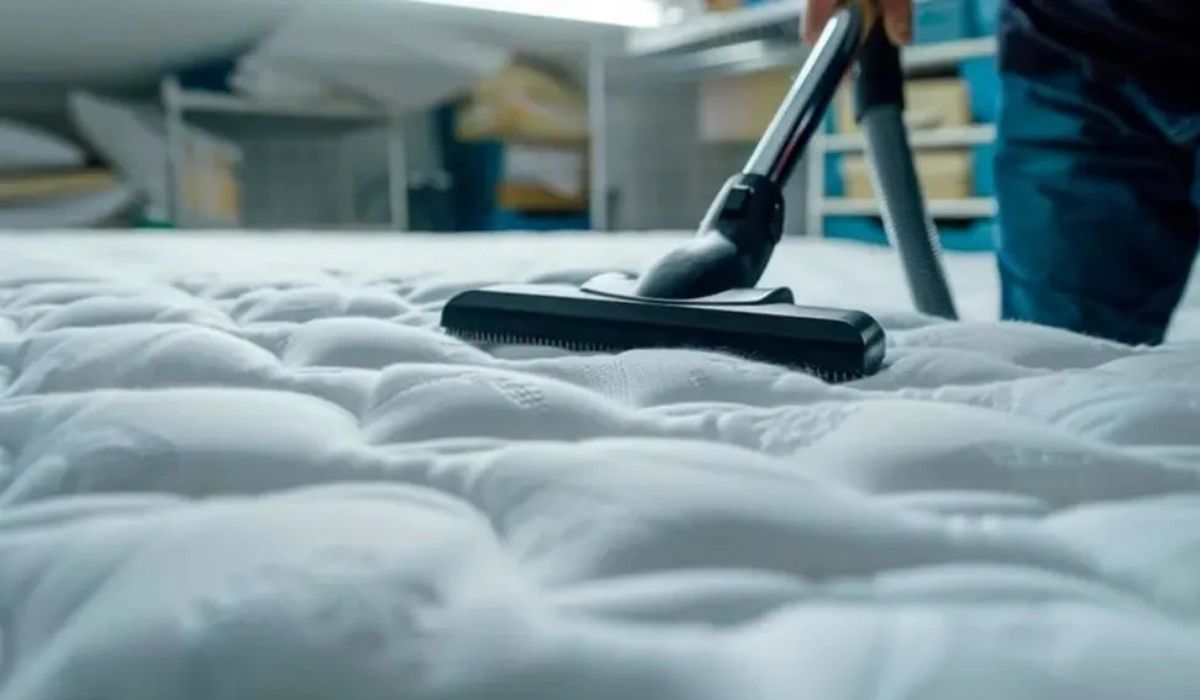
There’s plenty you can handle yourself in between deeper cleans. Run a vacuum over the surface with an upholstery attachment now and then, and pay attention to the seams, since that’s where debris tends to hide. Wash your sheets, pillowcases and protector weekly in hot water, that’s what kills the mites. Pull the covers back in the morning instead of making the bed right away, so any trapped moisture has a chance to escape before it gets sealed back in. A breathable mattress protector helps keep sweat and dust from soaking in to begin with, and flipping or rotating the mattress every few months lets it wear more evenly and dry out properly.
None of that reaches what’s buried deep in the mattress, though. Vacuuming was never built for that. That takes real extraction equipment, the kind that actually pulls moisture and allergens out of the core instead of just lifting dust off the top. A lot of people in Dubai bring in a professional mattress cleaning service through EcoClean once or twice a year for exactly that reason, and it’s usually the difference between a bed that looks fine and one that actually feels fine to sleep in.
Do both, the weekly upkeep and the occasional deep clean, and you’re covering the whole problem instead of just the part you can see. One keeps the surface in order. The other deals with everything that’s been quietly settling in underneath. Skip either one and you’re only getting half the picture.