
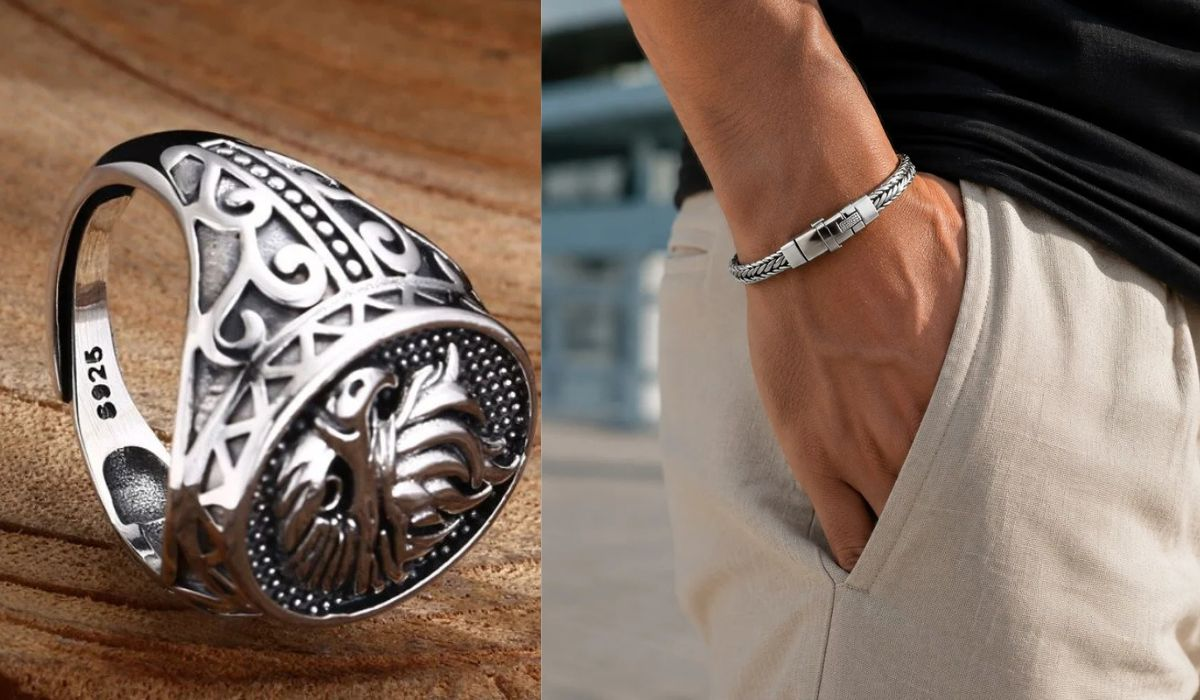
There is a bracelet I have worn almost every day for the past six years. I could not tell you exactly when it stopped being something I chose to wear and became something I simply wear. That transition happened slowly, the way most things that matter do. One morning I reached for it without thinking and realised I had been doing that for a very long time.
That is the thing about certain pieces of jewellery. They do not stay in your life because you keep choosing them. They stay because at some point you stop having to.
The Pieces Fashion Forgets About
Every year brings something new to chase. Colours shift, fabrics arrive and disappear, and silhouettes that feel completely current today will look unmistakably dated in photographs from this decade. Fashion has always worked that way and there is nothing wrong with it. Reinvention is part of its appeal.
Jewellery tends to move differently.
Some pieces are clearly tied to a moment. The oversized chain that dominated a particular year. The colourful resin bangle that was everywhere and then suddenly was not. The statement earring that made the cover of every magazine in spring and was gone by autumn. These pieces are fun while they last but they carry a timestamp you cannot remove.
Then there are the other pieces. The ones that were never wildly fashionable but never quite disappeared either. A simple silver bracelet. A plain chain. A ring with clean lines and no decoration. These things do not announce themselves. They just persist, quietly earning their place in drawers and on wrists and around necks, year after year, regardless of what else is happening in fashion.
Most people have at least one piece like this. Often they have several without realising it.
When Conversations Turn to Timeless Style
When people talk about timeless style they almost always talk about clothing. The well-cut blazer. The crisp white shirt. The leather boots that improve with age. And those things are worth talking about. But jewellery deserves the same conversation and rarely gets it.
Unlike clothing, jewellery does not have to navigate changing silhouettes or seasonal colour stories. A thoughtfully made piece in sterling silver can feel just as relevant in twenty years as it does today. The same cannot be said for most of what hangs in our wardrobes.
Part of the reason is what jewellery quietly accumulates over time.
Clothing tends to remind us of a particular season or a particular version of ourselves. Jewellery is different. It holds onto something more personal. A ring bought after finishing university. A bracelet discovered at a market while travelling somewhere. A necklace given by someone who mattered. These pieces gradually become attached to moments rather than occasions, to feelings rather than outfits.
Years later you might not remember what you were wearing on a particular day. But you often remember the piece that was with you.
The Ones We Wear Without Thinking
On most mornings there is not much time. Coffee is getting cold, the phone is already going, and no one is standing in front of the mirror making careful jewellery decisions. More often than not a hand reaches for the same familiar bracelet or necklace almost automatically.
That small habit is more revealing than it seems.
The jewellery we wear most consistently is not usually the boldest or the most expensive. It is the jewellery that fits so naturally into daily life that we stopped noticing it was a choice. It is comfortable from early morning until late at night. It works with almost everything without requiring thought. It never makes us wonder whether it belongs.
That is precisely why simplicity tends to last.
Decorative trends are exciting for a while but they become closely associated with the moment they belonged to. Seen years later they immediately signal an era. Classic designs work through proportion, balance, and craft rather than novelty, which is why they can feel just as right many years after they were made as they did the first time they were worn.
Materials are part of this too.
Sterling silver develops a character over time that is genuinely difficult to replicate artificially. The small marks that accumulate through everyday wear do not diminish it. They become part of what it is. A bracelet worn through commutes and weekends and celebrations and ordinary afternoons eventually carries a record of the life lived around it. That kind of history cannot be purchased. It has to be accumulated slowly.
Something Shifting in Men’s Style
Not long ago the conversation about men’s jewellery was fairly short. A watch. A wedding band if applicable. That was more or less the full extent of it.
That has changed considerably and the change feels genuine rather than trend-driven. Jewellery has become another quiet way for men to express something about themselves without making a statement about it. A well-made silver bracelet worn alongside a watch adds a layer of character without asking for any particular attention. It works at a desk, at dinner, while travelling, at the weekend. It does not need a special occasion.
That growing ease with understated pieces is why so many people are now choosing handcrafted sterling silver bracelets for men over accessories driven by whatever is currently visible in shop windows. Pieces made carefully by skilled hands tend to prioritise comfort, proportion, and durability over novelty. Those are exactly the qualities that become more valuable the longer something is worn rather than less.
Timeless jewellery has never relied on a strong first impression. Its real strength only becomes apparent over time.
Style Changes. Character Does Not.
One of the genuinely interesting things about well-made jewellery is that it does not belong to a particular stage of life.
Most fashion does. A jacket that felt right at twenty-five looks noticeably different on the same person at forty-five. Not wrong necessarily, but different. Tied to a time. Jewellery works differently. A silver bracelet that accompanied weekends in jeans and trainers a decade ago can feel just as natural alongside a tailored coat today. The person changes considerably. The piece quietly keeps up.
Leafing through old photographs you can almost always date a decade from how people are dressed. The cut of a jacket, the fit of a pair of trousers, the particular shade that everyone seemed to be wearing that year. Jewellery tells a softer story. The pieces that last tend to avoid strong allegiances to any particular moment in favour of the things that do not date. Good proportion. Quality material. Restraint in decoration.
Over time those qualities matter more not less.
Some jewellery passes between generations because of its value. Other pieces survive for a simpler reason. They have become part of a family’s daily texture. A father wearing the same bracelet to work every morning for fifteen years. A mother reaching for the same necklace on occasions that mattered. Children growing up with those details as familiar as anything else in the household. Years later those small consistencies remain vivid in a way that much larger events do not.
Personal Style Growing Into Itself
Personal style has become noticeably more individual over the past decade or so.
Not because people care less about how they dress but because the pressure to dress for other people’s expectations has quietly reduced. The question that used to be what is fashionable has been replaced more and more by something simpler. Does this feel like me.
That shift is visible in how jewellery is worn today across the board. The old boundaries around which pieces belonged to which genders have largely dissolved. A slim silver bracelet or a simple chain or a well-made ring no longer signals a particular image or lifestyle. They are just considered details that fit naturally into someone’s way of dressing.
Rings are perhaps where this change is most obvious.
They used to carry a single symbolic weight. Now they are simply an expression of taste like any other. Clean proportions, comfortable fit, quality material. Nothing that competes with the rest of an outfit. Nothing that requires an explanation.
That is exactly why men’s sterling silver rings have found such a consistent audience among people who are more interested in wearing something that feels right than in wearing something that announces itself. They become one of those quiet details you notice in someone’s overall presence without being able to immediately identify what it is.
People whose wardrobes always seem effortless tend to share this approach. They are not reinventing themselves each season. They are refining what already works. And over enough time those consistent choices become more recognisable than any trend they ever followed.
The Things That Earn the Right to Stay
There is a particular satisfaction that arrives at some point in life when buying something new becomes less interesting than continuing to use something you already own well.
It does not happen quickly. Most people spend years trying different things, following different directions, buying things for reasons that make sense at the time and then make less sense later. Some of those purchases disappear almost as fast as they arrived. They go into the back of drawers or boxes or charity bags without leaving much of an impression.
Others stay.
The ones that stay are rarely the ones that seemed most exciting at the time of purchase. They are the ones that turned out to fit so naturally into daily life that the idea of replacing them never really came up. The coat that has been through more winters than you can accurately count. The bag that has become softer and more comfortable with every trip. The bracelet that has been fastened so many mornings it has become part of the ritual of leaving the house.
These things eventually carry something that cannot be bought at the point of purchase. They have to earn it through time and use and the accumulation of ordinary days. They have been there for Tuesday mornings and delayed flights and celebrations with people you love and countless afternoons that seemed completely unremarkable as they were happening.
Those unremarkable afternoons are often the ones that turn out to matter most when you look back.
Nobody buys a bracelet expecting it to appear in family photographs for the next fifteen years. Nobody chooses a ring imagining they will be absent-mindedly turning it during every significant conversation they will ever have. But that is frequently what happens. The object itself barely changes. The life surrounding it does all the changing.
That is what makes lasting jewellery different from most things we own.
Its value does not peak at the moment of purchase. It grows quietly in the background while life continues. And that slow accumulation of meaning is something that neither fashion cycles nor trend reports have ever had much to say about.
Perhaps because it happens entirely outside them.