
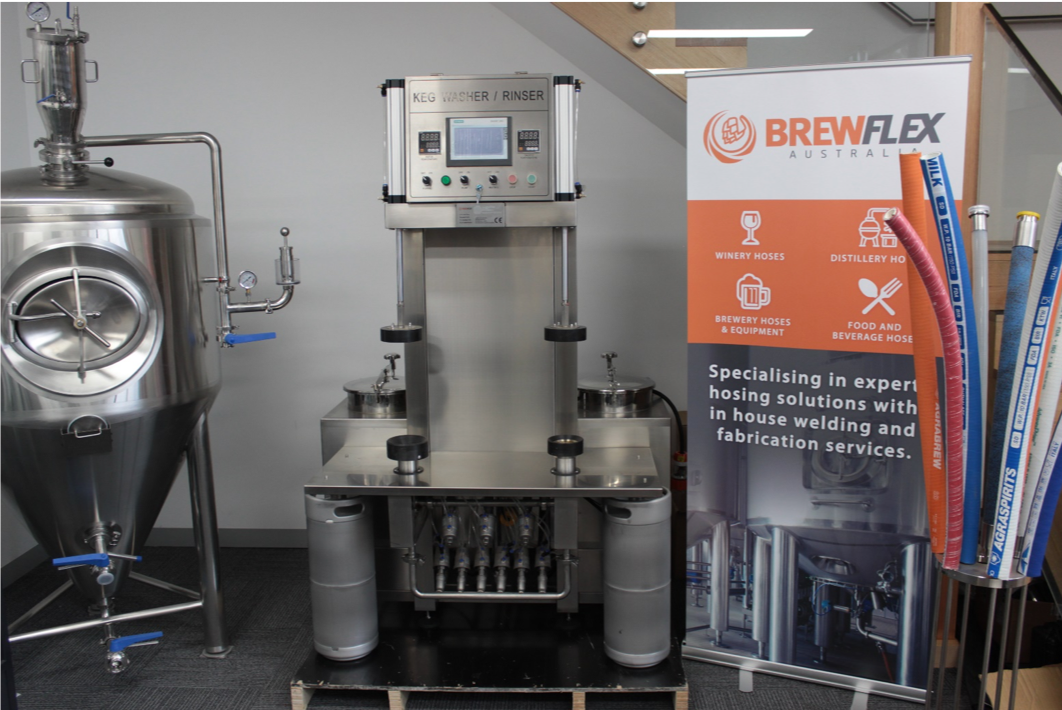

The best small breweries, distilleries, and specialty food manufacturers aren’t just getting better at their recipes, but they’re getting smarter about their infrastructure.
There’s a quiet revolution happening in Australian craft production. The best small breweries, distilleries, and specialty food manufacturers aren’t just getting better at their recipes, but they’re getting smarter about their infrastructure. And the producers pulling ahead of the pack? Many of them are drawing inspiration from an unexpected source: pharmaceutical manufacturing.
Where the Thinking Comes From
Pharmaceutical manufacturing has always operated under a simple but demanding principle: every component that touches a product must be traceable, certified, cleanable, and consistently performing. There’s no “she’ll be right” when the end product goes into someone’s body. That same rigor, applied to food and beverage equipment, is quietly transforming how the most serious small producers in Australia spec and manage their production lines.
It’s not about over-engineering a small operation. It’s about understanding that the standards pharmaceutical manufacturers apply exist for reasons that are just as relevant on a brewery floor or in a winery pressing room as they are in a compounding facility.
Hygienic Design Isn’t Just for Hospitals
One of the biggest lessons craft producers are borrowing is hygienic design. This is the principle that equipment should be built so that it can be thoroughly cleaned without disassembly, and that no surface in contact with product should harbour bacteria between runs. This means smooth internal bores, crevice-free fittings, fully drainable vessels, and connection points that seal completely without micro-gaps.
In brewery equipment, this translates directly to things like tri-clamp fittings with correctly specified food-grade gaskets, pumps with cleanable wetted surfaces, and fermentation vessels designed with CIP (Clean-in-Place) compatibility built in from the start, not bolted on as an afterthought. Suppliers who understand both the food and pharmaceutical sectors can make all the difference here, offering equipment that meets the hygienic benchmarks of both industries.
Material Certification Changes Everything
Pharmaceutical thinking also puts material traceability front and centre. Every component that contacts a product from hoses, seals, fittings to tank linings, should carry a certification that confirms what it’s made of and that it’s safe for product contact. In practice, this means food-grade silicone over generic rubber, 316 stainless steel over 304 where hygiene demands it, and PTFE-lined hose assemblies where chemical resistance matters.
For a craft distillery running aggressive spirit wash, or a kombucha producer dealing with live cultures and organic acids, these material choices directly affect product safety, flavour consistency, and shelf life. A supplier who stocks ISO 9001 certified components and can advise on material suitability across different applications is worth their weight in stainless steel.
The Long Game
The producers who adopt this philosophy early rarely regret it. Equipment that’s designed to pharmaceutical-adjacent standards tends to last longer, clean more reliably, and fail less catastrophically, meaning fewer surprise shutdowns and more consistent output. It also scales better. When a craft brewery doubles its batch size or a small food manufacturer brings on a second production line, hygienic infrastructure doesn’t need to be rebuilt from scratch. It simply expands.
Commissioning support, hose audits, and ongoing service and maintenance from a knowledgeable supplier means operators aren’t navigating these decisions alone. They’ve got the kind of technical partnership that pharmaceutical manufacturers have always relied on, now available to the craft end of the industry.
The standards exist for a reason. The smartest small producers are starting to use them.